
Leak detection on Lolland-Falster
Water in the excavation proves nothing
Large parts of Lolland-Falster are low-lying, and the water table is close to the ground. Drainage is an integral part of the landscape, with drainage pipes and pumping layers a prerequisite for the use of fields and roads.
This makes the usual signs unreliable. Moisture along a foundation or a soft spot in the roadbed in the spring could be due to a leaking water pipe. It could just as well be groundwater or drainage water behaving as usual.
Is it drinking water or groundwater?
The question must be decided before the excavator is ordered, and here trace gas is the method the angle requires. The gas can only come from the pipeline, then we find it in the ground above the pipe, is the water drinking water, and otherwise the source is somewhere else.
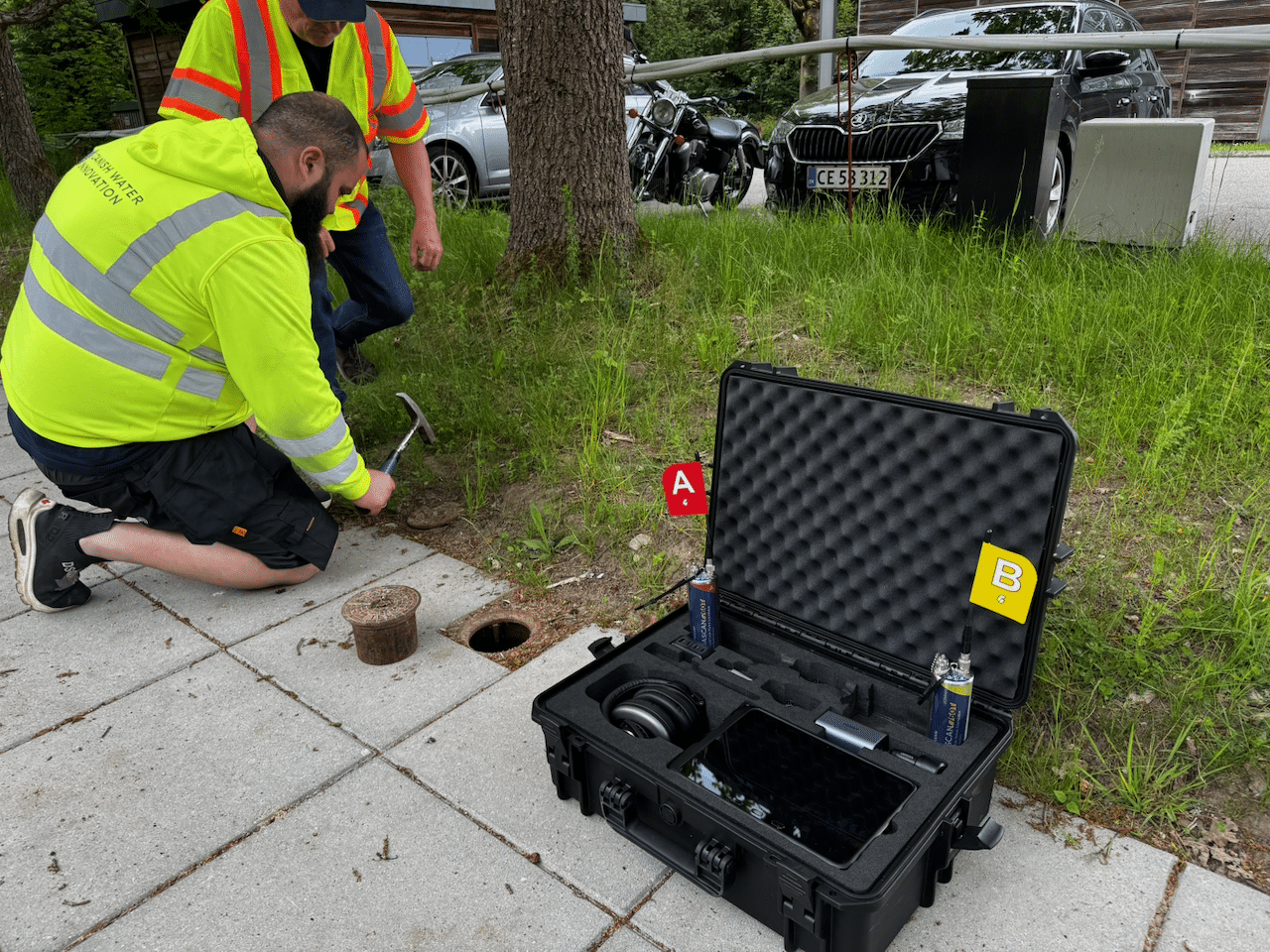
The pipe trench makes the picture even more unclear because it is often the most permeable layer in a heavy clay soil. Both leakage water and foreign water therefore follow the trench until it crosses a drainage pipe or a road box foundation, and appears there. If the water table is high around the pipe, the sound image is attenuated, and therefore we take the measurements during the quiet hours of the night, when consumption is low and the background noise from roads and machinery is gone.
Leak detection on Lolland-Falster between the villages
The region's network is long in relation to the number of connections. Between two villages there can be kilometers of main pipeline without a single branch pipe along the way, and there are long distances between the wells and valves from which we can measure.
This is where correlation works best. Two measurement points at each end of a long, straight stretch cover a lot of pipe, and the method is based on the coincidence between the two signals, which holds true even when the signal is weak.
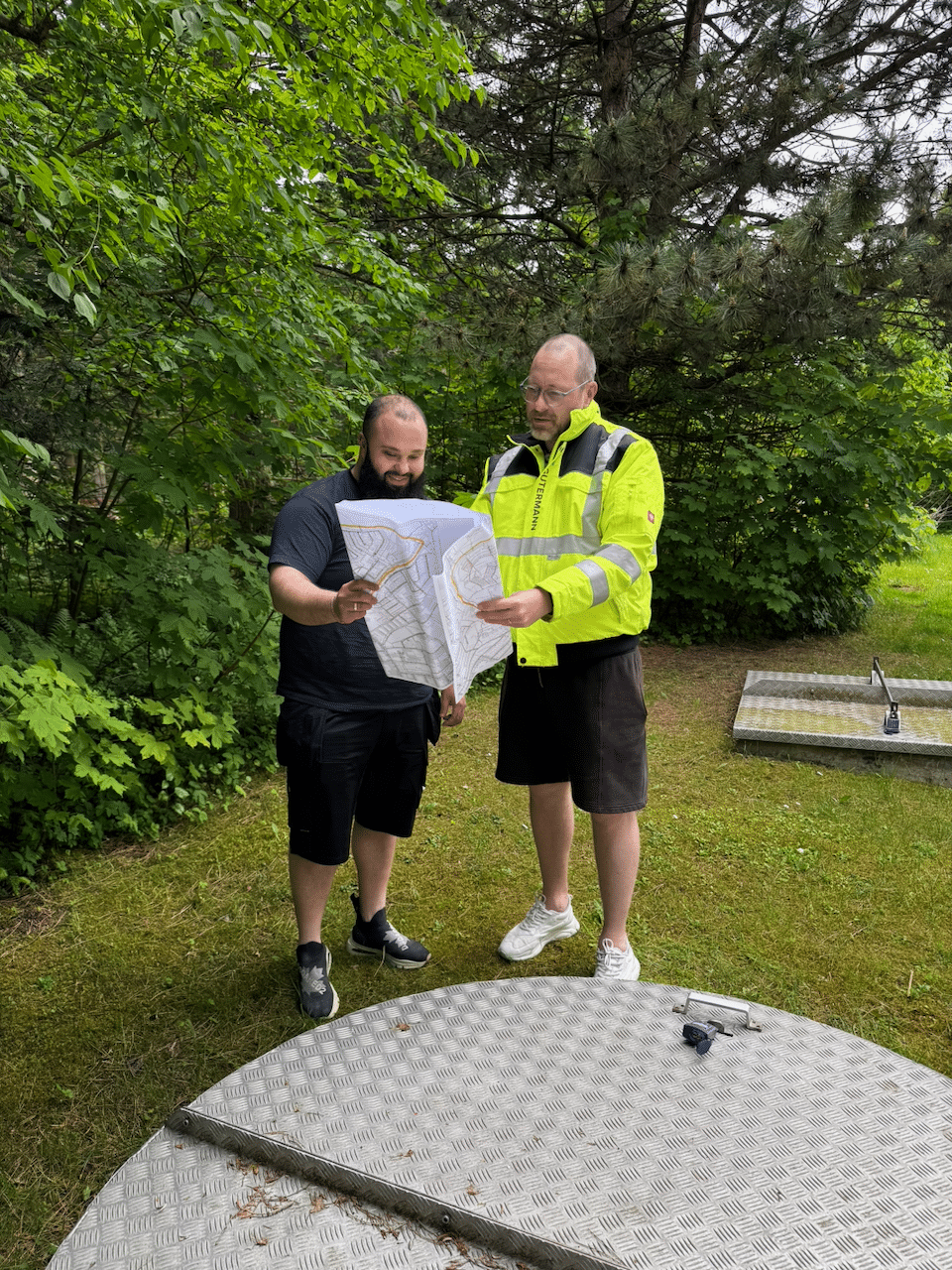
If the process is unknown, we start with wire search. The map material on old land routes does not always match reality, and a pipeline that has been traced and measured makes both the measurement and the later repair shorter.
When a few cubic meters have to bear the loss
A loss is distributed over fewer settled cubic meters here than in a city, and the same gap therefore weighs more heavily in the NRW statement. A waterworks with few consumers per kilometer of pipe may have a water loss that looks massive in the statement, without anything dramatic having happened in the network.
Agriculture is part of the equation. A connection to a farm or a field irrigation tap has a different consumption profile than a household, and a loss there can lie for a long time without anyone noticing it, because consumption fluctuates from season to season anyway. We measure the connection pipes along with the main pipe.
A leak far out on a branch also costs more to pump than a leak close to the plant because the water has to be carried all the way out before it seeps away. This is one of the reasons why we often recommend taking the longest stretches first when laying the sequence.
Monitoring when the driving distance is long
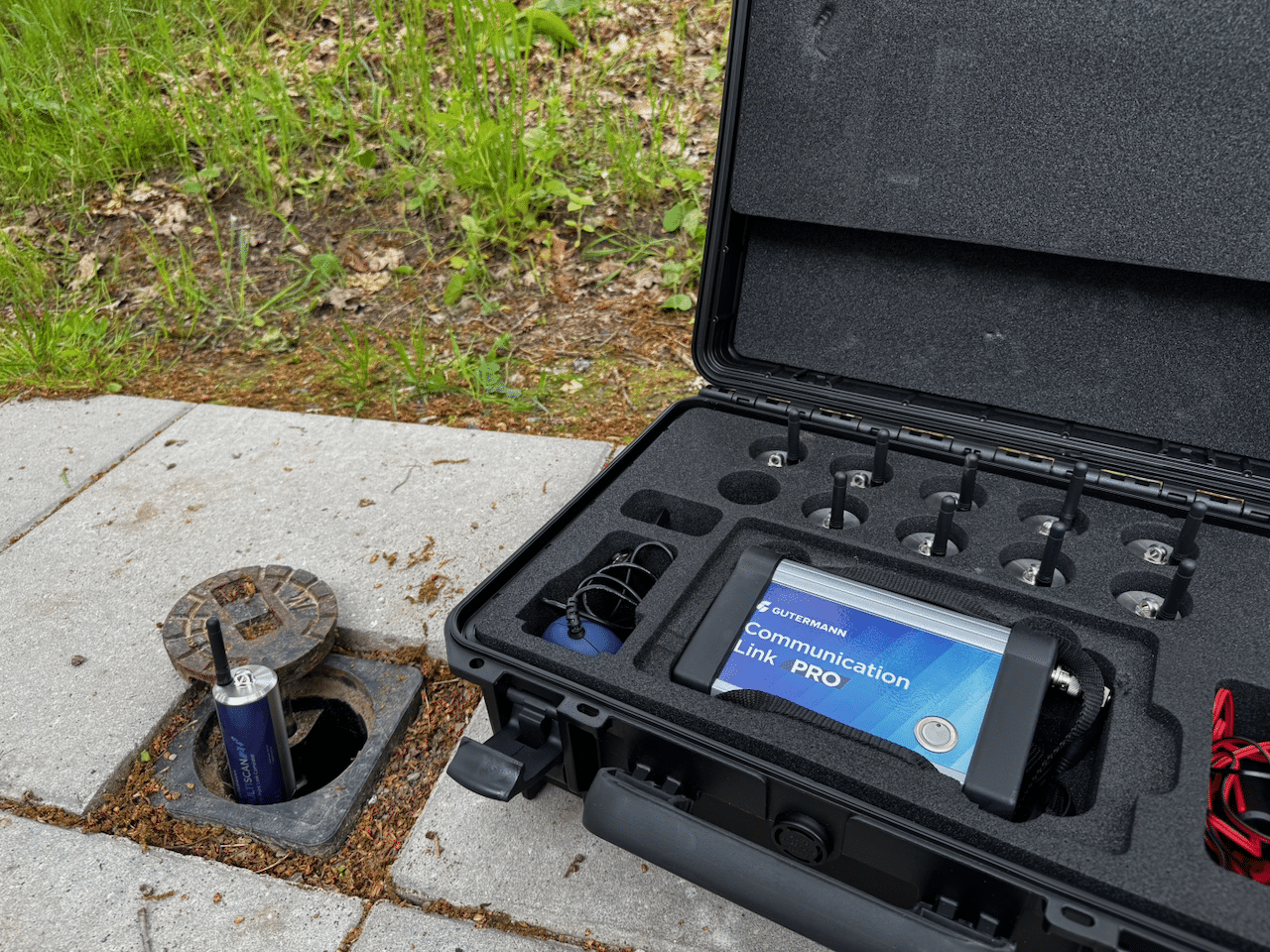
Sending a man out to listen every week on a network that stretches over many kilometers of road is not practical. Data loggers located in the network listens around the clock, and HydrantAI collects the measurements and automatically alerts you if there are deviations from the normal pattern.
This changes when we come. Instead of a fixed annual round across the entire network, the visit will be directed to the section where the numbers have shifted.
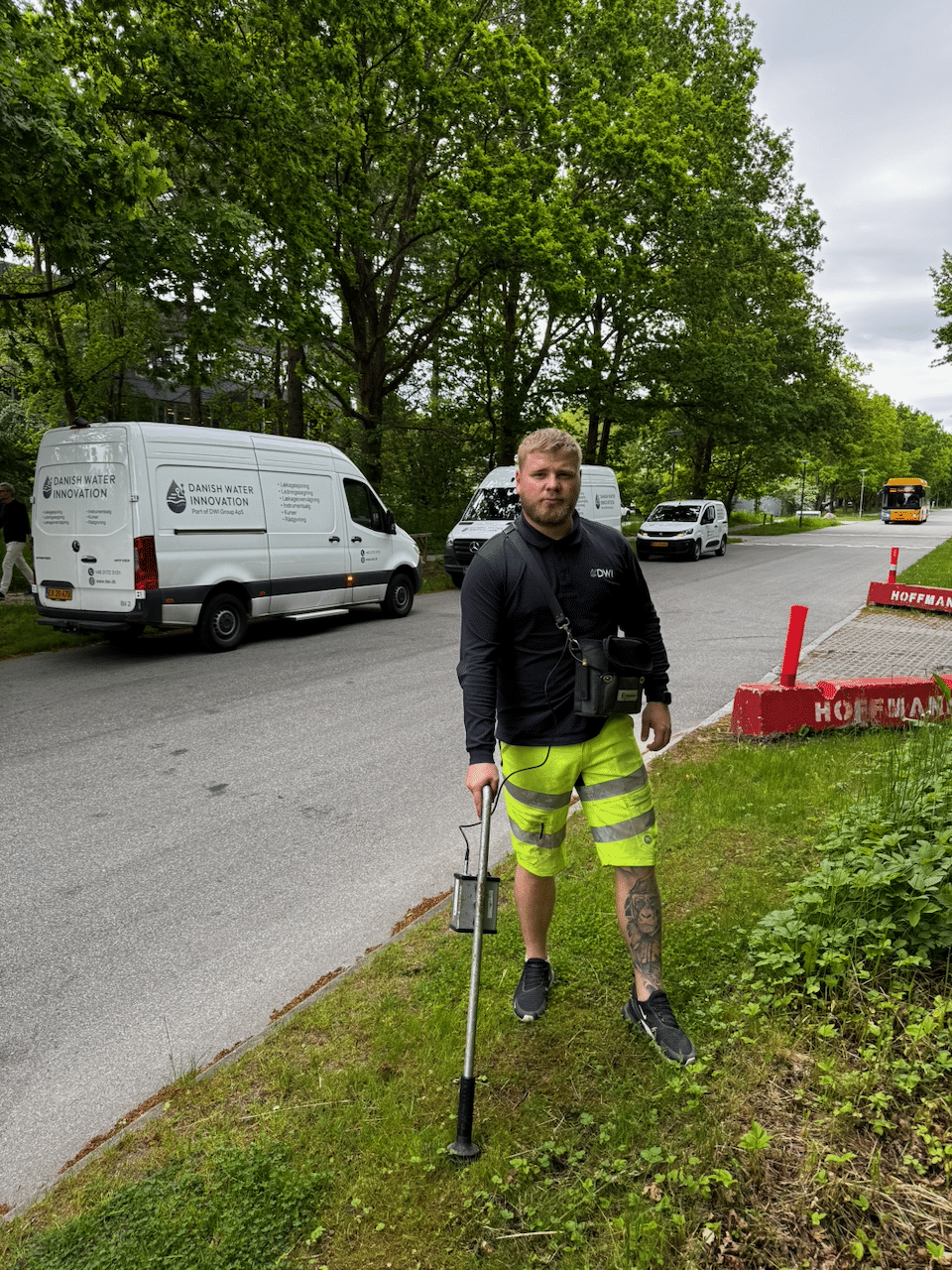
The driving distance pulls in the same direction when it comes to equipment. With kilometers of road between the villages, it becomes difficult to request an operator for each individual suspicion, and therefore some waterworks here have search equipment on site themselves, purchased or leased with service. If the operator has taken a basic course, the first demarcation can be made the same day the suspicion arises, and we are called out to the sections where more than a listening is needed.
Leak detection on Lolland-Falster in stages over several years
Few water utilities have the budget to review the entire network at once, and it is rarely necessary. We divide the network into stages and agree with you which one will be taken first. We document each stage so thoroughly that next year's review can begin where the previous one left off.
The stages are also a way to get a handle on a network that no one has had a comprehensive overview of for many years. After a few seasons, there is a description of sections and leaks found, which can be used when pipe replacements are to be prioritized and included in an investment plan.
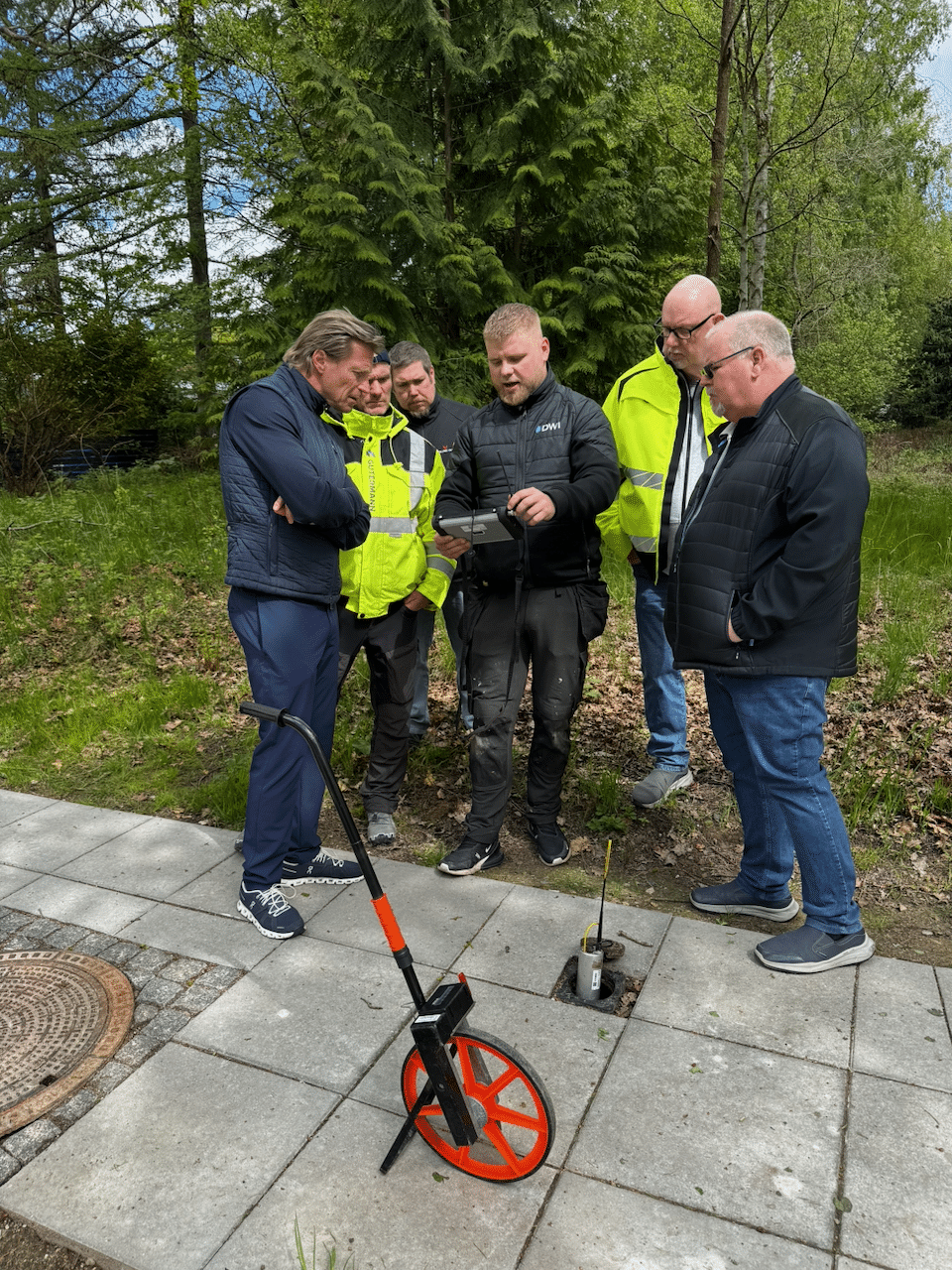
Yes. We put tracer gas on the pipe and measure along the pipe. The gas can only come from the pipe, then we will find it, if the water is drinking water. If we don't, the source must be found outside the pipe.
In the calculation, yes. The same leak is distributed over fewer settled cubic meters, so the water loss takes up more space than in dense buildings. However, the search itself does not become more difficult because of this.
We measure from the points at each end and narrow the distance from there. Long, straight distances are precisely the situation where correlation is strongest. If we want to get closer, we accelerate on the calculated section.
Drains and pumping operations move water around deep underground, making moisture an unreliable indication. The measurement is not affected: tracer gas determines whether the water originates from the pipe, regardless of how wet the surroundings are.
We find this by measuring in zones. We close or isolate sections via existing valves and follow where night consumption drops. This points to the section before we start looking for the hole itself.
Contact DWI
Contact us for competent advice, leak detection and pipe location for your waterworks or water supply. We also assist commercial customers and private households with professional solutions.
