
Leak detection in Helsingør
The moisture appears somewhere other than where the pipe is leaking.
The old city center of Helsingør has buildings with thick masonry structures and basements below street level, rebuilt internally several times over the years. In such structures, moisture migrates. Water from a leaking pipe can penetrate a wall core, follow a foundation or an old floor construction layer and appear as discoloration or peeling several meters from the source — perhaps a room further away, perhaps a floor below.
The consequence is that you can't go after the damage and expect to find the cause in the same place. And you can't just break up floors and walls and look. On a property worthy of preservation, every intervention has a price that is not about craftsman hours.
Leak detection in Helsingør from the inside, point by point
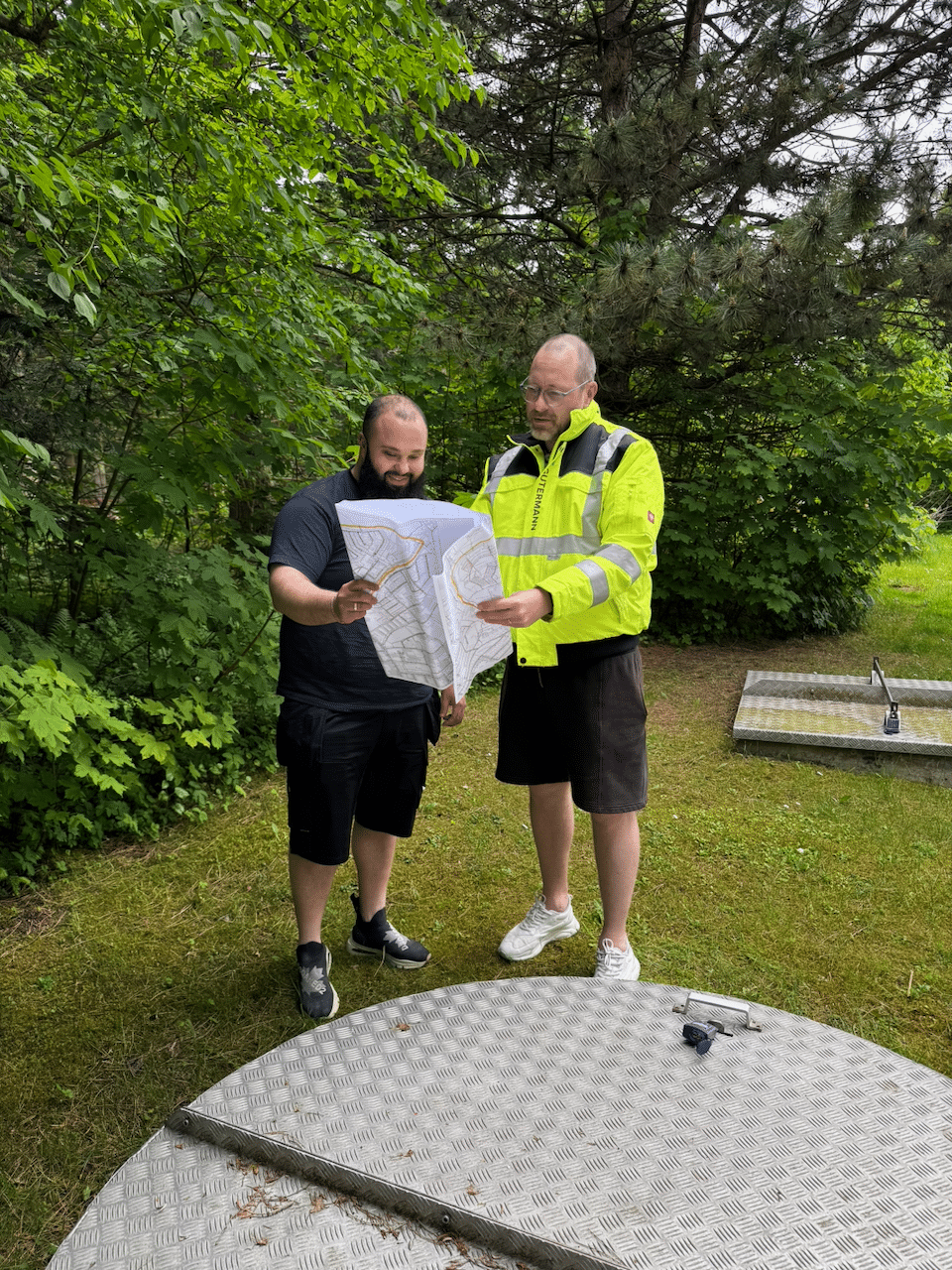
We start by defining the boundaries. If there is a meter on the installation, we read it at closed consumption, so that it is clear whether water is flowing, and approximately how much. Then the branches of the system are closed in turn — cold and hot, risers, the individual apartments — by your plumbers or heating engineer, while we follow the meter. This work alone typically removes the majority of the building from the equation.
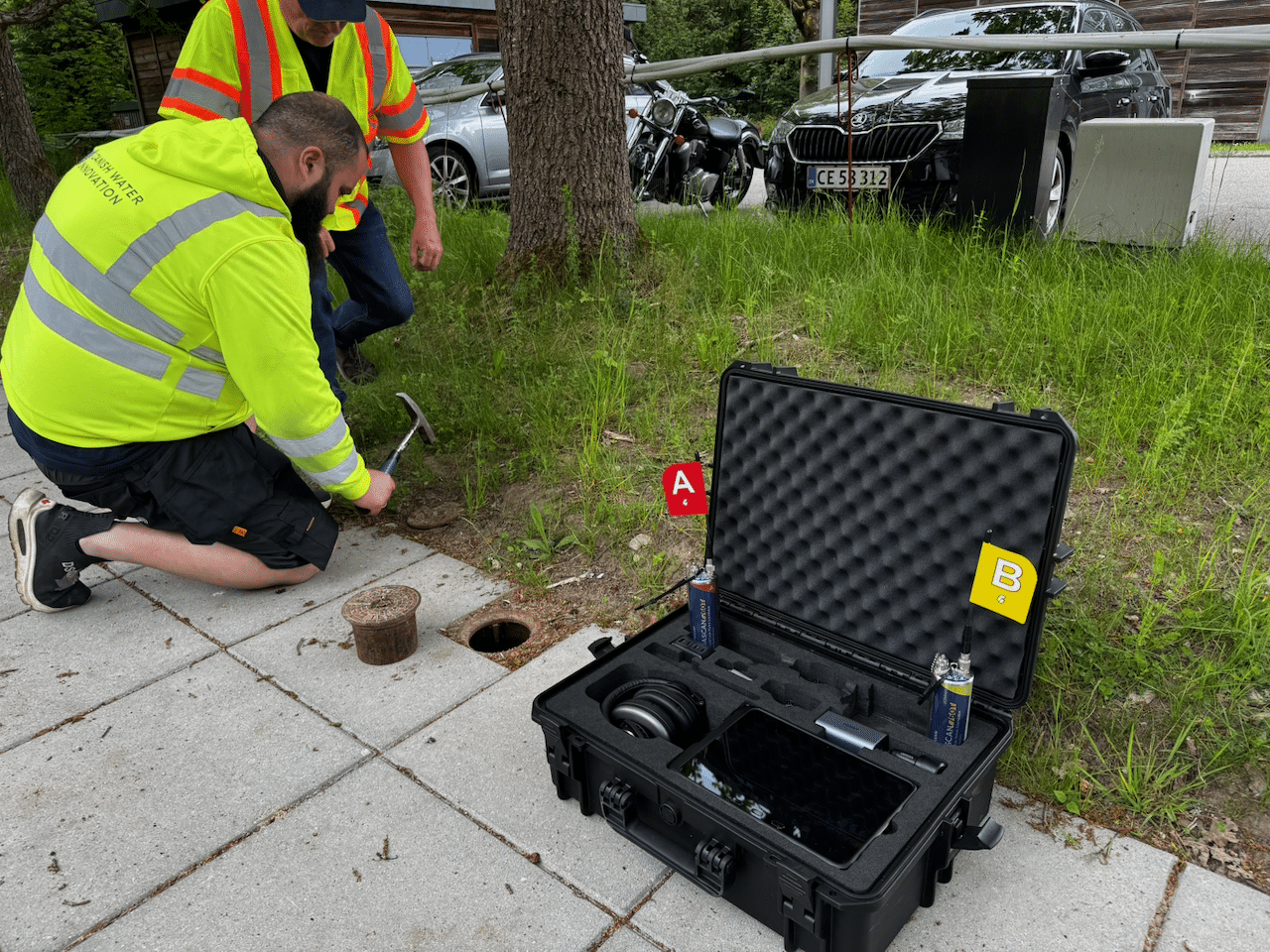
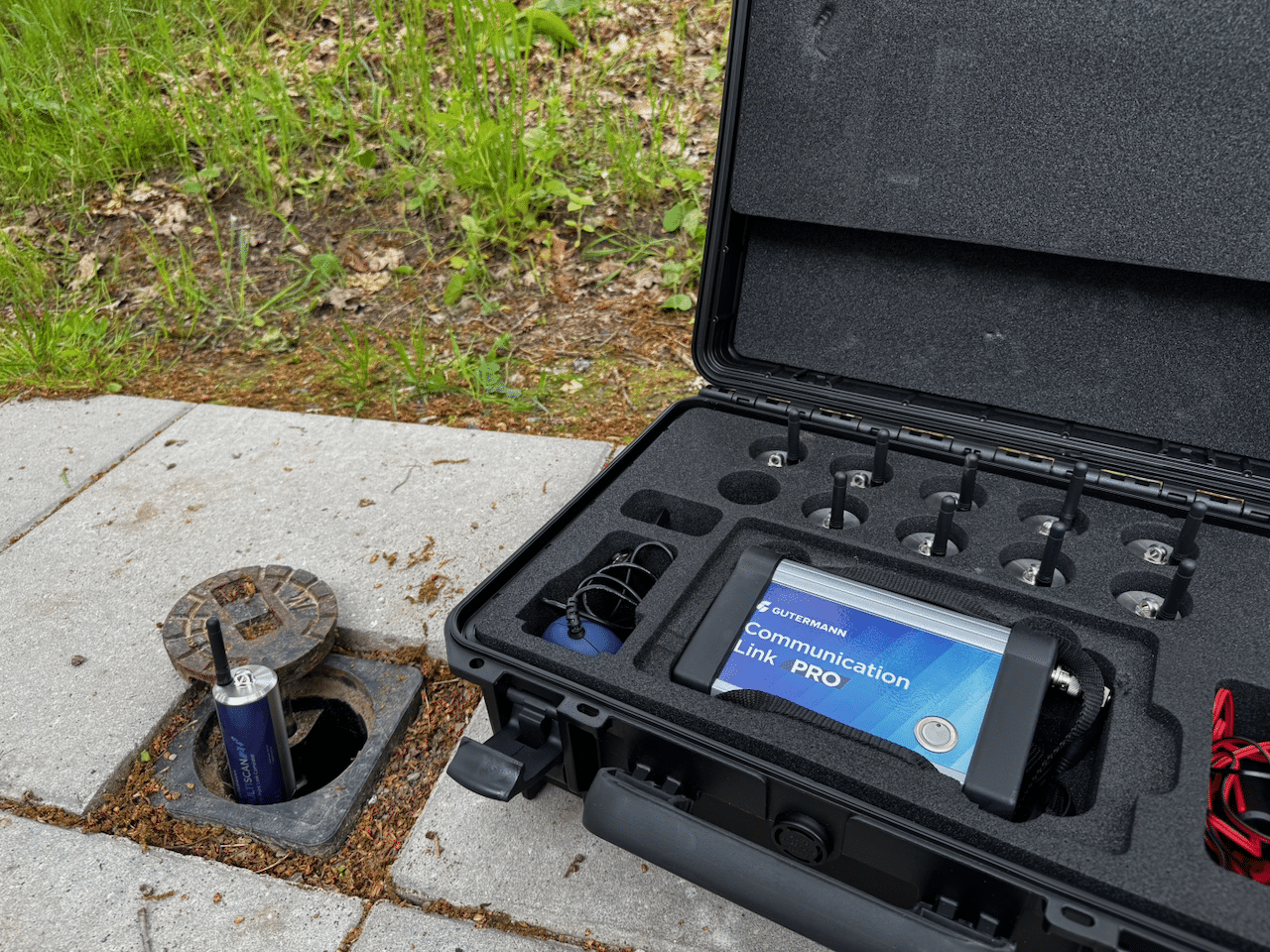
Then we measure. We listen acoustically with a microphone on the pipes and on floor and wall surfaces and find where the sound image from the leak is strongest, compared to what the installation process dictates. If the sound does not reach through the construction, we use tracer gas on the suspected string when your plumbers have prepared it.
Searching under a floor that is supposed to stay put
A parquet floor or a cast terrazzo cannot be laid back as it was. Therefore, the whole point of the measurement is to make the intervention a single hole instead of a series of test holes along a suspected pipe route.
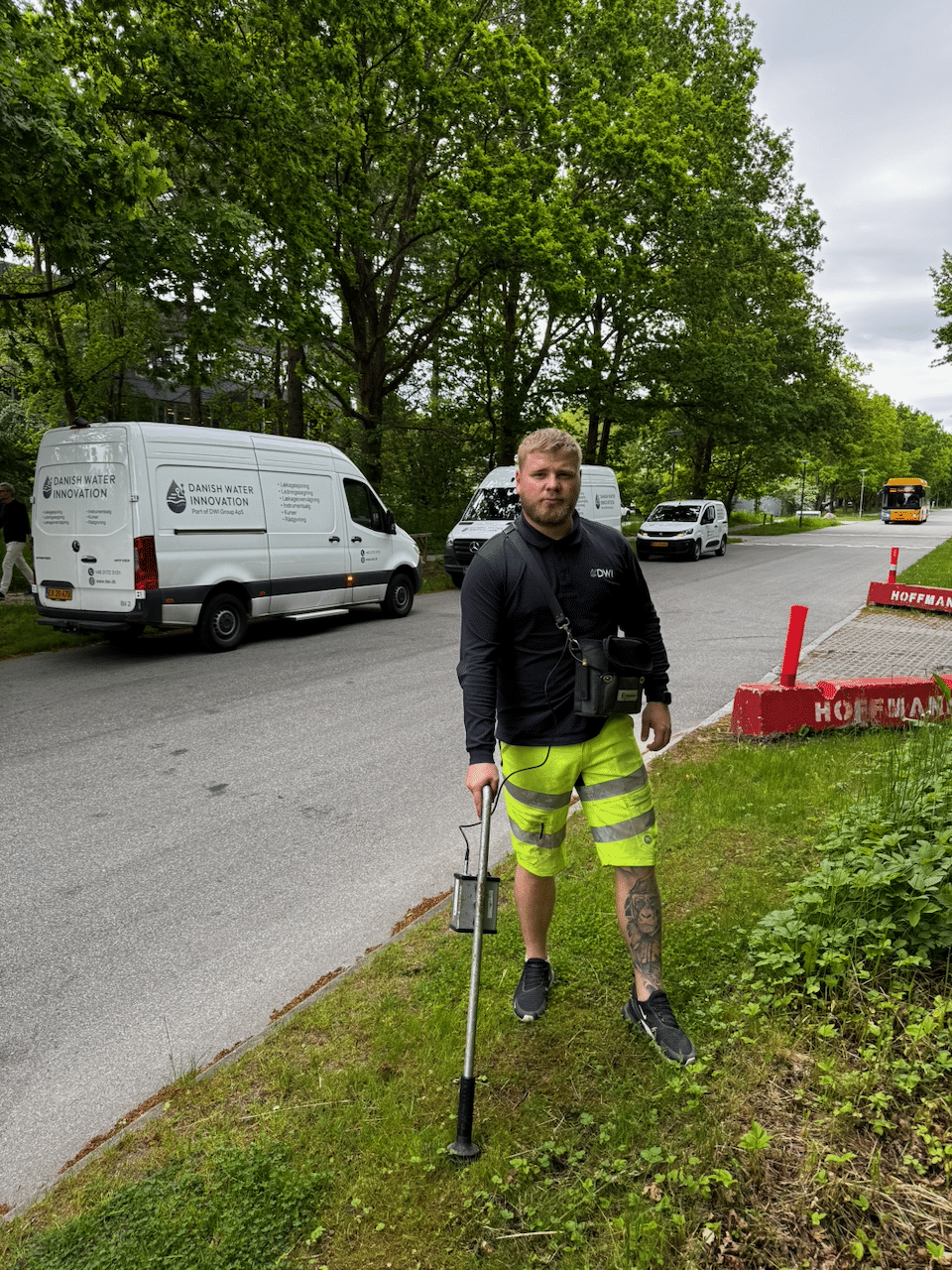
We work from above and from the outside: through joints and pipe penetrations and from the basements below, where the construction is more accessible. If there is access to a crawl space or an old installation shaft, we measure from there, because the pipe is closer to the microphone. If the installation is hidden, we make wire search and marks the actual course of the pipe before pointing to a point.
Water pipe or something else entirely
Not all moisture in an old building comes from a water pipe. It could be rising damp or a faulty drain along the foundation. A leaking drain or a roof drain that runs into the structure gives the same picture. The difference is crucial because it determines who should get involved in the case and what the insurance company can decide.
Our part of the answer is the technical one. The meter on your own installation shows, when consumption is closed, whether the system is losing water at all. If it does, we continue to search with acoustics and trace gas until the leak is located. If the meter is still, while the humidity is getting worse, it points away from the drinking water and further towards the drain or the structure itself, and then you know which professional to call in. We describe what we have measured and what the measurements rule out.
A heating engineer or a property service with several older properties in their portfolio often needs to follow a suspected installation over a few days, rather than calling every time the moisture moves in the masonry. For this, we lease and sell search equipment with service, and listening is practiced on the basic course at DWI Leak Academy, where it is known what is located where in the test track's pipes. Then the first observations can be made in the house, and we come in when the position is to be set.
Leak detection in Helsingør: how big the intervention will be
How small an intervention is required depends on how close the measurement can be and what is above the pipe. In a brick basement with access to the pipework, the position can be set so narrow that a single field is opened. Under a layer of older floor construction on an inhabited floor, it will be more, and it must be assumed that the floor must be able to be closed again with something that looks like the rest.
It is worth clarifying with the craftsman before opening, because it is often the restoration and not the repair itself that determines how big the work will be. That is why we always say how accurate the measurement is and what speaks for and against the position, so that the opening can be planned to the extent that the structure can bear.
The position is marked on site, and you receive the measurements documented with the method and the conditions that were measured - material that a property manager can forward to the board of directors, and an insurance company can process a case on.
We do not open floors and walls. We locate and document, and your plumbers carry out the work, preferably in direct dialogue with us about where the cut is best made in relation to the construction. If the break has occurred now, call the emergency number +45 70 23 98 98 — we are often there the same day.
We start with the meter at closed consumption, so it is clear whether the installation is losing water. If it is, your plumbers will close the branches one by one while we follow the meter, and then we will measure the section with acoustics and tracer gas.
By keeping the installation separate. If nothing is flowing on the meter while the moisture continues, the cause lies elsewhere — typically a drain, a drainpipe or moisture in the construction. We write this into the documentation so that it can be used further.
It depends on the construction above the pipe. The goal is one field that is opened, instead of multiple test holes, and we always provide the accuracy of the measurement so that the craftsman can plan how much to remove.
The measurements are documented with method, position and the conditions under which the measurements were made. We do not assess coverage, but we provide the technical basis on which the administrator or company can process the case.
Most often yes. We use the shut-off valves that are available and measure in short windows. If a riser needs to be closed, we agree on the time with the administrator so that the residents are notified in advance.
Contact DWI
Contact us for competent advice, leak detection and pipe location for your waterworks or water supply. We also assist commercial customers and private households with professional solutions.
