
Leak detection in Viborg
Two meters wrong on the map is two meters wrong in the field
Line data in many networks around Viborg is based on an older foundation: paper maps, hand-drawn sketches from a construction period and knowledge held by people who have retired. Digitization has moved the lines into a system, but it has not made them more accurate than they were.
The consequence becomes apparent when work is required. If the pipe is two meters from the line, you listen in the wrong place and conclude that there is nothing — or the excavator is put down next to it.
Lead search as an independent task
We are making wire search as a service in itself, without there having to be any suspicion of a leak. The route is traced in the field and marked on the terrain, so that it can be measured and entered into your own pipeline data.
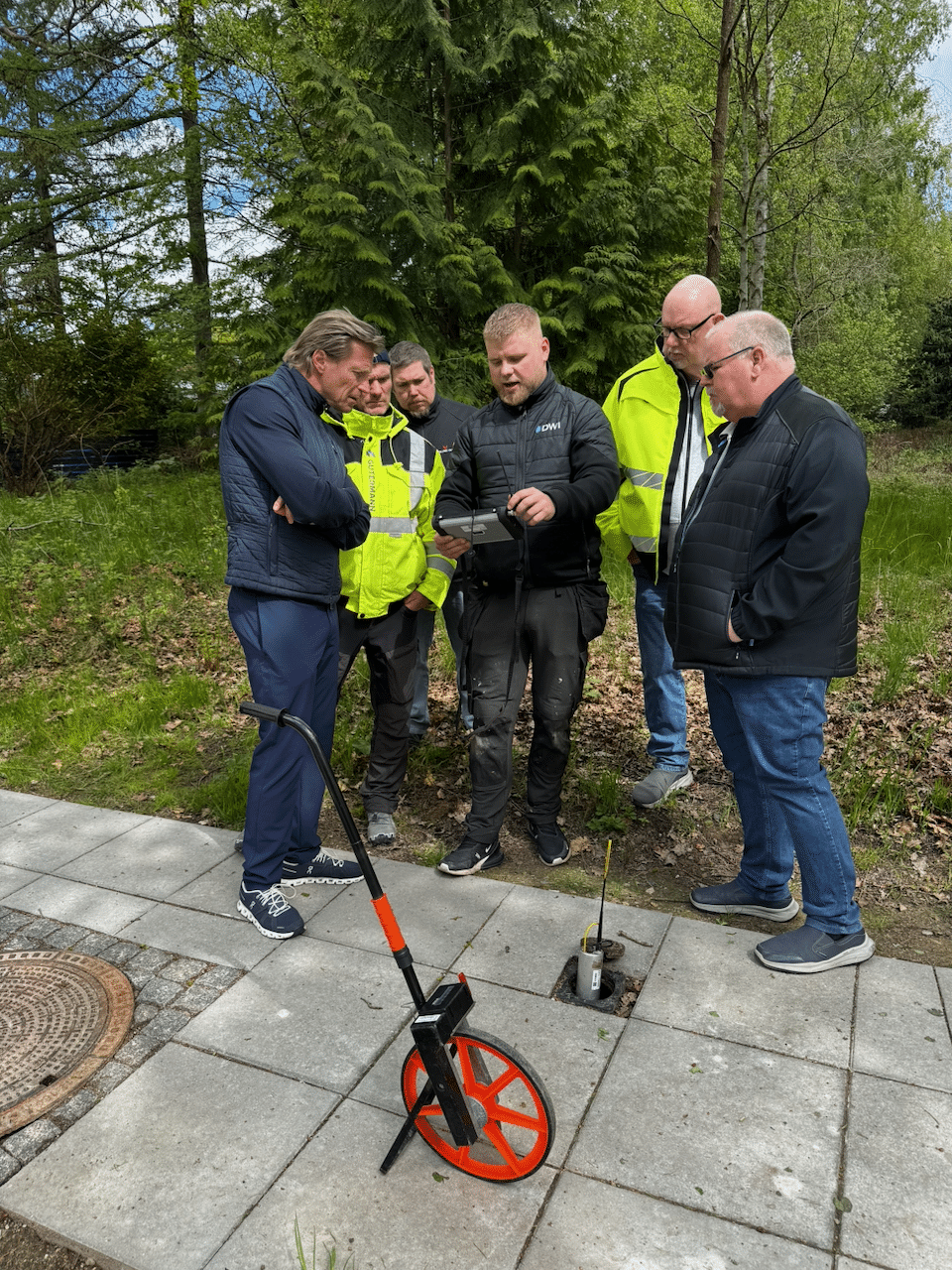
The tracing is based on the wells and valves that are accessible. We put a signal on the line where it can be done and follow the progress along the route. The marking is made with spray or with sticks, depending on whether the excavation is to be done next week or the surveying is to be done next month.
The task typically comes from two places. Either an excavation needs to be planned close to a known pipeline, or a network needs to have its map material put in order before a renovation plan is drawn up. Both parts are made easier by knowing the process before ordering machinery.
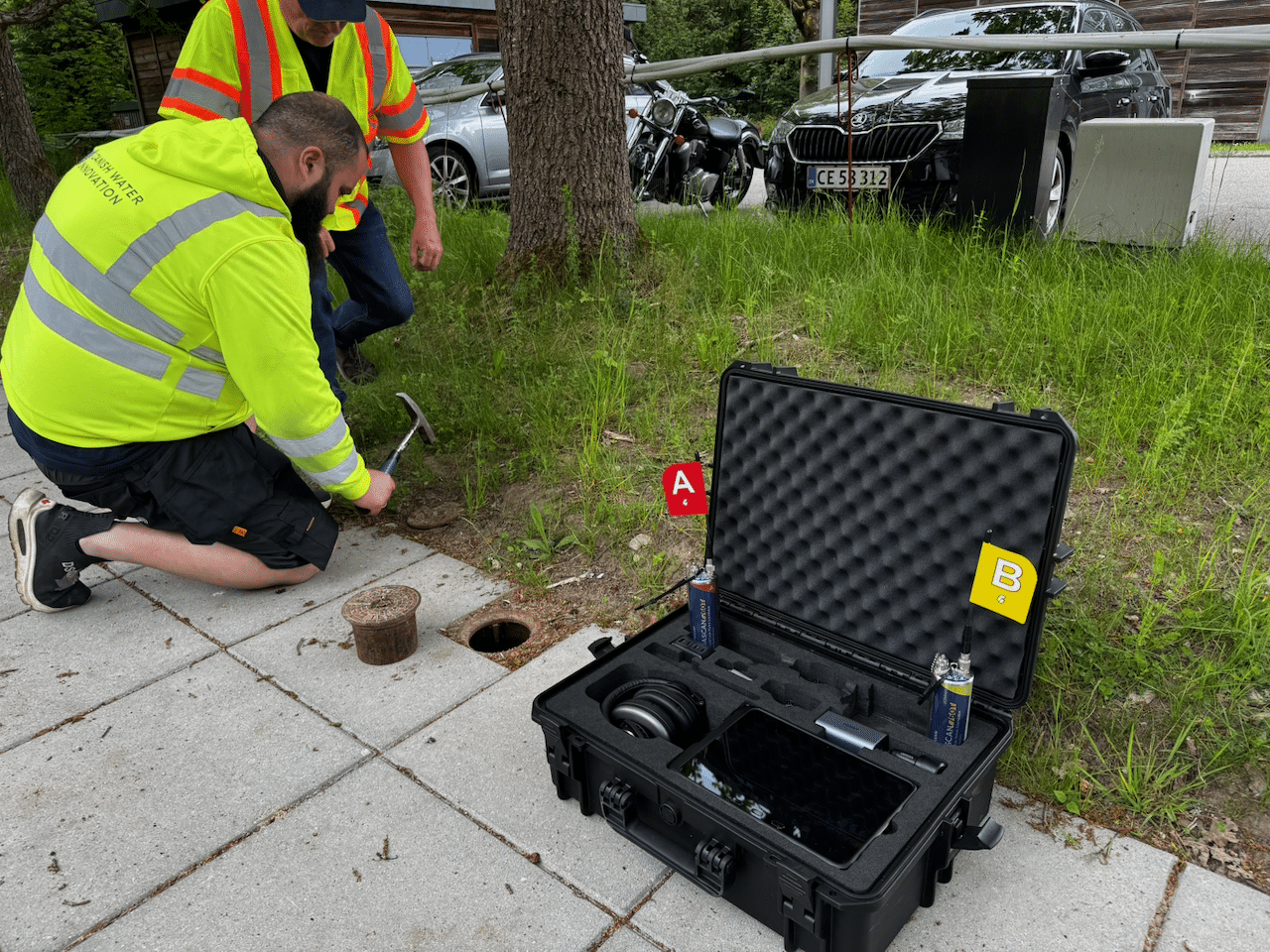
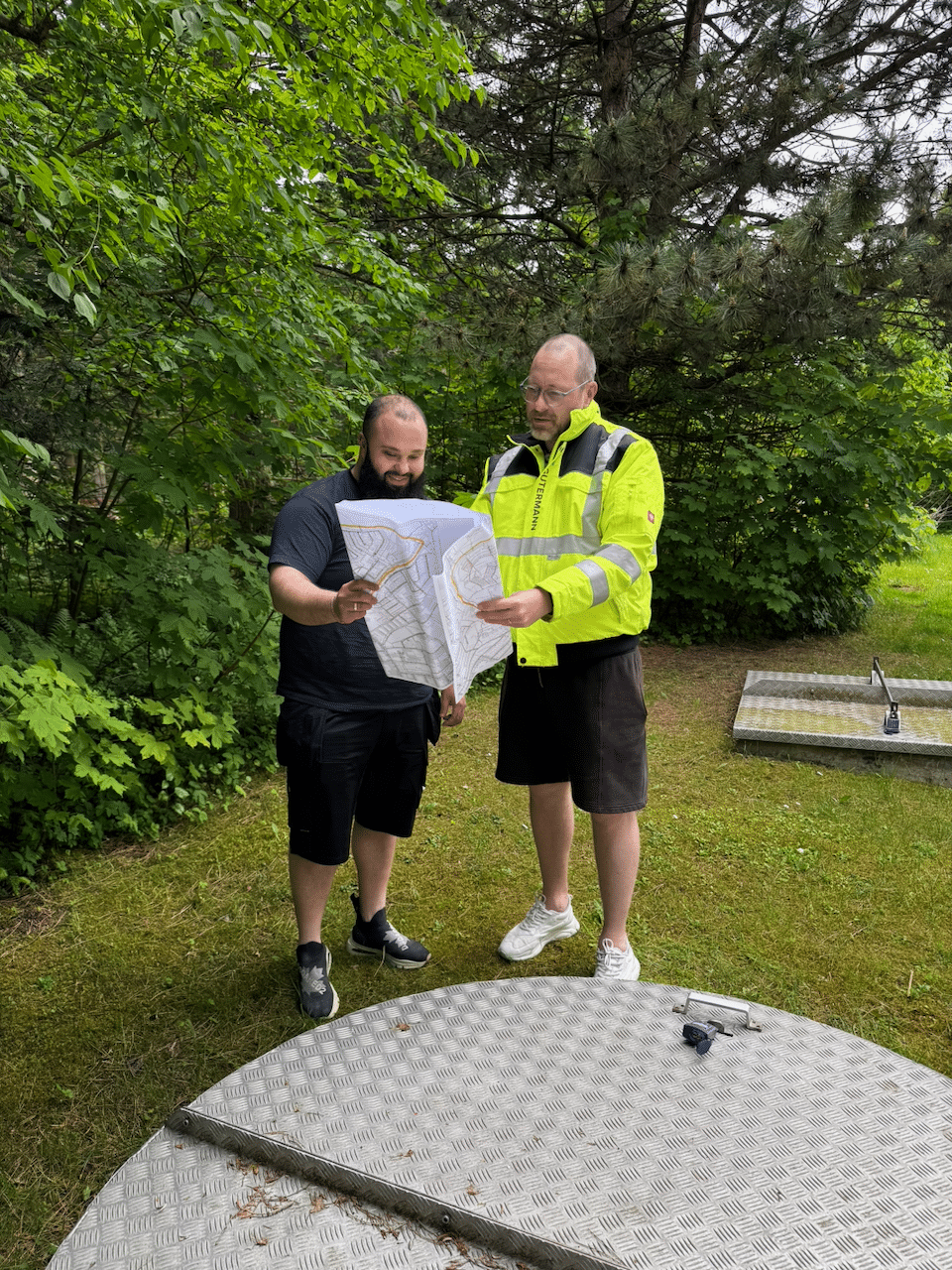
Wires that are not on any map
The most undocumented stretches are those that never entered a system. A supply line that was shortened during an expansion, or a plug that was moved during a renovation, without anyone correcting the drawing afterwards.
If there is plastic without a search wire, it requires a different approach than a metal wire, and we clarify this before we come, so that you do not pay for a visit that cannot be carried out. If there are two sets of map material that disagree about the same route, we trace it in the field and decide there. The measured route is what applies afterwards.
Operations departments that already monitor the buildings' other systems are often surprised that the water pipes are running blindly. They don't need to: Both individual measurements and permanent monitoring can be integrated into existing operations.
Leak detection in Viborg with data that lasts
When we are finished, you will receive the markings on the terrain and documentation of what has been measured and tracked. If a leak is found, the location is there, and your contractor or plumbers will take care of the repair — DWI A / S does not dig and repair itself.
Once a route has been traced, it can be measured and aligned in your system, and the next time the starting point is different. This is the part that keeps paying off: a route traced once and written in will not need to be found again in three years when the next task is on the same path.
Log in to the individual properties
Branch lines are the most poorly documented part of almost all networks. They have been laid over many years, often by different contractors, and they are rarely mapped with the same care as the main line.
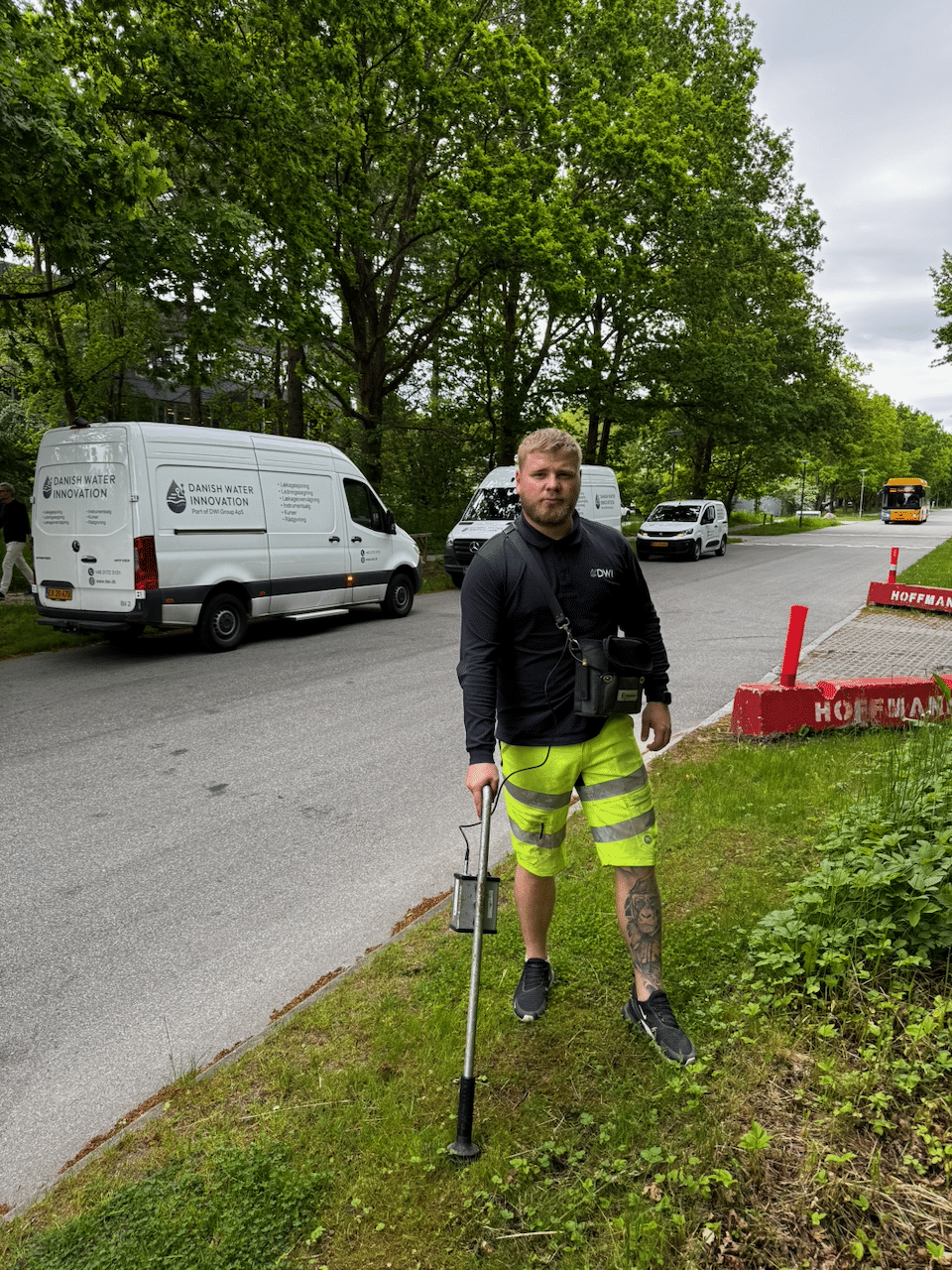
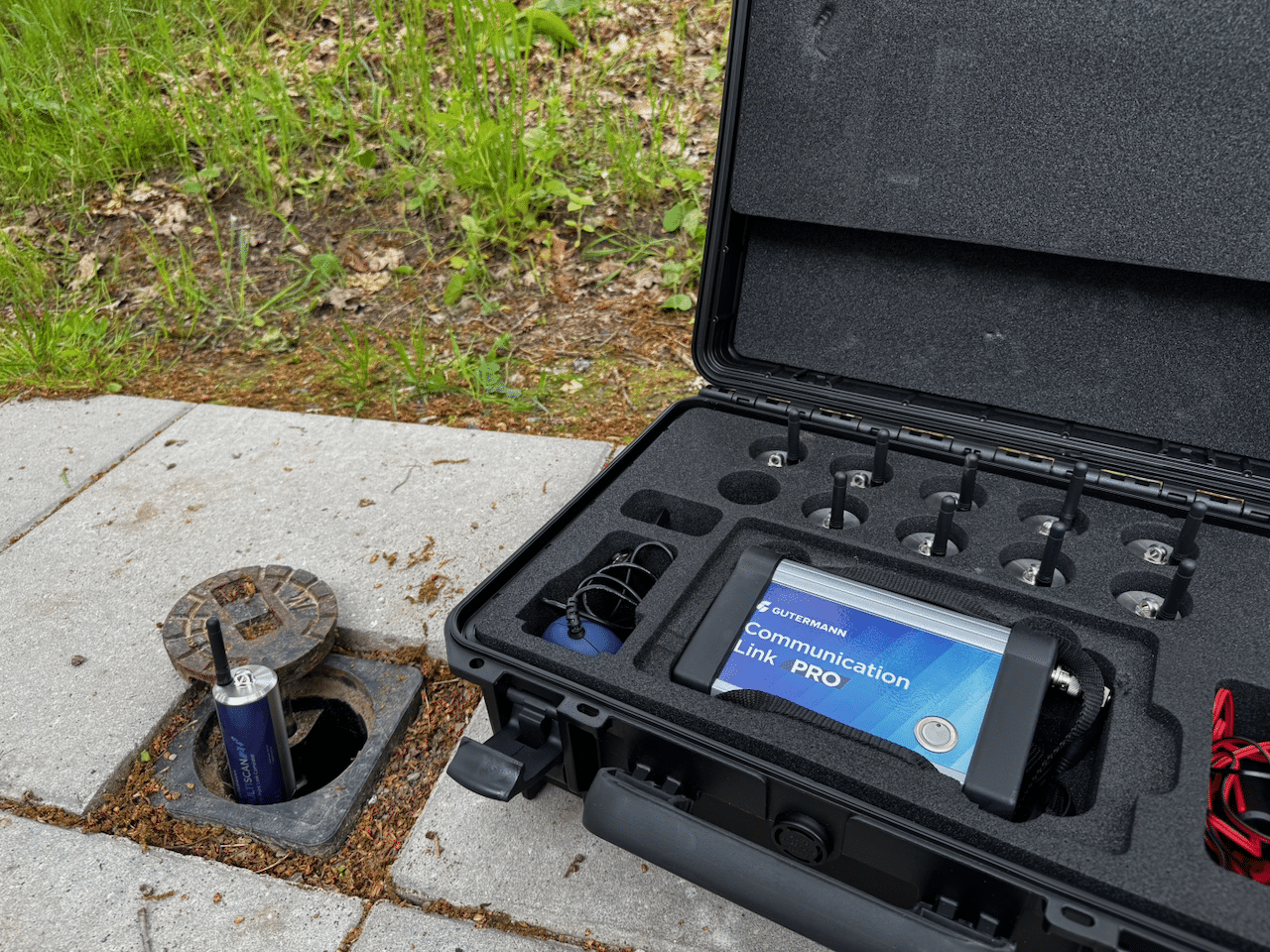
We trace connections to individual properties and mark where they leave the main pipe and where they enter. For a housing association or property manager, this is often the information that is missing when consumption has increased and no one knows where the pipe runs under the yard area.
We also track the connectors that have been cut or plugged during a previous rebuild. A dead end can sit with pressure on for years without anyone having it on a card.
Leak detection in Viborg often begins with finding the pipe.
An acoustic measurement is only as good as the assumption of where the pipe is located, and a tracer gas measurement must be sent into the exact section where the suspicion applies. Neither method can do without a position.
That's why we often put the wire search first when we come to a network with uncertain map material. It takes time at the beginning and saves time in everything that comes after — and it makes a measurement without a finding something you can trust, because you know that the measurement was taken in the right place. If your own people need to be able to detect a course themselves, we sell and lease professional search equipment with service, and the DWI Leak Academy holds basic course in pipeline and leak detection in Hørsholm.
Often yes. We trace the route in the field and mark it on the terrain. Tell us in advance what you know about the material and age, and we will assess whether the route can be traced before we set out.
Yes. We mark the course in the terrain so that it can be measured, and the documentation for the tracking is included. From there, the position can be entered with you and used the next time you need to dig or measure.
We do this regularly. The connectors are typically the weakest documented part of the network, and we mark both the exit from the main line and the entry at the building.
You let us trace the route in the field. Then the measured route becomes decisive, and the disagreement between the two maps is no longer something for someone to decide at the edge of the trench.
Contact DWI
Contact us for competent advice, leak detection and pipe location for your waterworks or water supply. We also assist commercial customers and private households with professional solutions.
