
Leak detection in West Jutland
The line to the irrigation system is not on any map.
West Jutland agriculture has long underground pipes leading to irrigation systems, farm buildings and distant paddocks. One section was laid when the system was established. Another was re-laid when the engine house was added, by an owner who has since sold the farm. None of them are marked anywhere, and the pipes that are marked are not always located where the drawing says.
That's why a task out here rarely begins with listening. It begins with finding the pipe. If we don't know the process, we're listening in the wrong place, and a measurement without findings means nothing.
Wire tracing is the first step
We trace pipelines and branch lines and mark the route in the terrain so that it can be drawn in later. On older plastic pipelines without tracer wire, ordinary tracing is not enough, and here tracer gas can find the route because the gas seeks up through the ground above the pipe.
The search takes time, but it is rarely wasted. We often find outlets that no one remembered: an old branch pipe to a demolished building or a outlet to a watering place in a paddock that is no longer used. Such an outlet can remain under pressure for decades, losing water all the way, without anyone having had a reason to close it.
The result is a drawing you can use again. The next time a foundation needs to be dug or a cable laid, the machine operator will know what lies underneath. And the next time consumption increases inexplicably, we can go straight to measuring.
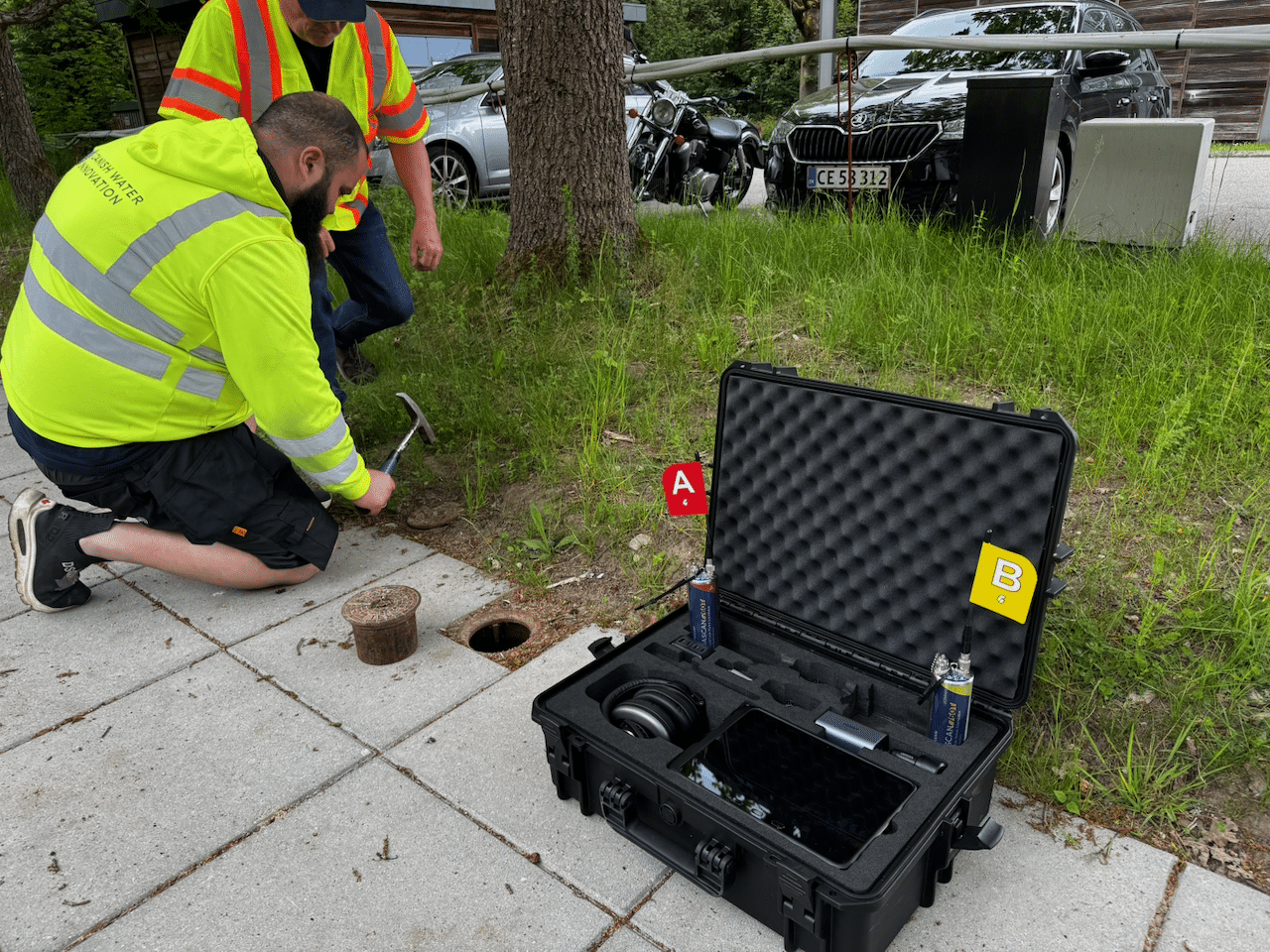
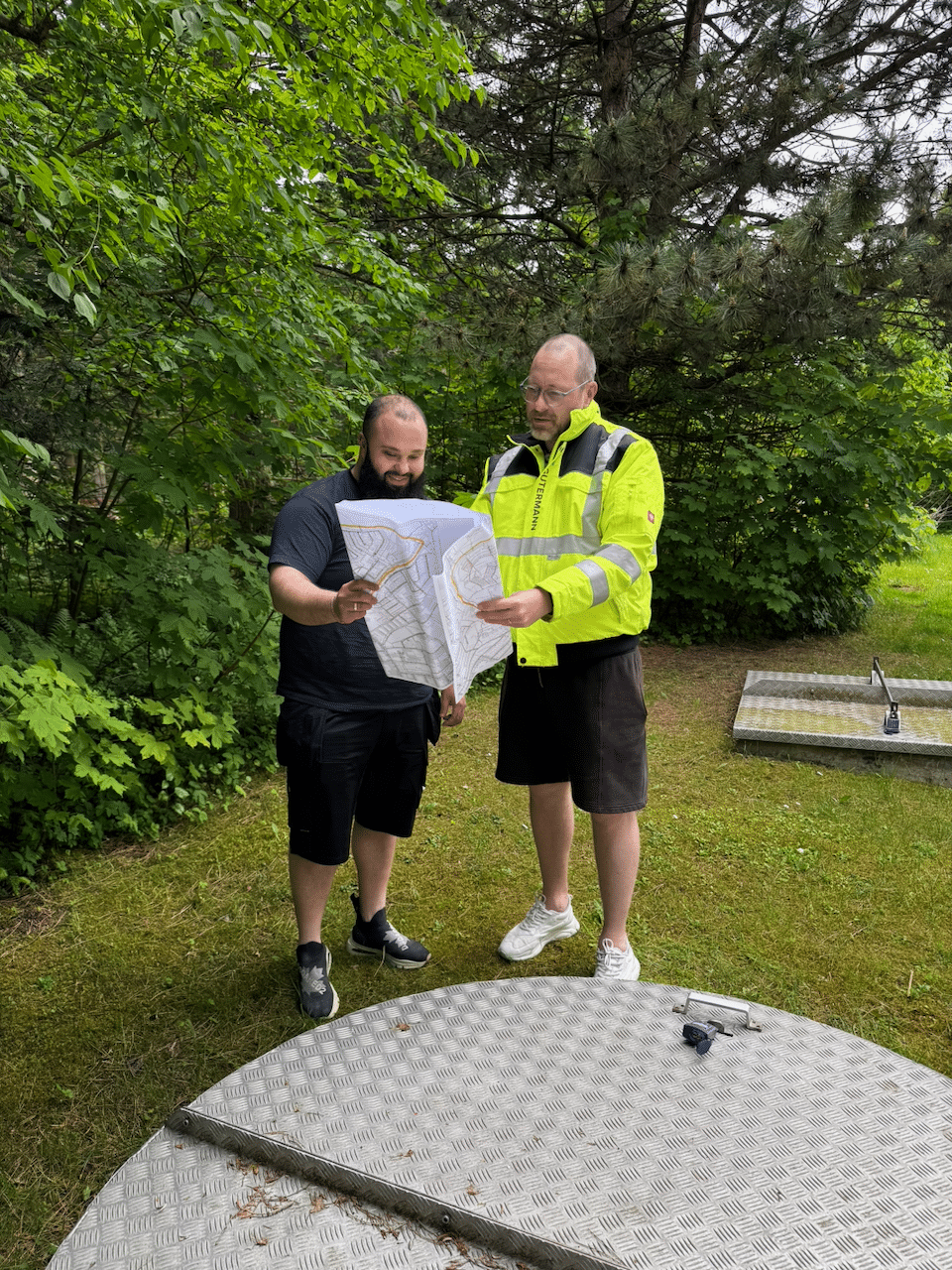
Leak detection in West Jutland on long field irrigation pipes
The loss is felt most when the system is running. A hole that doesn't matter much in February costs pressure and pump hours in the middle of the irrigation season, when water has to be delivered to the cannon every day. The pump runs longer for the same result, and the pressure drops at the far end, long before anyone thinks of a leak.
The season also has a technical side. When the system is in operation, there is pressure on the pipe, and a leak produces a measurable sound image. We therefore take the measurements when the operation provides the best conditions — sometimes during irrigation, other times during a break when consumption is not noisy.
Therefore, the timing is worth considering. If you call in March, the progress can be tracked and the sections measured while the system is quiet, and a repair can be planned rather than having to rush through in July. If you have already lost pressure in the middle of the season, we will come out and narrow it down so that the excavation work is kept to one place.
Leak detection in West Jutland when the field is sown
A crop in the field does not change the method, but it does change the planning. We travel in the tramlines and in the tracks between the rows, and we place the probe where we can reach it without trampling the crop. If the conditions are so bad that the result is unreliable, we say so, rather than handing in a measurement that cannot be used.
Once the point is found, it is marked in the terrain, and your contractor can dig there instead of following the pipe. DWI A / S We do not dig or repair, but we are happy to give the measurements directly to the person who will be doing the work. In the event of an emergency break during the irrigation season, we often respond the same day; the emergency telephone number is +45 70 23 98 98.
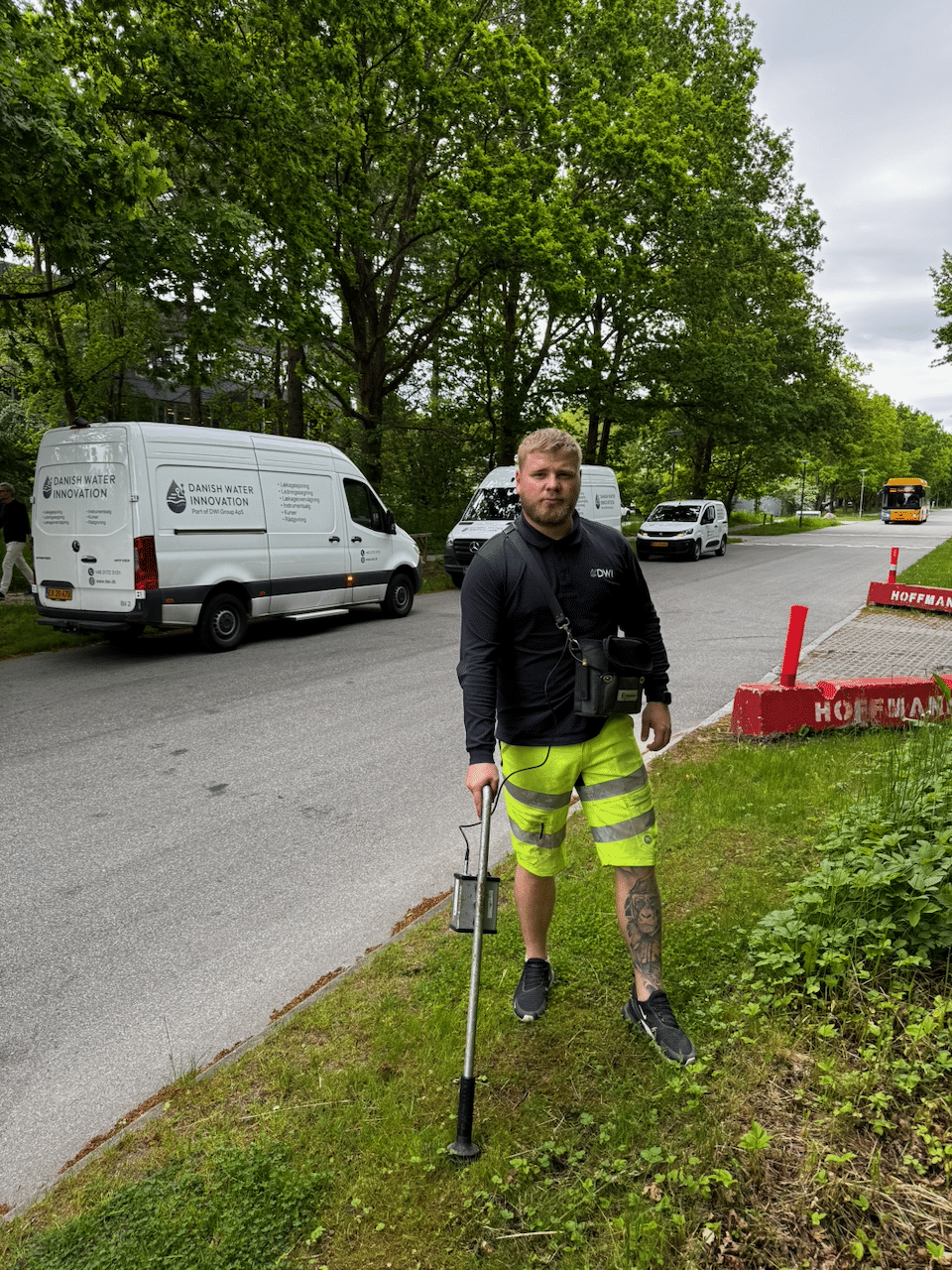
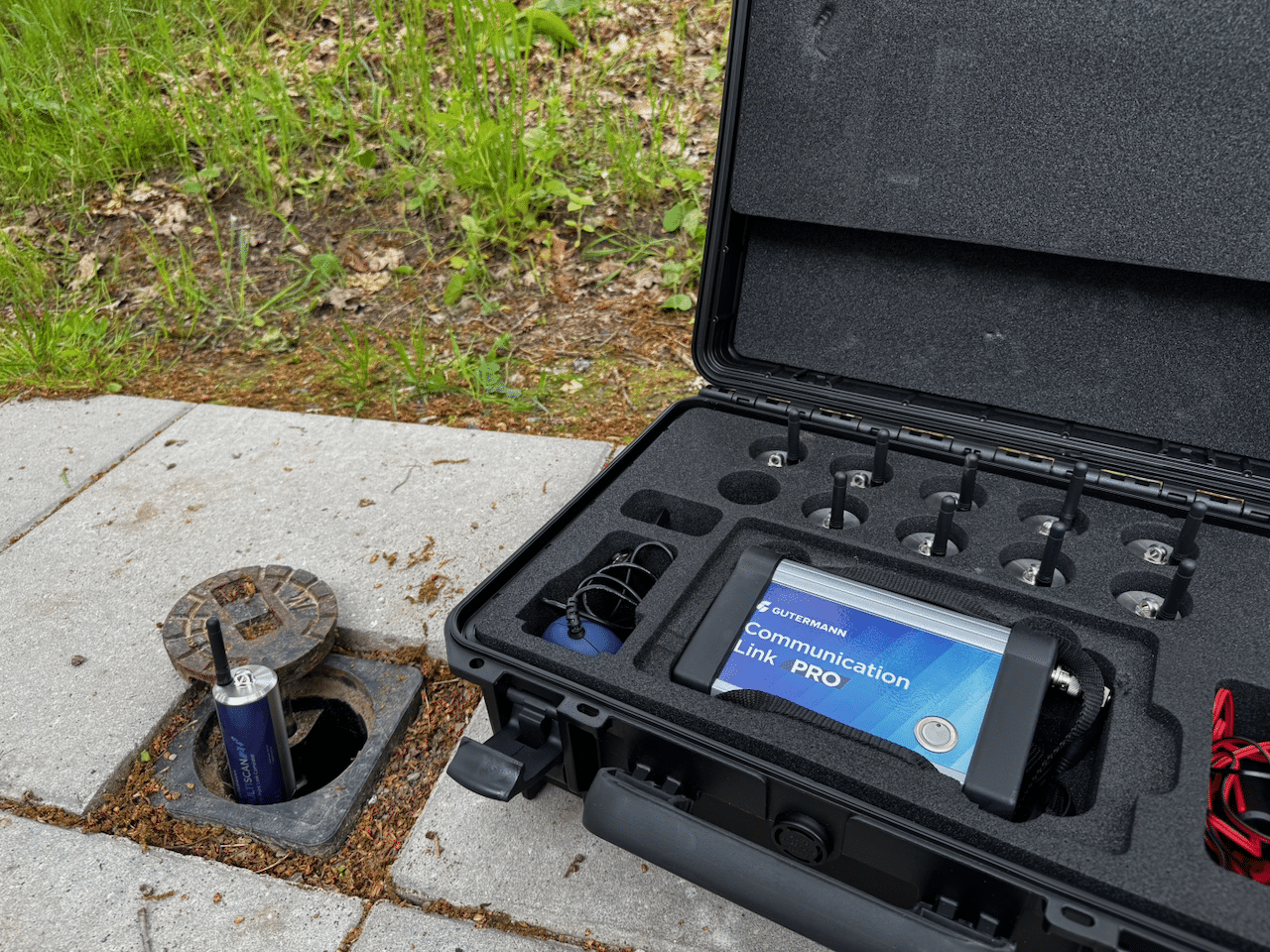
When you need to check a wire yourself between two visits
If you have a large network of your own cables, it may make sense to be able to do the initial check yourself. Search equipment can be purchased or leased from us with service, and as an authorized distributor we are responsible for, among other things: Gutermann.
If people want to be able to use it too, hold the DWI Leak Academy basic course in wiring and leak detection at DTU Science Park in Hørsholm. There is theory about the sound image and about choosing a method, and there are practical exercises on the test track, where you look for pipes with known faults.
Yes, it's a common task out here. We trace the course and mark it in the terrain so you can draw it in. On plastic pipes without tracer wire, we typically use tracer gas to bring out the course.
Usually not. We walk and use tramlines where there are any. If the crop is tall enough to make the actual scanning unreliable, we say so and then we agree on a time that will give a usable result.
Yes, and it happens regularly. We follow the pipes that are under pressure and along the way we come across outlets to buildings and watering points that are no longer in use. A forgotten outlet under pressure is one of the places where water can disappear for years.
From the meter or boundary line and onto the property, the pipe is usually the owner's responsibility. This is also where many losses occur because no one is supervising. If you are in doubt about the boundary, your water supply company can inform you before we arrive.
Read the meter at a time when nothing is using water, and read again after a few hours. Close off the outlets you can, and repeat. This often tells you whether the loss is before or after the building, and we spend less time on site.
Contact DWI
Contact us for competent advice, leak detection and pipe location for your waterworks or water supply. We also assist commercial customers and private households with professional solutions.
