
Leak detection in South Zealand
The water is accounted for collectively and measured separately.
A municipality or a large property portfolio in South Zealand has water at addresses spread across the entire geography. Schools, halls and care centers each have their own meter and usage pattern, and the readings end up as one item in the budget.
A loss at one address disappears into the total, and no single employee has the full picture. It shows up as a reading that doesn't match the building's usage — a consumption that doesn't fall during the summer holidays, or a nighttime consumption at an address where there's no one at night.
Leak detection in South Zealand begins with meter data
Before anyone goes out with equipment, we look at the numbers. The nighttime consumption and the difference between addresses with the same function say a lot about where the loss is and how big it is. This makes the visit shorter because we know which address we are coming for.
We need some material from you first. Readings over a period of time from the addresses in question, and an overview of where the meter wells are located. If the meters are remotely read, hourly data is the best starting point, because a constant base consumption at night can be read directly from the curve. Each time an address can be excluded in this way, the next measurement becomes more secure.
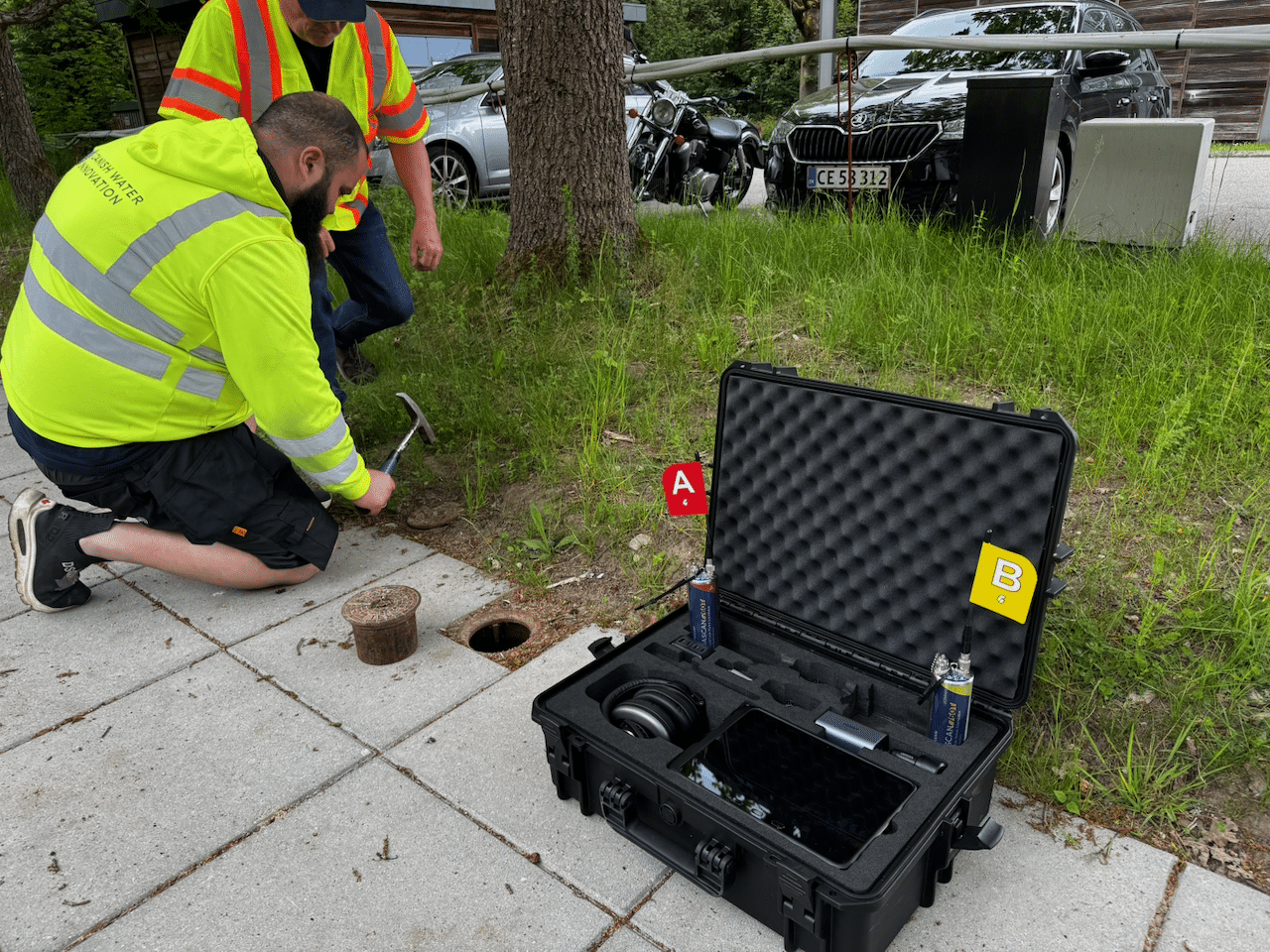
Then we demarcate on site. By measuring on plugs and valves, a single building can be separated from the rest of the address, and one wing can be separated from another. Only when the distance is short enough do we go after the position — acoustically where the material allows it, and with tracer gas where the sound does not reach.
Leak detection in South Zealand on outdoor areas and irrigation systems
Large outdoor areas have long connections and water mains that are only used a few weeks a year. A leak outside can go undetected for a long time because no one is close enough to notice it and because the ground absorbs the water without it showing up in the pavement.
Irrigation systems make the task more difficult because the pressure is low and the branches are many. Here we delineate with tracer gas, which does not depend on the jet making enough sound through the ground, and we take the system in sections until the point can be marked on the terrain.
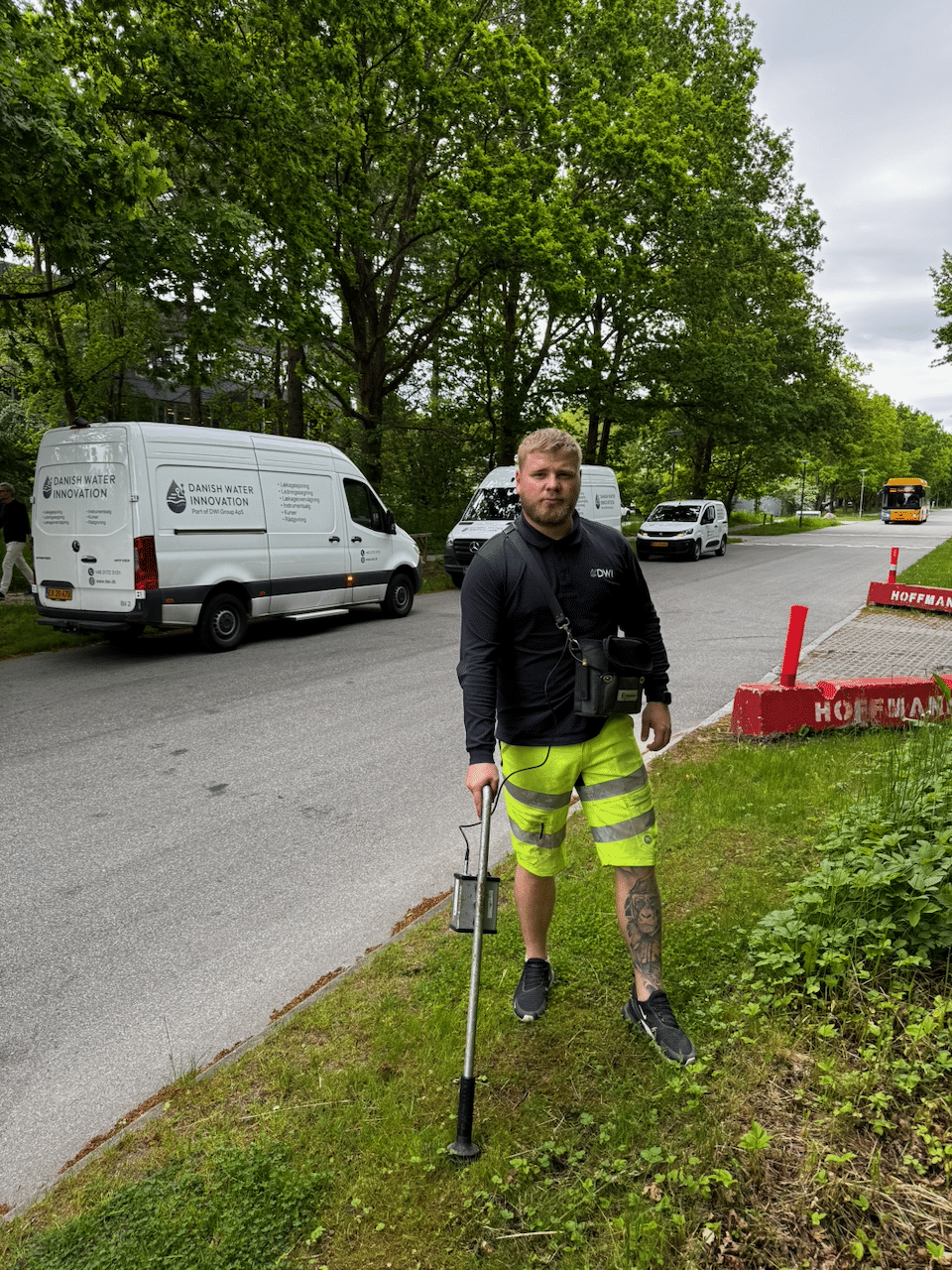
An operations department with water at dozens of addresses can advantageously carry out the first check itself, especially on areas that are only in use for part of the year. We are responsible for the sale and leasing of search equipment for this type of self-check, and a basic course At DWI Leak Academy, technical service employees practice distinguishing between a quiet sound image and one that needs to be reported. Then our visits are spent on addresses where there is something to be found.
Measurement at a school or hall in use
The work is done from the surface and from wells and valves, and there are no closures during the search. Teaching and kitchen operations can continue while we measure.
The usage pattern is a factor, however. Sound measurements are most reliable when consumption is calm, so in some buildings we measure early in the morning or after closing time. We agree this with the operations manager before the visit, so that keys and access to the technical room are in place when we arrive.
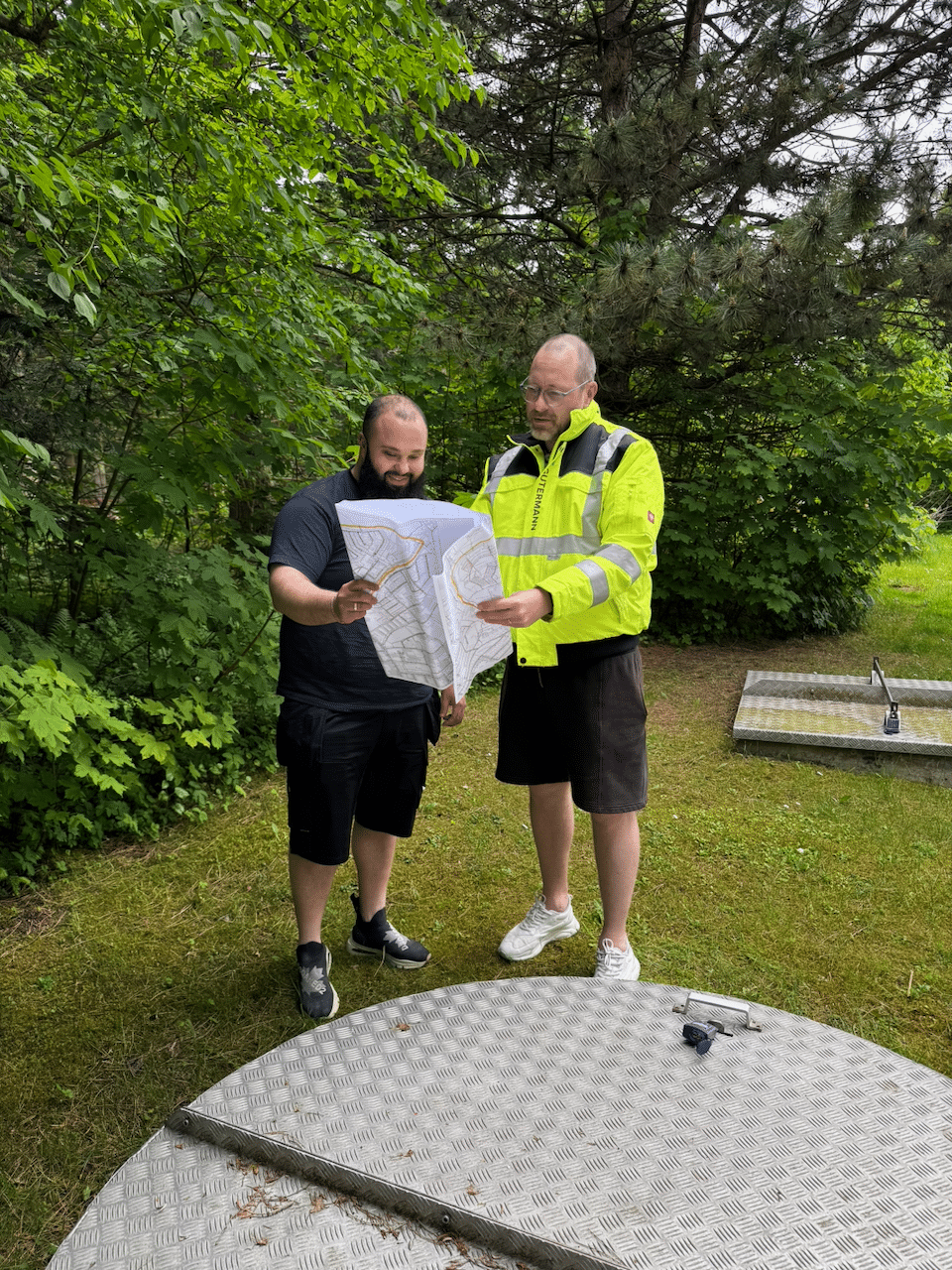
Large plots also have an internal network that no one really owns. From the meter well at the boundary and out to the individual buildings, there are pipes that neither the utility nor the property department has drawings for. This is where the task of finding the pipes begins: the route from the meter well to the building is identified and marked on the ground, and only when the connection to the hall or care center is established is there a section to measure.
Fixed measurements pointing to the address
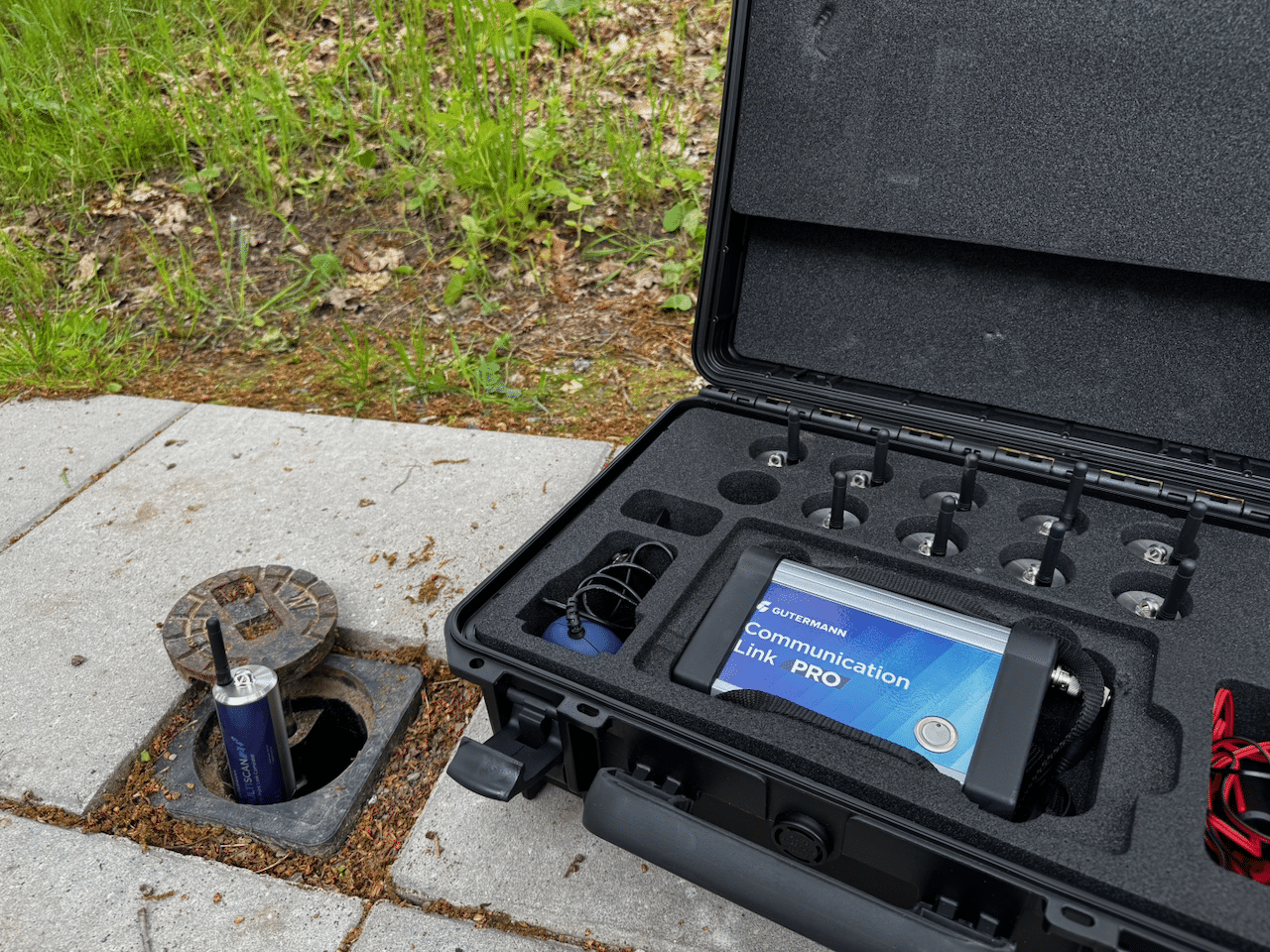
If the portfolio has water at dozens of addresses, regular monitoring is more useful than an annual round. Data loggers in the network measures around the clock and sends data to HydrantAI, which collects the measurements and automatically alerts when an address deviates from its own pattern.
Then the call is directed to the building where something is actually happening, and not to the address where someone randomly noticed a damp spot.
However, the notification must have a recipient who can act on it. We agree in advance whether the message goes to your technical department or to us, and what should happen in the event of a deviation. Otherwise, the message will be read and put away.
What the documentation is used for internally
The report has a life after the repair. It can be attached to a construction permit and saved as a basis if the same address comes up again a few years later. It also explains to finance and management why consumption is falling at that particular address.
We do not dig ourselves. The position is marked on the ground, and your plumber or contractor takes the work from there. We are happy to speak directly with them so that the operator does not have to pass on a technical description.
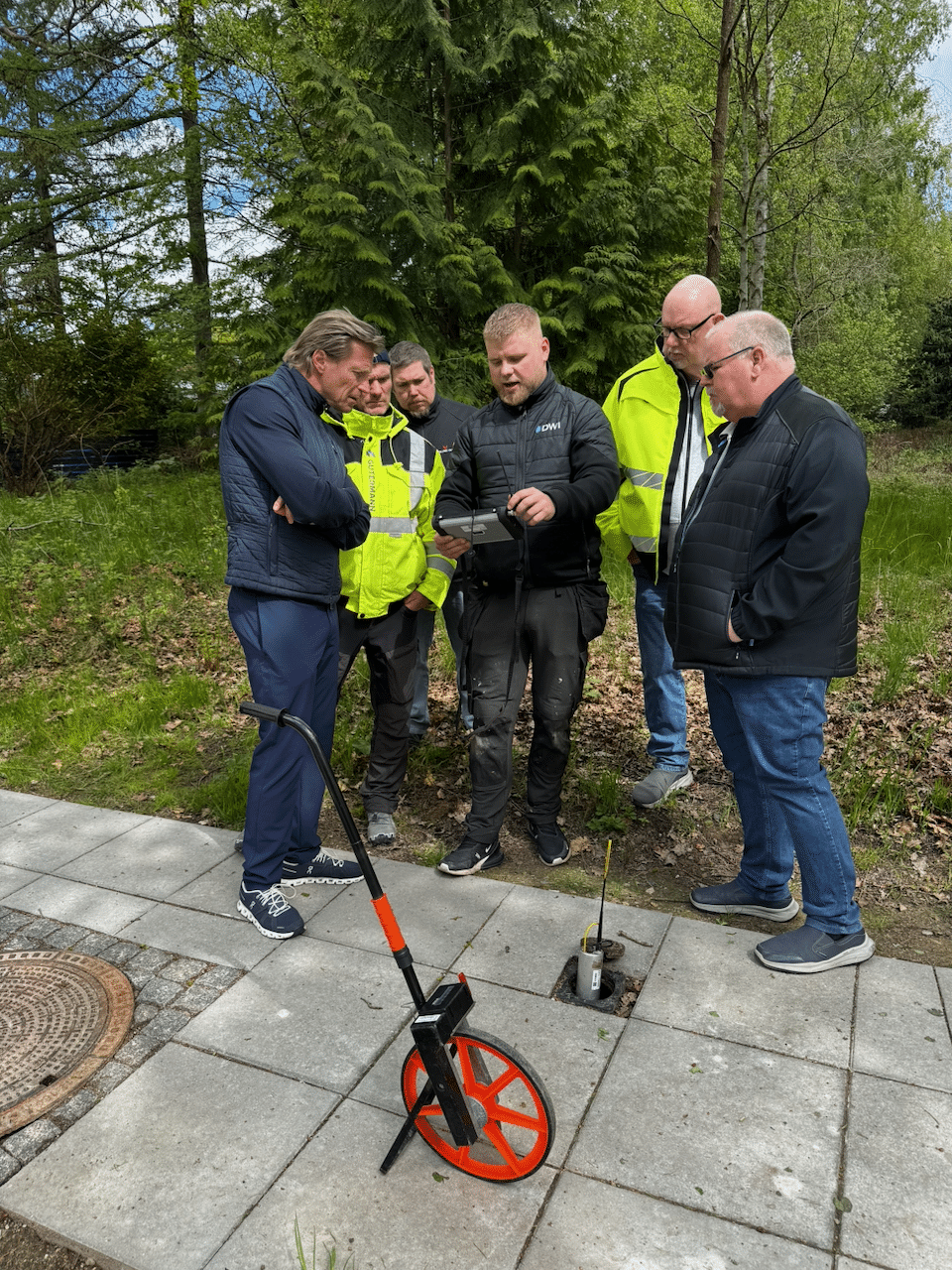
We start with meter data and compare addresses with the same function and night consumption. Once the address is identified, we delimit the site down to the building and route and find the position from there.
Yes. The work is done from the surface and from wells and valves so that operations can continue. If the sound measurements are to be completely clear, we will schedule the visit early in the morning or after closing time.
Yes. Low pressure and many branches make the sound weak, so we typically use tracer gas and delimit the system in sections until the point can be marked on the ground.
The report states where and how the measurements were made, and what position we found, with the date. It documents to finance and management what was found and why consumption is changing.
Only if technical rooms or locked areas need to be opened. Otherwise, we will handle the measurements ourselves and review the results with the operations manager afterwards.
Contact DWI
Contact us for competent advice, leak detection and pipe location for your waterworks or water supply. We also assist commercial customers and private households with professional solutions.
