
Leak detection in Silkeborg
On a PE wire, the signal disappears a few meters from the hole
If there are PE pipes in the network you are responsible for around Silkeborg, it changes what an acoustic measurement can be used for. The plastic pipe has many advantages in the ground and one decisive disadvantage for someone who needs to find a leak: the pipe wall is highly absorbent.
A leak that would be detectable far from the hole in a cast iron pipe may be inaudible a few meters away in plastic. You can walk over the leak with a ground microphone and get no response. It is not the equipment that is failing, it is the material that is not conducting the signal.
Why listening alone is not enough on a plastic net
The noise from a leak occurs at the opening in the pipe and propagates in two ways: through the pipe wall itself and through the soil around it. On metal, the pipe wall carries the energy a long way, and a fixture well away can therefore be used as a listening point.
Plastic absorbs the energy instead of passing it on. What remains after a few meters is low in frequency and overlaps with the noise that already exists in a city: traffic, pumps and installations in the houses. You look for a weak signal in the frequency range where the surroundings are noisiest.
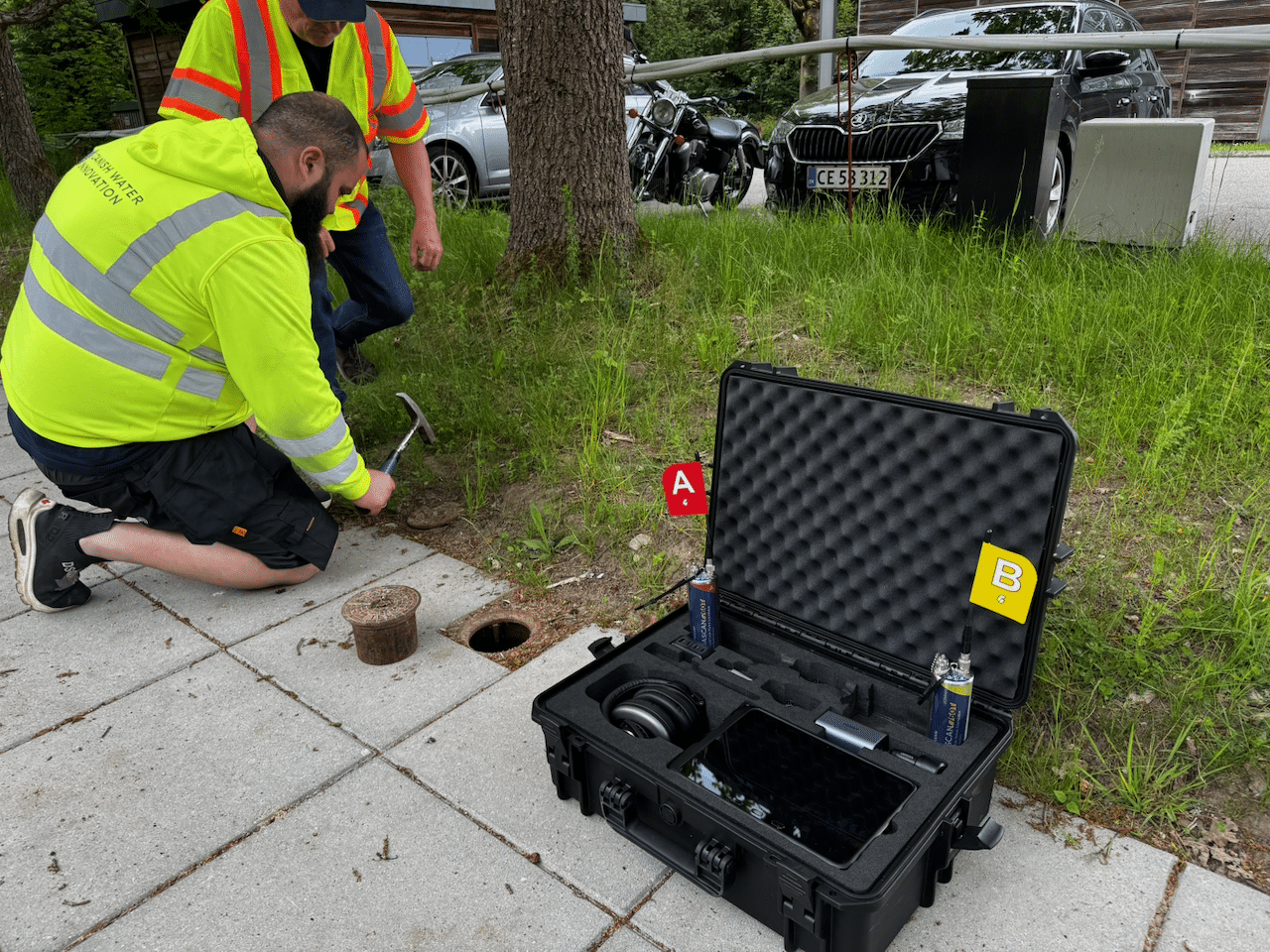
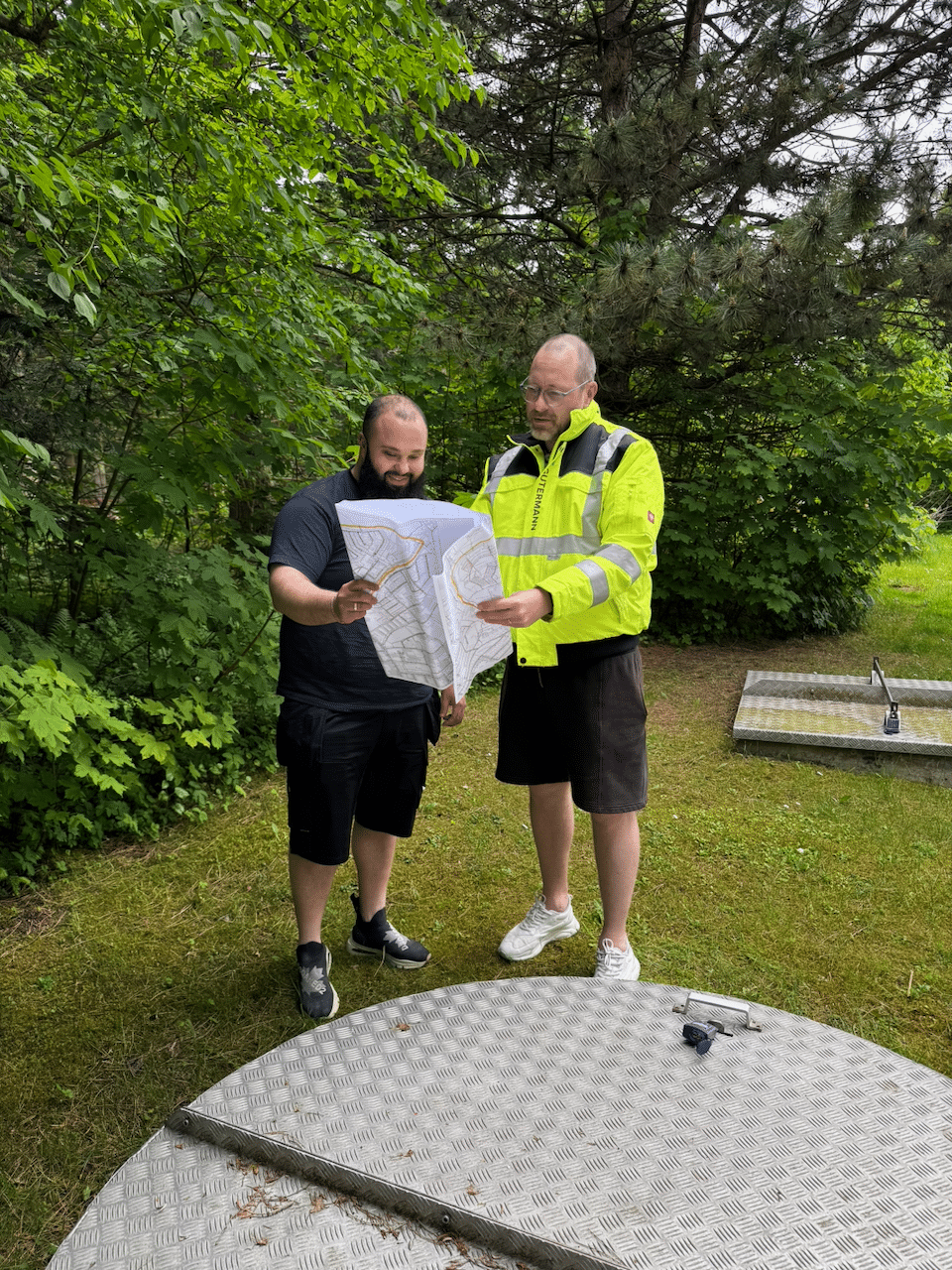
Leak detection in Silkeborg requires access to several points
On an old cast iron network, you can make do with the hydrants and valves that are there. On a PE network, the points must be closer together, and it is the practical difference that is most often surprising.
We use taps and meter wells, and places where there is metal to attach a sensor. If the points are too few, the section is first narrowed in another way, or we go directly to tracer gas.
And if the map material is uncertain, we wire search before measuring. On a plastic net there is no margin to stand two meters from the pipe, because the signal is already weak just above it.
Correlation calculates the position based on the time difference
Correlation solves part of the problem by not requiring you to stand above the hole. Two sensors are placed on the pipe or on a fitting at each end of the line. The noise from the leak reaches them at different times, and from the time difference, the distance between the points and the speed of sound in that particular material and dimension, the position can be calculated.
The prerequisites must be met for the calculation to work. The two points must be on the same wire, without a branch in between that interferes. The material and the length between the points must be known, because they go directly into the calculation. And there must be a signal to correlate with — even a weak one.
The method is strongest on long, straight stretches. On PE, the distance between the points must also be shorter than on metal, because the signal does not reach as far.
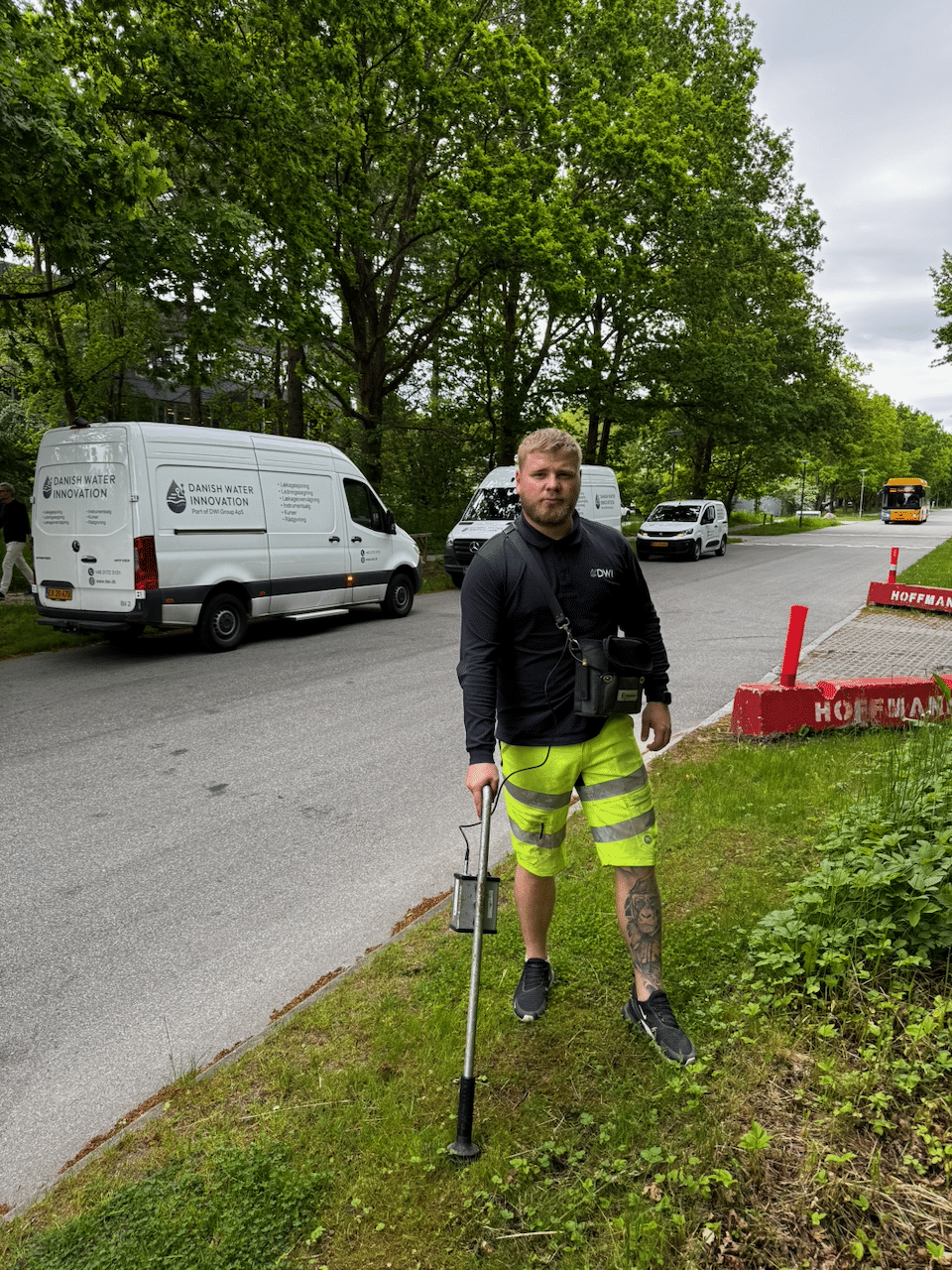
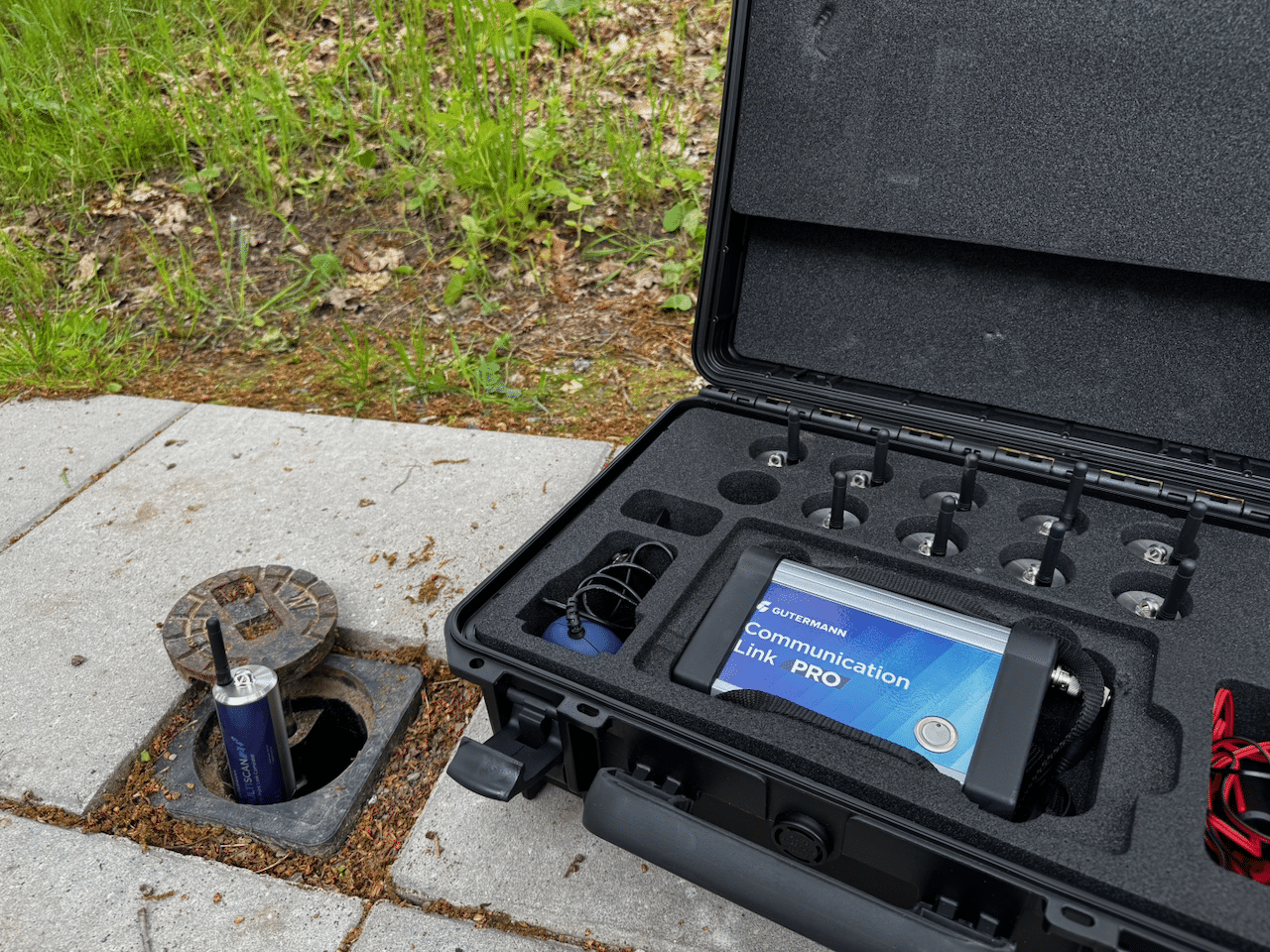
Leak detection in Silkeborg when there is no sound to follow
Some leaks do not produce any useful sound image. The pressure may be low, the opening may be a slow seep in a joint, or the soil around the pipe may be so loose that the water is carried away without creating noise. Here, both listening and correlation cease to work.
Tracer gas works on a completely different principle. A harmless gas is injected into the pipe, and the surface is then scanned to see where the gas is coming up. The method is independent of the pipe material and sound, and it gives a position with an accuracy of a few centimeters. In a network with a lot of plastic, we often go to it intentionally rather than hide it for last.
Gas has its own requirements for preparation. There must be access to a point where the gas can be sent into the section we are working on, and the section must be able to be prepared. We agree on this before the visit, so that the time on site is spent measuring.
When your own people have to measure plastic
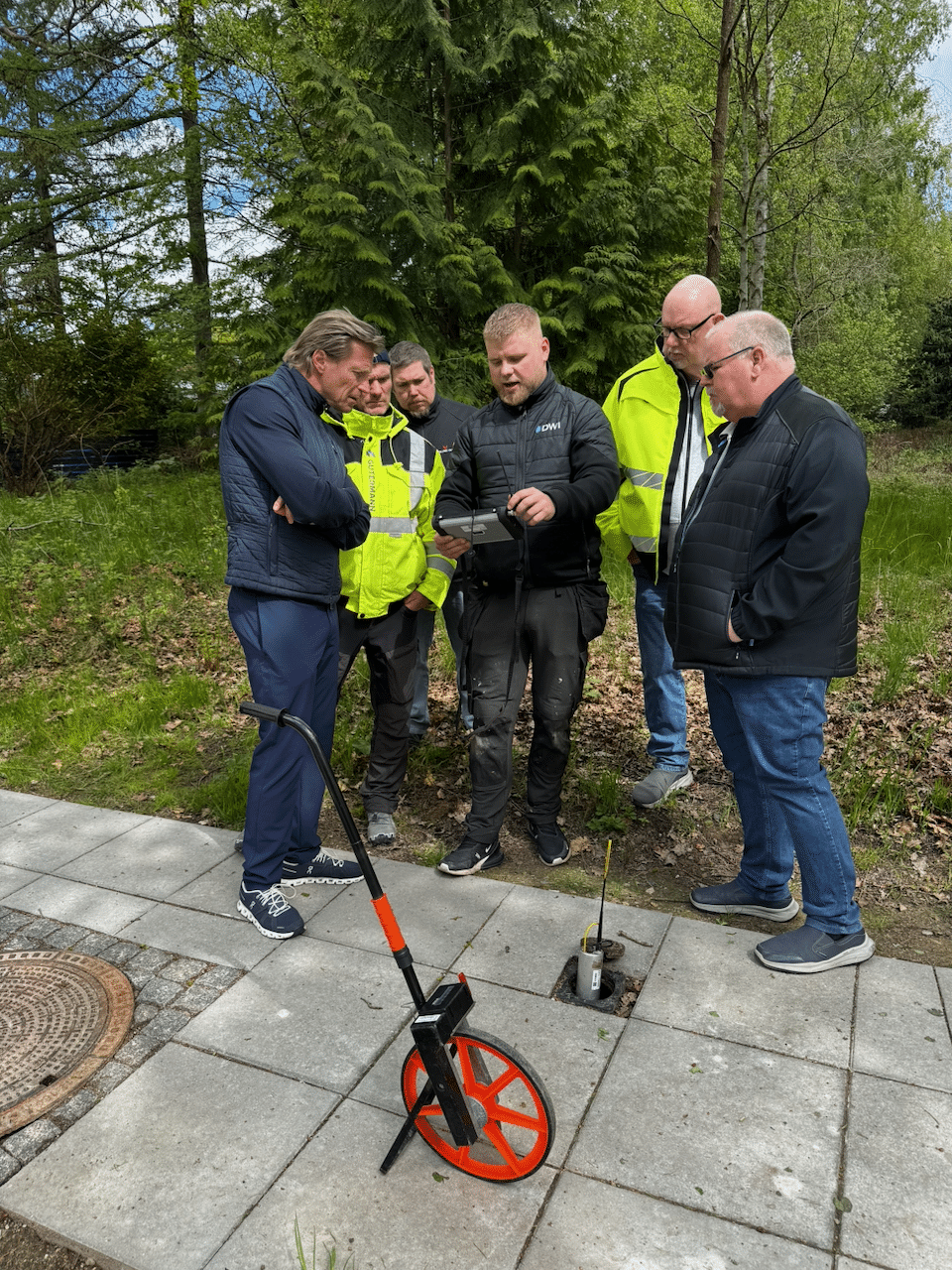
The difference between a metal mesh and a PE mesh is difficult to read. You have to hear how little of a signal is left in plastic before you dare to conclude that a section is tight, and that experience is the core of it. basic course, DWI Leak Academy held at DTU Science Park in Hørsholm — theory first, then measurement on the test track. If you want to take the sections yourself between our visits, the search equipment can be leased or purchased from us with service, and we are an authorized distributor of, among others, Gutermann.
Because the wall of the plastic pipe absorbs the energy from the emission instead of passing it on. The signal weakens quickly and is low in frequency, so it disappears in the noise that is otherwise present in a city.
Two measurement points on the same pipe without a branch in between, a known distance and a known material between them, and a signal from the leak. Without that information, the measurement cannot be translated into a position.
Yes, with tracer gas. The method does not use the sound from the pipe, but registers the gas where it reaches through the ground, and the position can be marked directly in the terrain.
Closer than most people expect. We use the taps and meter wells that are available, and where they are too spread out, we narrow the route in other ways or use tracer gas rather than stretching the acoustics further than they can carry.
Yes. On newer PE networks, the errors are typically in the workmanship — a joint or a connector that has been damaged during filling. The loss is real, but it is harder to hear than on an old network.
Contact DWI
Contact us for competent advice, leak detection and pipe location for your waterworks or water supply. We also assist commercial customers and private households with professional solutions.
