
Leak detection in Kolding
The height difference is in the pressure all day long
Kolding is built upside down. From the bottom of the valley to the highest residential areas, there is a height difference over which the pipeline network must deliver water, and this is done with pressure boosters up towards the high areas and with pressure reducing valves down towards the low areas. Therefore, the city does not have one pressure, but several zones, each with its own.
The fractures are not evenly distributed across the city. They are most concentrated where the pressure is highest.
The measurement is also not the same from zone to zone. The pressure determines how much energy is in the signal that a leak sends out into the pipe and into the ground.
Therefore, most fractures are located in the low zones.
The pressure at a point is primarily due to the height difference up to the point where the water comes from. If it is located a quarter of an inch lower than the tank or pressure booster, there will be more pressure on the pipe 24 hours a day — even when no one is using water.
High static pressure strains joints and old connectors, and pressure surges at pump start-up or rapid shut-off hit hardest where the level is already high. At the same time, each leak becomes more expensive: the flow through a given opening increases with pressure, so the same hole loses more in the low zone than in the high zone.
The load is not constant throughout the day. When consumption drops at night, the pressure loss in the pipes disappears and the pressure in the zone increases. It is during the quiet hours that a weak point in an old connection most often gives way, and this is part of the explanation for breaks being discovered in the morning.
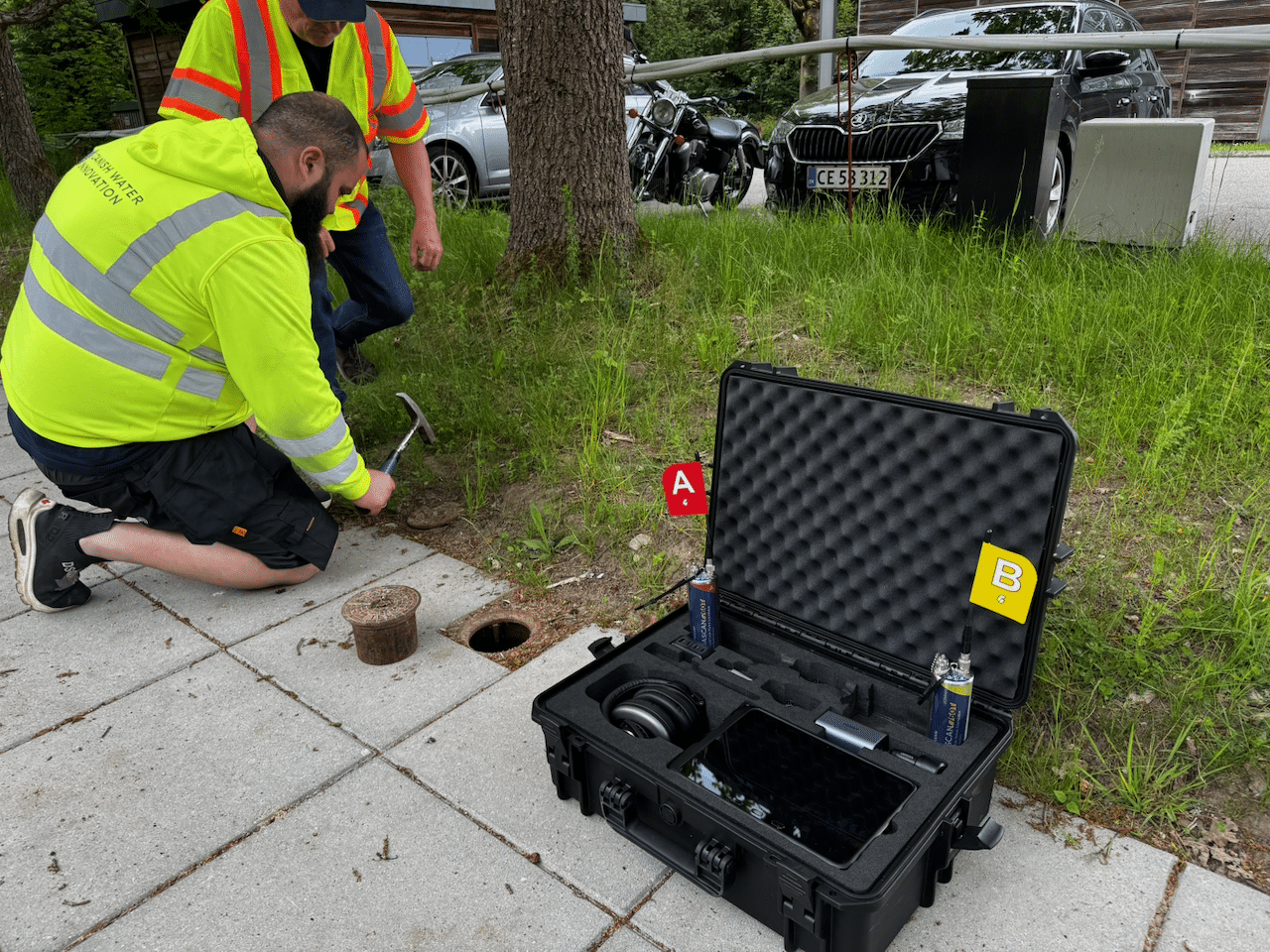
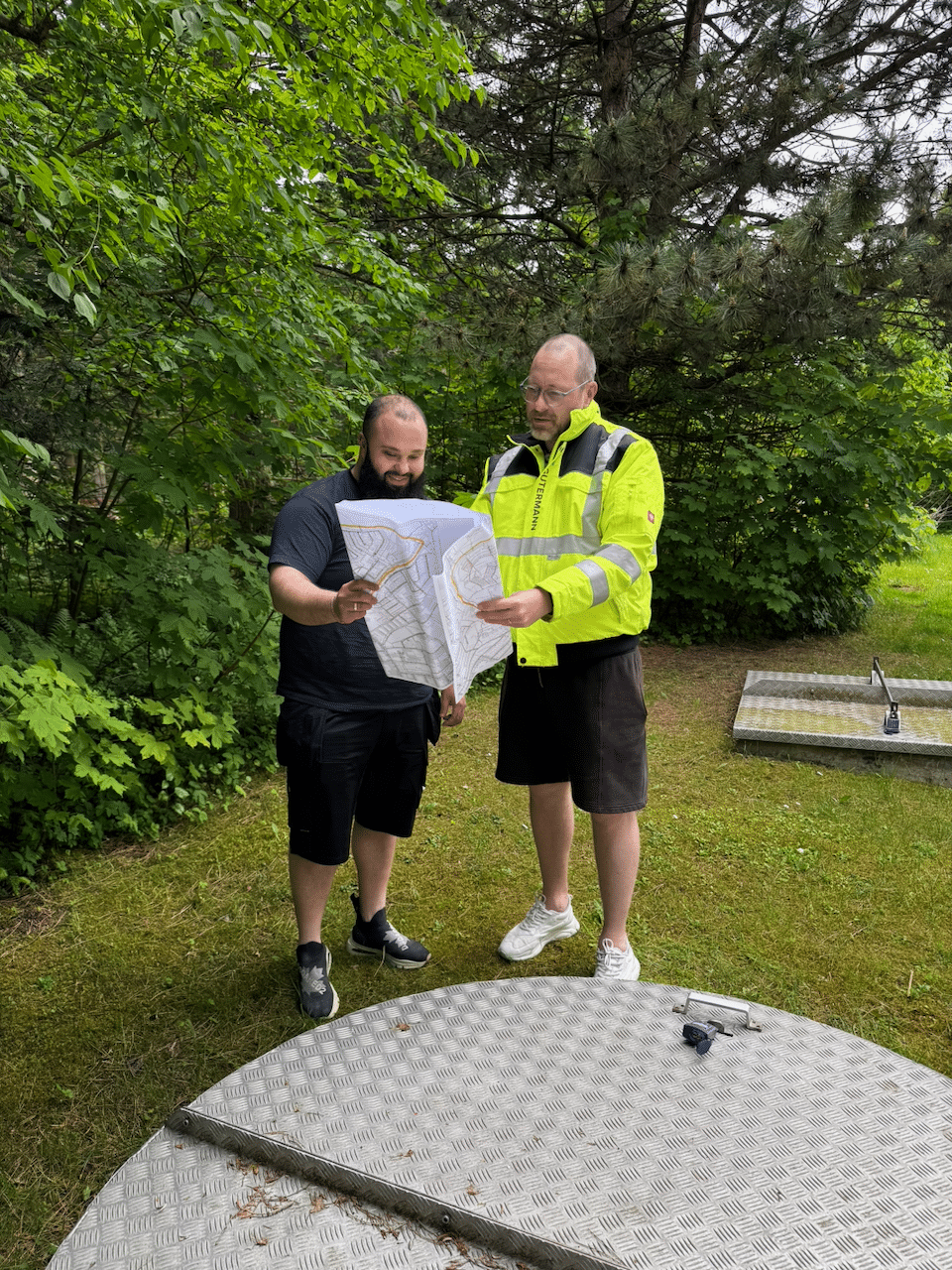
Leak detection in Kolding follows the boundaries of the pressure zone
The zone is the natural unit of work because the pressure is the same set of conditions throughout. The boundary is typically a closed valve or a pressure reducing valve, and it also sets the limit on how far a measurement can follow the pipe.
That's why we keep the measurement points within the same zone. If you cross a boundary, you are comparing two sections where the pressure is not the same, and a slight difference at one end can be just as much due to the pressure as the distance to the leak. We note the pressure level in the zone along with the measurements, so that the result can be read correctly afterwards.
Pressure changes the sound image
The noise we measure arises at the opening in the pipe itself, and the energy in it follows the pressure. In a zone of high pressure, a leak can be detected further from the hole, and the position can often be determined with ground microphones alone.
In a low pressure zone, or on a pipe where the pressure is reduced, the signal becomes weak and short-range. Then listening is not enough, and we shift the emphasis to correlation between two measurement points or to tracer gas.
The pressure level is therefore one of the first things we ask about before a zone is measured. It determines both how far from the hole we can expect a result and how close the measurement points must be to cover the distance.
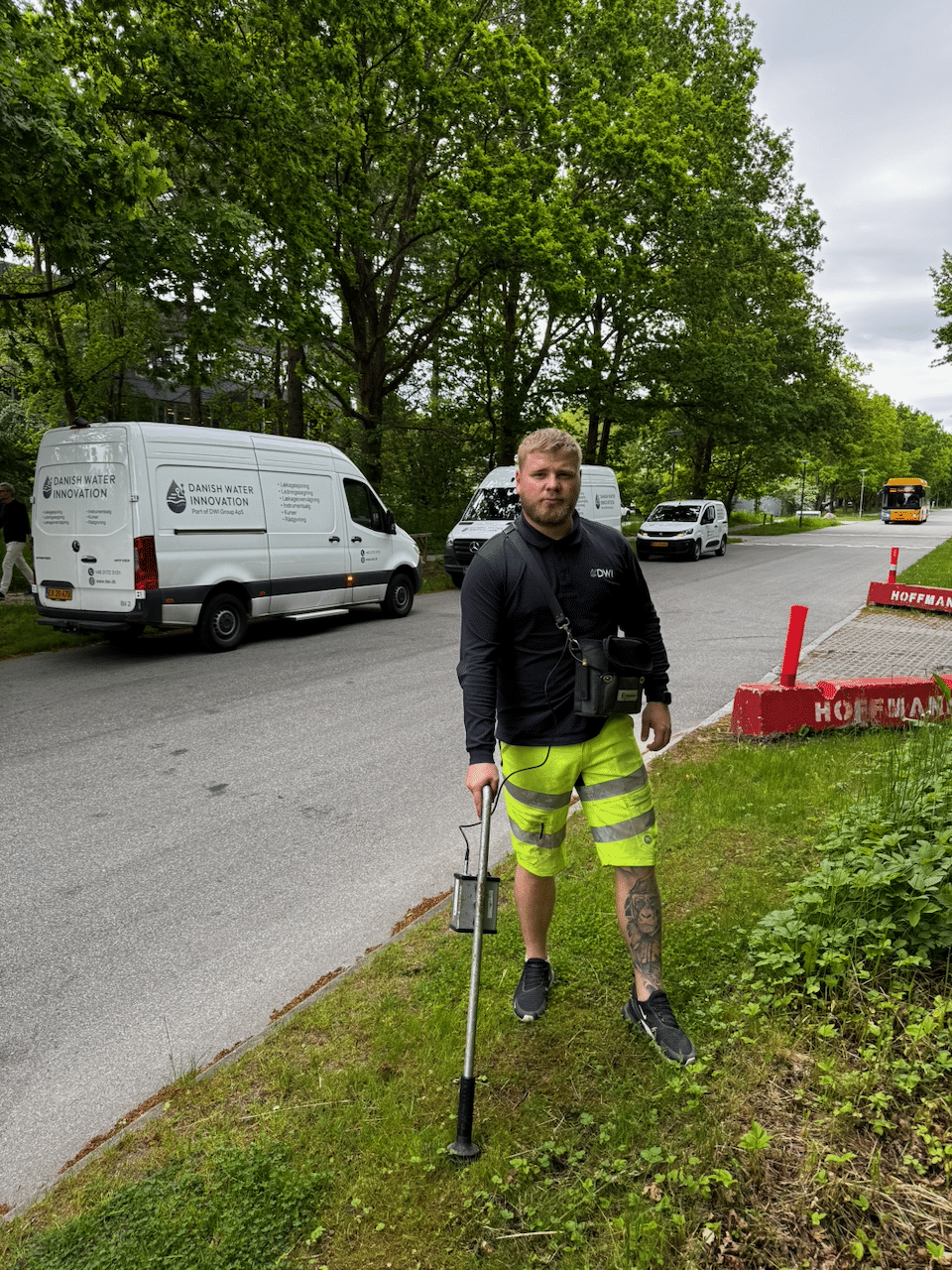
What your own pressure data can indicate
If you have pressure loggers in the zone or flow measurement in the inlet, we read them before we go into the field. A night pressure that has dropped over a few weeks without consumption increasing points to a loss, and combined with the altitude conditions, this can narrow down which part of the zone we should start in.
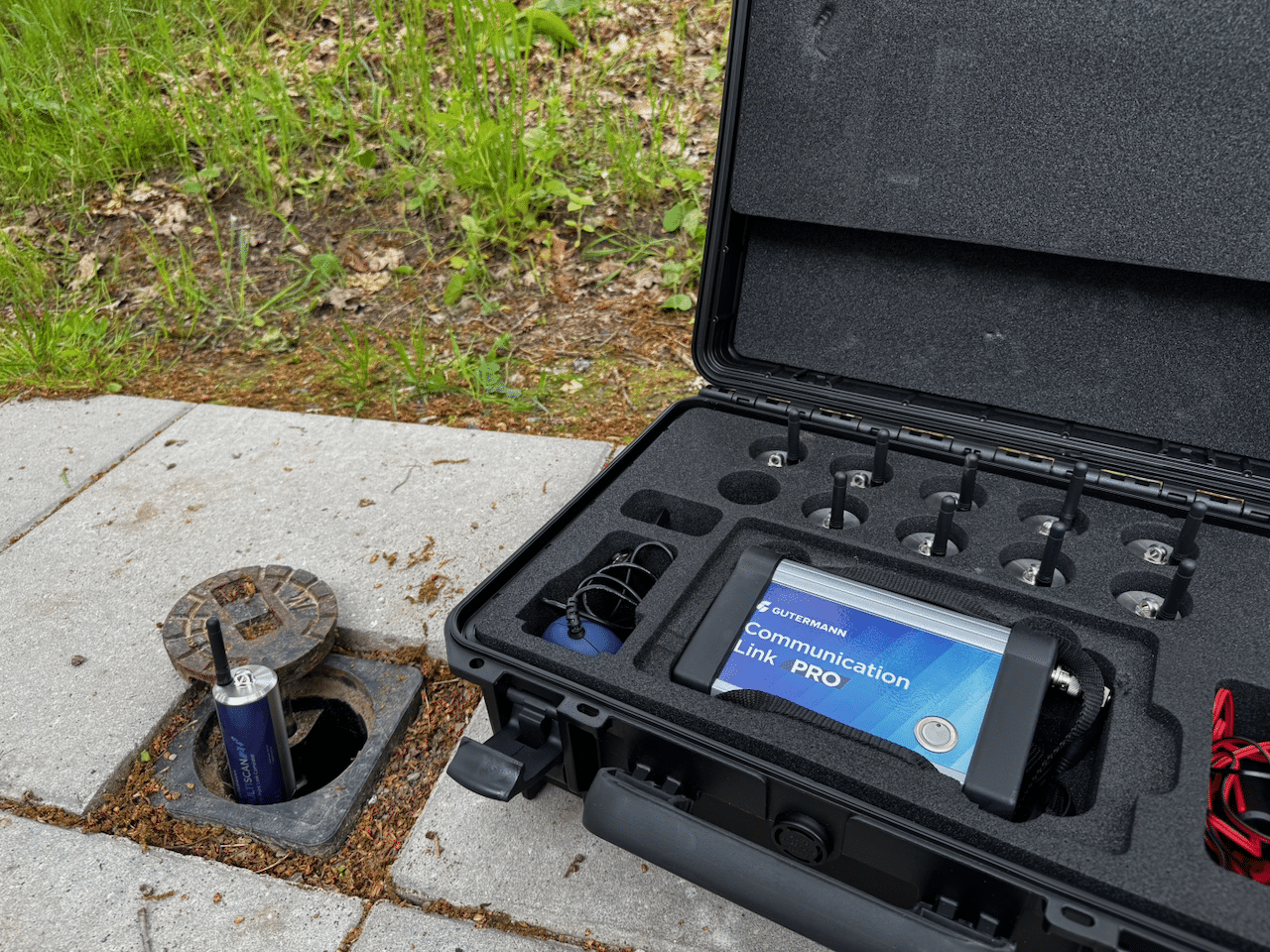
Our own measurements are acoustic listening, correlation, tracer gas and wire search, and if the network is to be followed between visits, we can set data loggers up, who listens around the clock.
The HydrantAI platform They collect measurements and automatically alert you to deviations so that a change is not only noticed during the next review.
Pressure data becomes most valuable in the hands of someone who can also hear the difference between a leak at high and low pressure. That is precisely the practice that lies in it. basic course, DWI Leak Academy is held in Hørsholm, and if a zone needs to be inspected between our visits, the search equipment can be purchased or leased from us with service.
Leak detection in Kolding, and what pressure control can take over
Lowering the pressure in a low zone reduces the loss in the leaks that already exist and postpones the next breaks. It does not eliminate them. The holes are still there and must be located and repaired before the loss disappears.
Therefore, the two things are linked in practice. The pressure control keeps the load down, while the leak detection removes the losses one at a time, and the water loss is calculated professionally as NRW. We locate and mark on site; your contractor or plumber digs and repairs.
Rarely. Low-lying areas have the highest static pressure 24/7, which puts the most strain on joints and connectors. The same hole also loses more water down there than higher up in the network.
No. We measure under the pressure conditions that the network has in normal operation. In some cases, an agreed, short-term change in pressure can be used to confirm a finding, but this is your decision and never a prerequisite.
This may mean that more water needs to pass through to maintain pressure in the zone, and this indicates a loss. If you have data from the station, we will look at it together with the measurements we make out on the line.
Yes. The reduction reduces the outflow from existing leaks and slows down new breaks, but the leaks remain unchanged. If the loss is to be reduced and stay reduced, they must be found and repaired.
It depends on the size of the network and the access conditions. Call or write and we will assess the task specifically.
Contact DWI
Contact us for competent advice, leak detection and pipe location for your waterworks or water supply. We also assist commercial customers and private households with professional solutions.
