
Leak detection in Horsens
Vapor from the asphalt does not by itself point to the water pipe
Horsens is well supplied with district heating, and in large parts of the city, heating pipes and water pipes are located in the same route or in the same bank. When the snow melts in a strip across the road, or steam rises from a joint, the heat is the obvious explanation. Moisture in a basement or water in the middle of a road, on the other hand, can come from both networks.
On the surface, the two errors look similar. When measured online, they don't, and the difference can be determined before anyone orders an excavator.
A heat leak and a water leak do not behave the same.
A heat failure releases energy. The ground above the pipe becomes hot, and the moisture has a temperature that can be felt. The release first propagates through the pipe's jacket and insulation before reaching the ground, and therefore the hot surface is not always directly above the hole.
A leak in a pressurized water pipe does something different. The water is forced through a small opening, and this creates a continuous noise in the high frequency range that propagates through the pipe wall and through the ground. This is the noise we measure, and it is not found in a heat failure.
DWI A / S working on the water side. We do not measure the district heating network and do not comment on its condition. On the other hand, we can determine whether the water pipeline contributes, and that is the half of the question that can be answered with measuring equipment instead of with a theory about what the neighboring pipeline is doing.
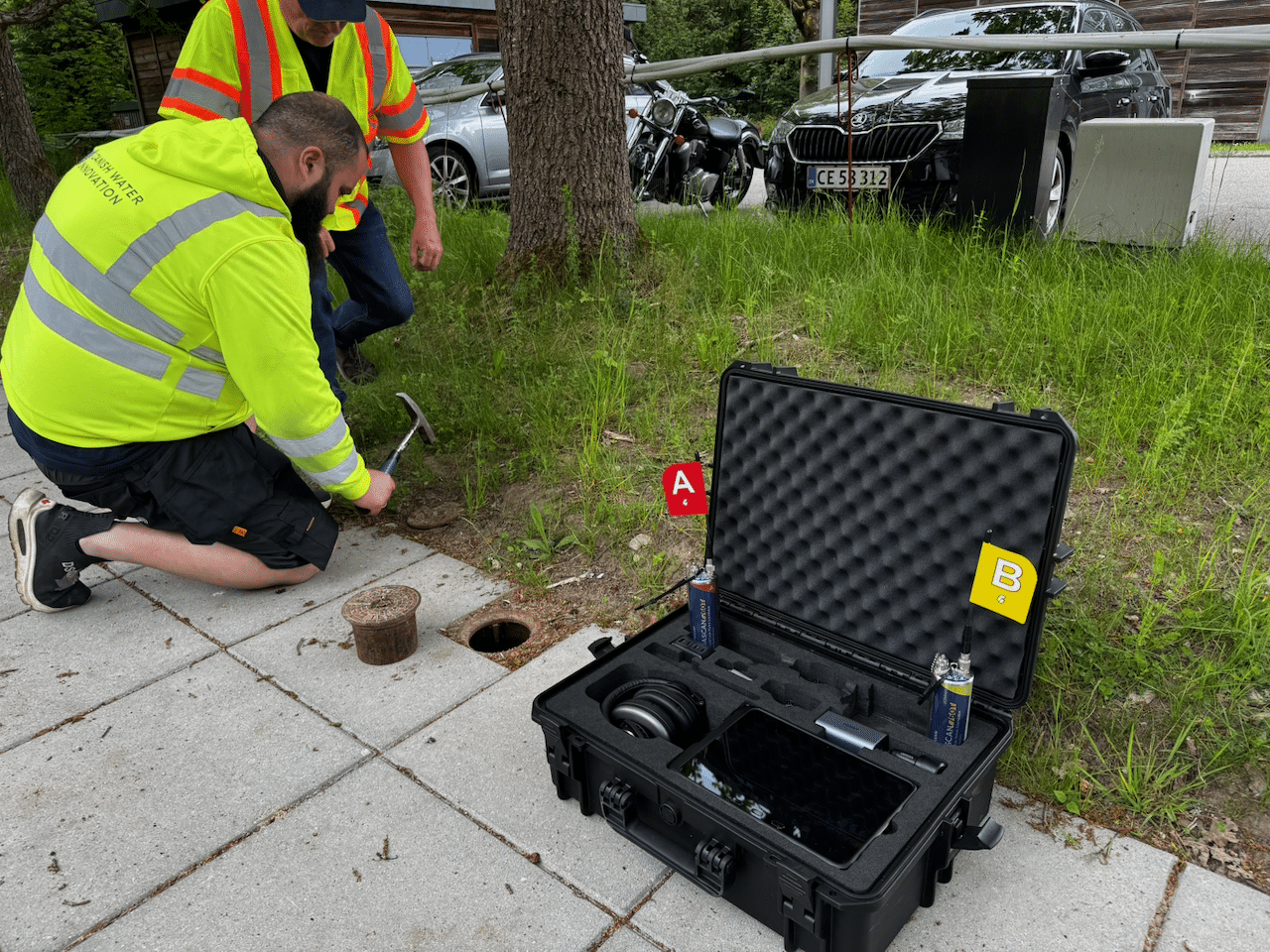
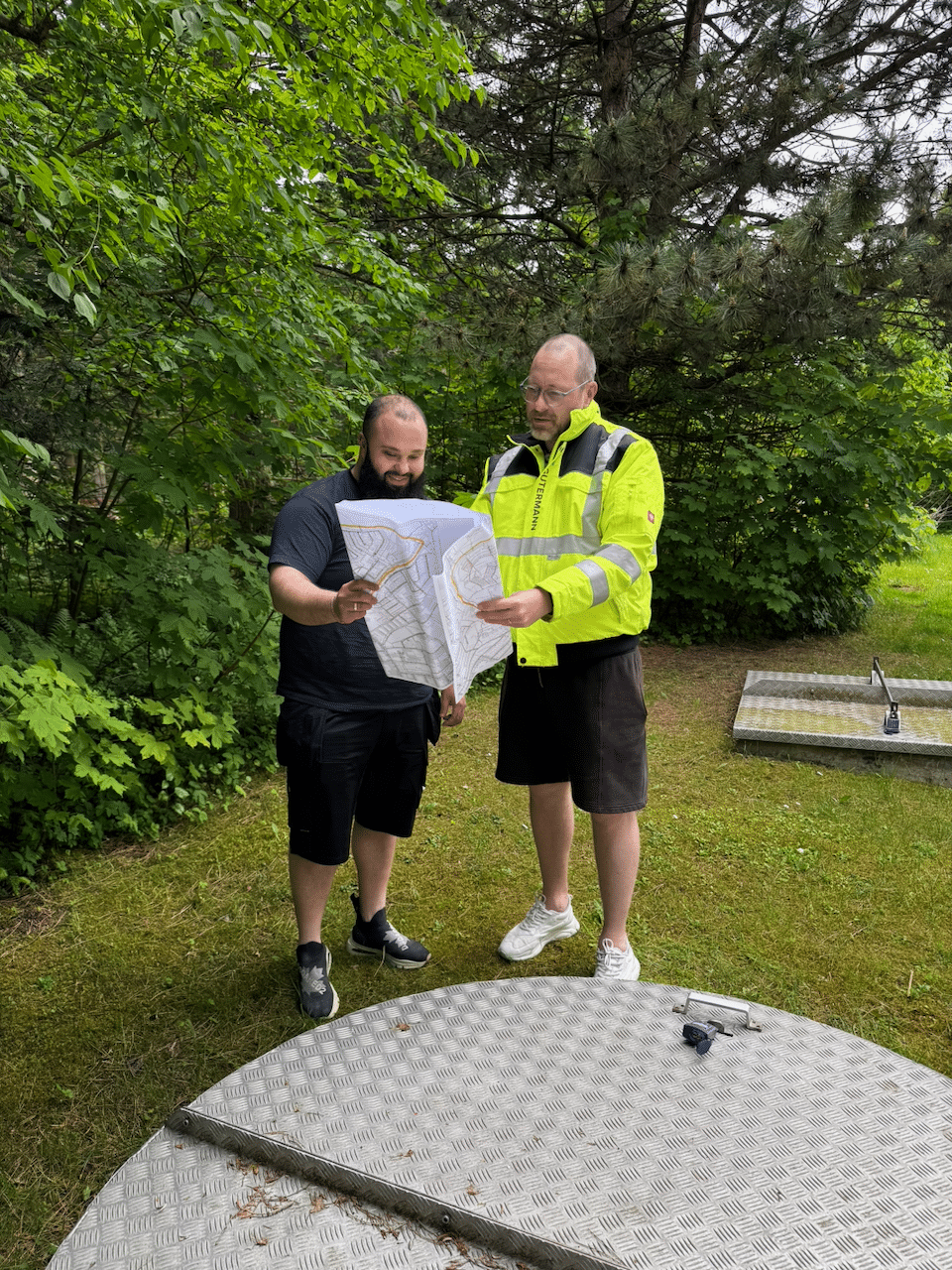
Leak detection in Horsens where two supplies are located in the same trace
When two pipes share a slope, it is not enough to know that there is water on the surface. We need to know which pipe the water is coming from. Therefore, the work begins with determining where the water pipe actually runs and where the measurement points on that particular pipe are located. If the map material is not enough, we start with wire search.
The two courses must be separated before anyone can say which network is losing. Heat and water can be less than a meter apart in the same excavation, and a line on a map is not enough to know which pipe a leak belongs to. If the position of the water line has been identified in the field, we also know what a signal next to it means.
Trace gas can bind the water to the pipe. If the gas is found where the water emerges, it is coming from the water pipe, and otherwise it is not — and this is the surest way to an answer when the two pipes are so close that sound cannot separate them.
The water side also gives its own signs. A break of any size often shows itself as a pressure drop at the nearest consumers or as night consumption that has increased in that part of the network, while a heating failure does not affect the water pressure. If you have this kind of information when you call, the section will be narrowed before we go out.
Moisture in a basement with both heating and water supply
In many older properties in Horsens, heating and water are brought in through the same basement wall, often in the same room and a few centimeters apart. If the floor is damp, or there is water in a corner, both inputs can be the cause — and seepage from the outside can be the cause too.
We measure on the water side: on the inlet, on the connector in the ground and on the pipe up to the boundary. If there is a leak, we mark it. If the water pipe is tight, you will have it documented, and then you can move on to the heating or the building's own drainage without having dug in vain.
The order of measurements matters. A moisture measurement in the basement tells you that there is water, but not where it is coming from, and an excavation along the outer wall costs the same regardless of whether the guess was correct. The measurement of the water installation, on the other hand, can be done in a morning without touching the building.
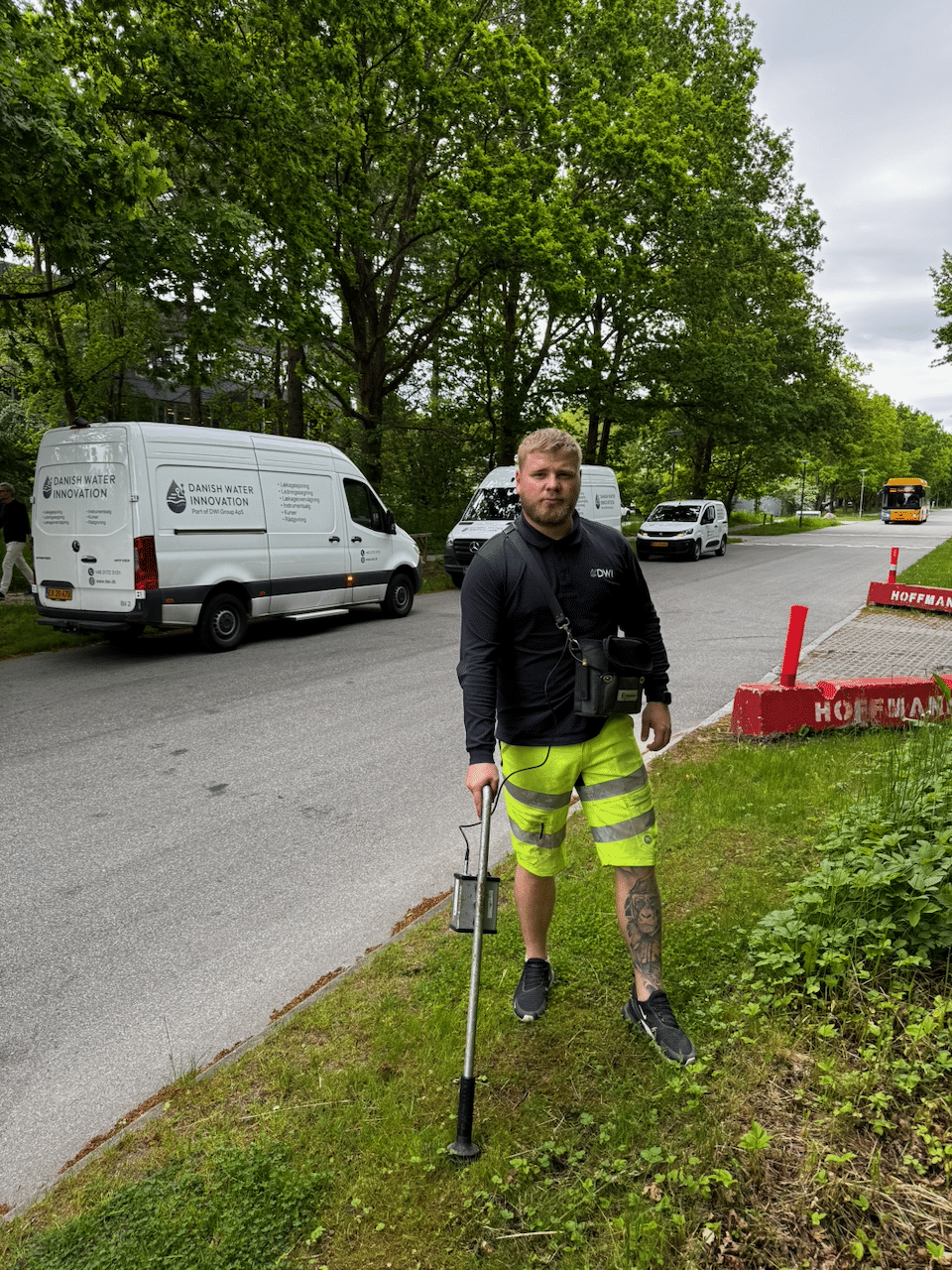
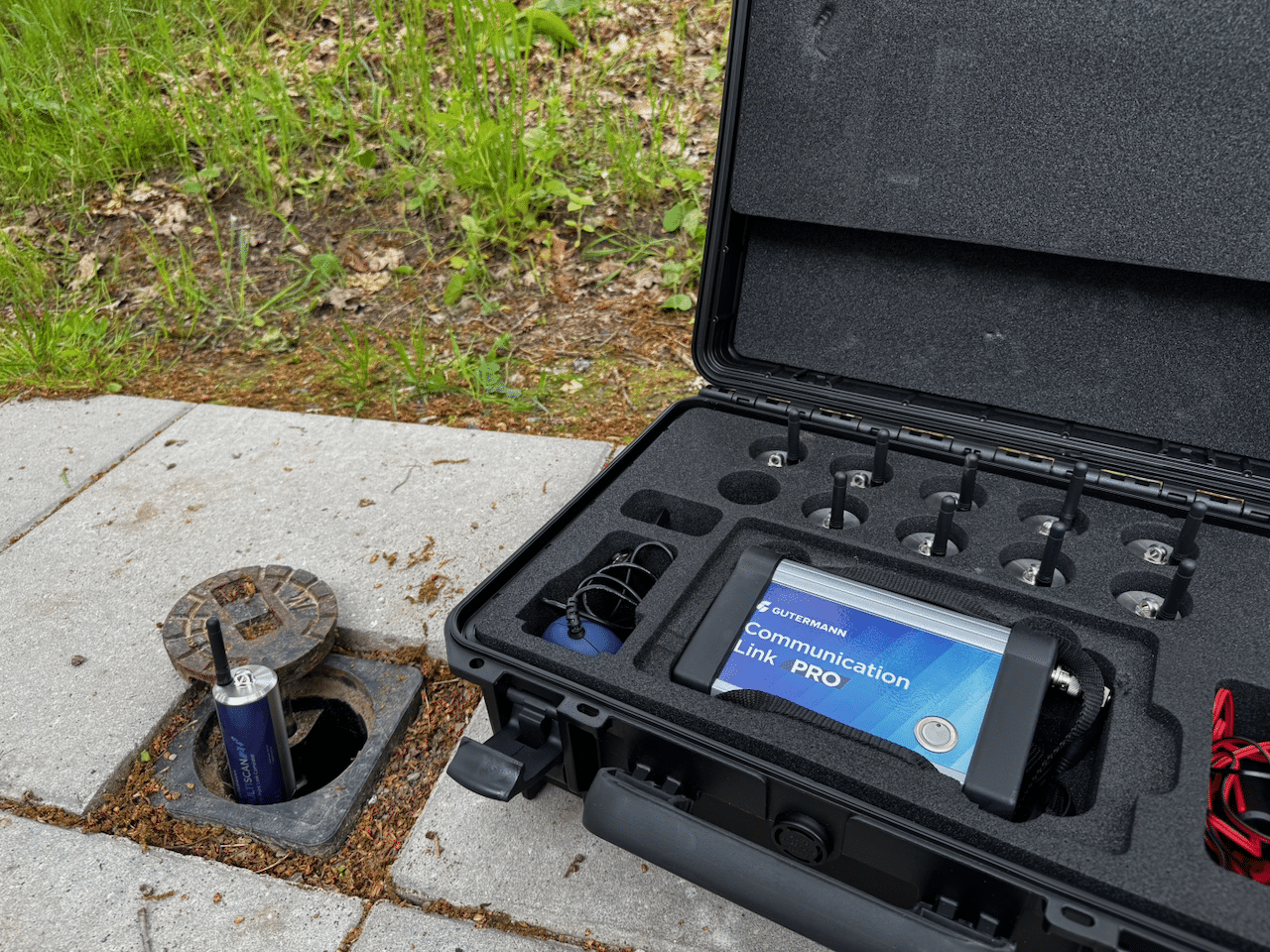
Leak detection in Horsens, and what you can pass on
DWI works on the water side and locates pressure pipes. We do not dig or repair, but we mark the position on site and deliver the measurements in writing, so your plumbers or contractor can go straight to the job. In the case of acute breaks, we often arrive the same day on +45 70 23 98 98.
If the case is to be forwarded to another pipe owner, the written measurement is what moves it. A documented review of the water pipe removes one of two possible clues, and the next person looking at the case can spend time on their own network instead of starting over.
For an operations team, it saves time to be able to make the first clarification yourself before the case is forwarded. This kind of measurement can be learned, and the DWI Leak Academy holds basic course in wiring and leak detection with theory and practical exercises.
Call us and don't order any digging work. We will measure the water pipe and tell you if it is the source. If it is not, you will be given a written report with measurement points and method.
Yes. A review without findings is also a result. You will receive the measurement points and the method in writing, and this can be used against the line owner to whom the case will be forwarded.
Yes. We determine the course of the water pipe and only measure on it. Trace gas is the safest confirmation because the gas can only come from the pipe it is sent into.
At the water inlet and the connection outside, and then further inside if needed. That way you know if the water side can be put aside before someone breaks up a floor.
Contact DWI
Contact us for competent advice, leak detection and pipe location for your waterworks or water supply. We also assist commercial customers and private households with professional solutions.
