
Leak detection in Herning
Consumption follows how many people are in the house
Herning has an unusually dense supply of large halls and facilities for trade fairs and sports, and behind them lie internal wiring networks of a different kind than those of a regular property. The pipes extend far into the terrain, to fields and grass areas, to fire hydrants and to installations that must be kept frost-proof in winter. Consumption then fluctuates: an empty hall in February and a full hall in March do not look at all like each other on the meter.
A constant loss drowns in such fluctuations. A steady release that runs 24/7 disappears in a month when the difference between two weeks is already large. That is why we do not start with the total annual consumption, but with the periods when the plant is idle.
Leak detection in Herning in large internal networks
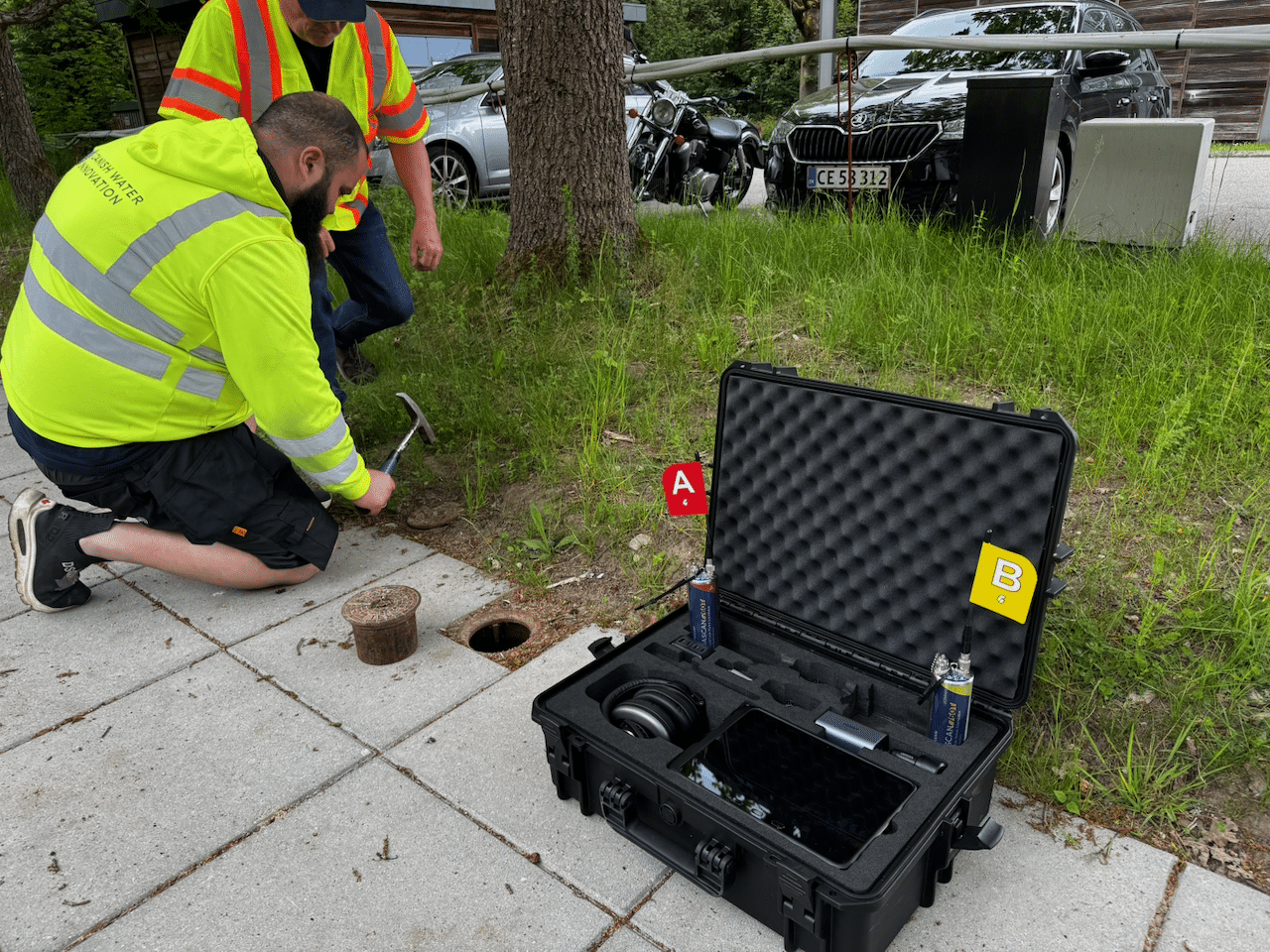
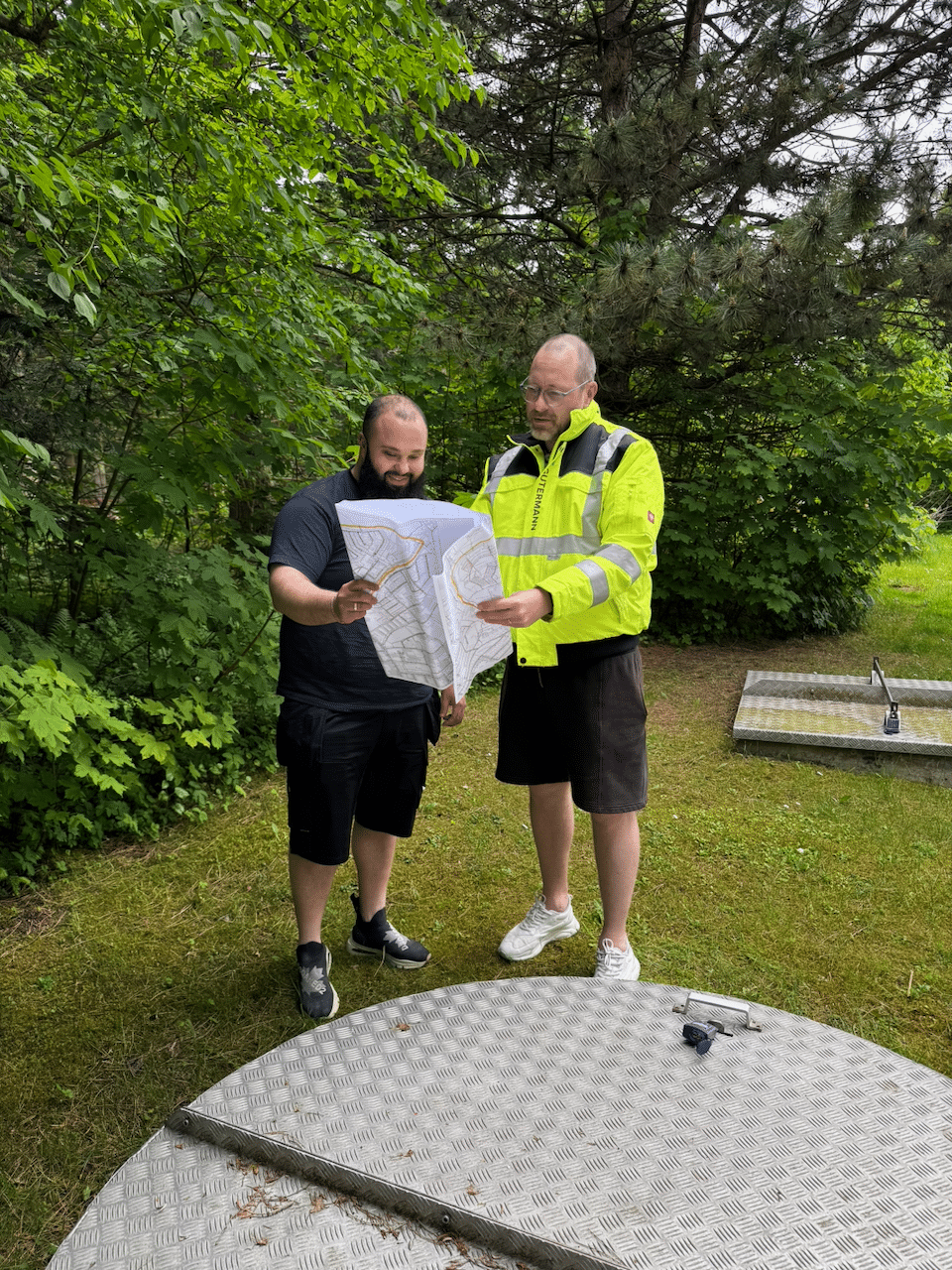
There are few main meters on a large system and many branches, and some of them supply something that is only used a few weeks a year. We first map out what can be shut off and where, and divide the network into sections that can be metered separately.
Then we work inwards. If the numbers point to a section, the measurement is repeated with the section closed and opened until the loss can be linked to a single string. On a system with many branches, this is the part of the work that takes time, while the actual location is quick once the section is known.
Irrigation systems and long pipes in the terrain
Pipes for watering pitches and grass areas are often laid by the contractor who built the pitch, and they are rarely shown correctly on any drawing. They are relatively high up and are typically made of plastic, and every joint and every drain is a potential leak.
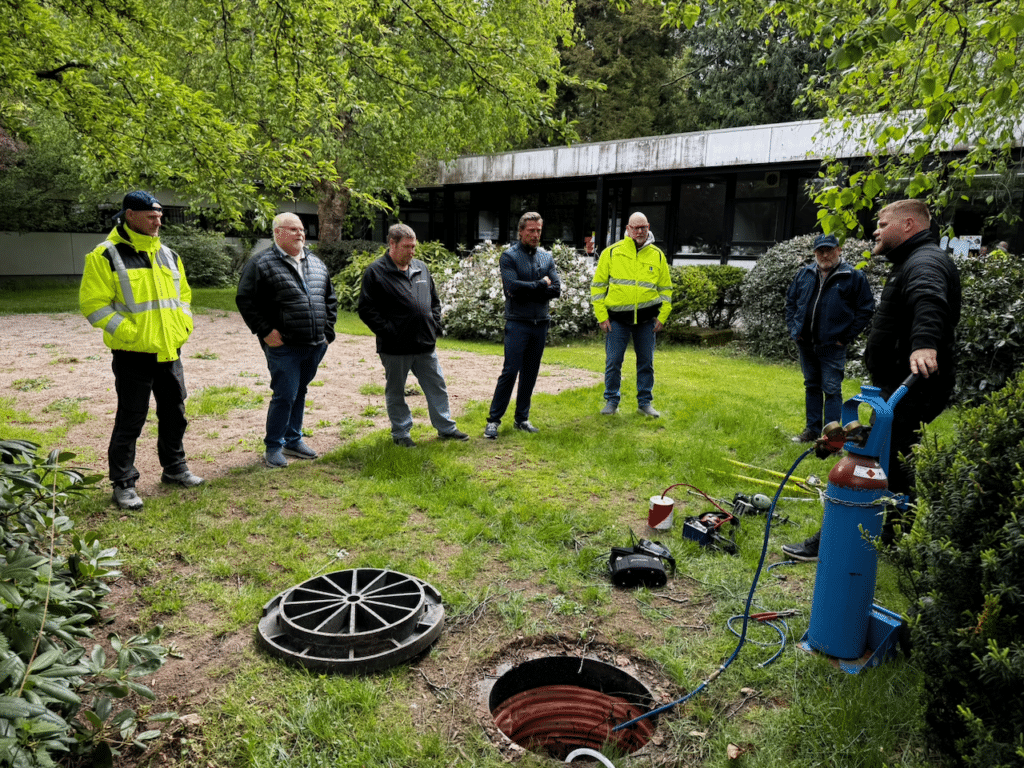
Plastic greatly dampens sound, which is why we use tracer gas on these types of strings. The gas is harmless and also detects a leak that the acoustics don't pick up at all — for example, when a soft field in a court has been there since spring and the irrigation has been turned off for weeks.
Leak detection in Herning as a comprehensive review of the facility
Several facilities choose to have the entire internal network reviewed once and then in a fixed rhythm. We take it section by section: first the building network, then everything that is out in the terrain. You get an overview of what has been measured and found, and which sections require additional access before they can be assessed.
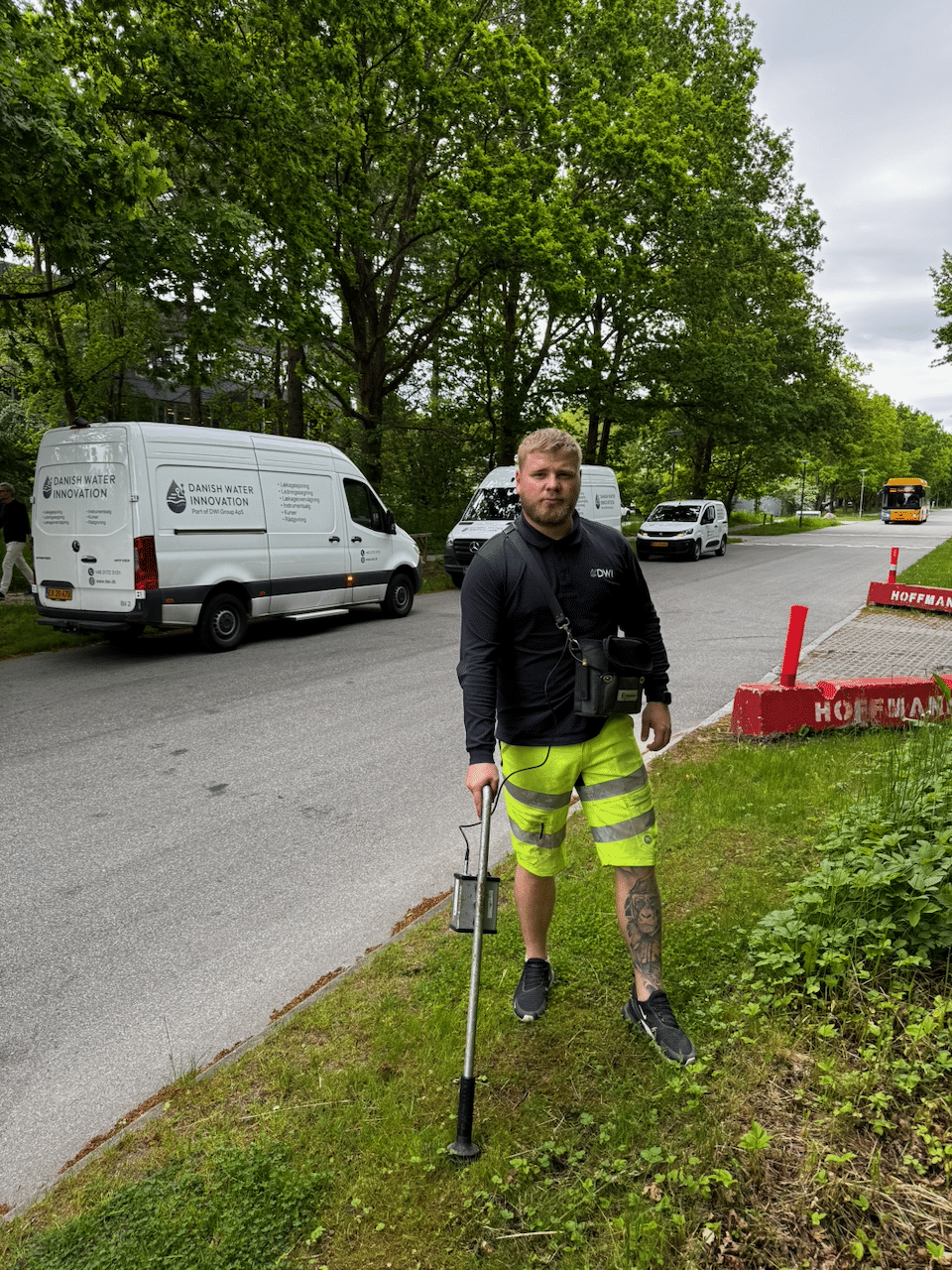
If your own operations staff should be able to take the first measurement between two visits, you can get search equipment for the house as a purchase or lease, service included, and training is provided. the basic course at DWI Leak Academy with exercises on the test track.
Measurement while the house is in use
With a full house, both consumption and noise levels are high, and the acoustic measurements are less accurate under these conditions. On the other hand, the time can be spent on wire search and to prepare the sections that need to be measured when the house is empty again. We therefore plan the visits according to the calendar of the facility, not our own.
Night measurements require an extra appointment on a facility like this because the irrigation typically runs at night. We get the operating schedule first and measure in a window when the irrigation is out of operation. Otherwise, you measure the irrigation and call it a loss.
A few weeks of history makes the fluctuations legible
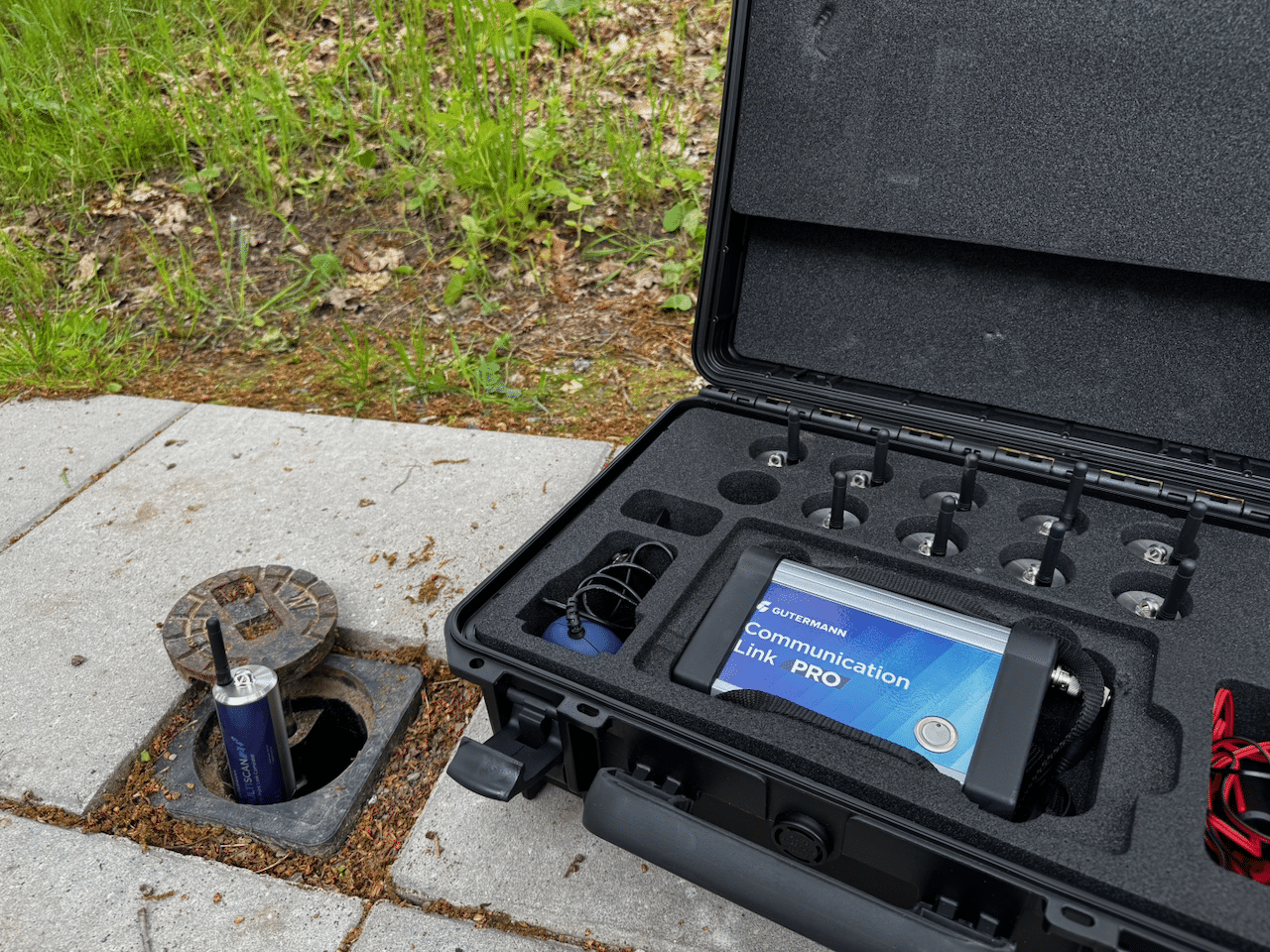
When the load changes from week to week, a single measurement provides a weak basis. Data loggers placed in the network measure around the clock over a long period of time, and The HydrantAI platform collects data and automatically alerts when there are deviations. With a few weeks of history, we can separate what the audience uses from the flat line that lies underneath everything and doesn't go away. It's the same methodology that utilities use when they work with NRW.
When the point is marked
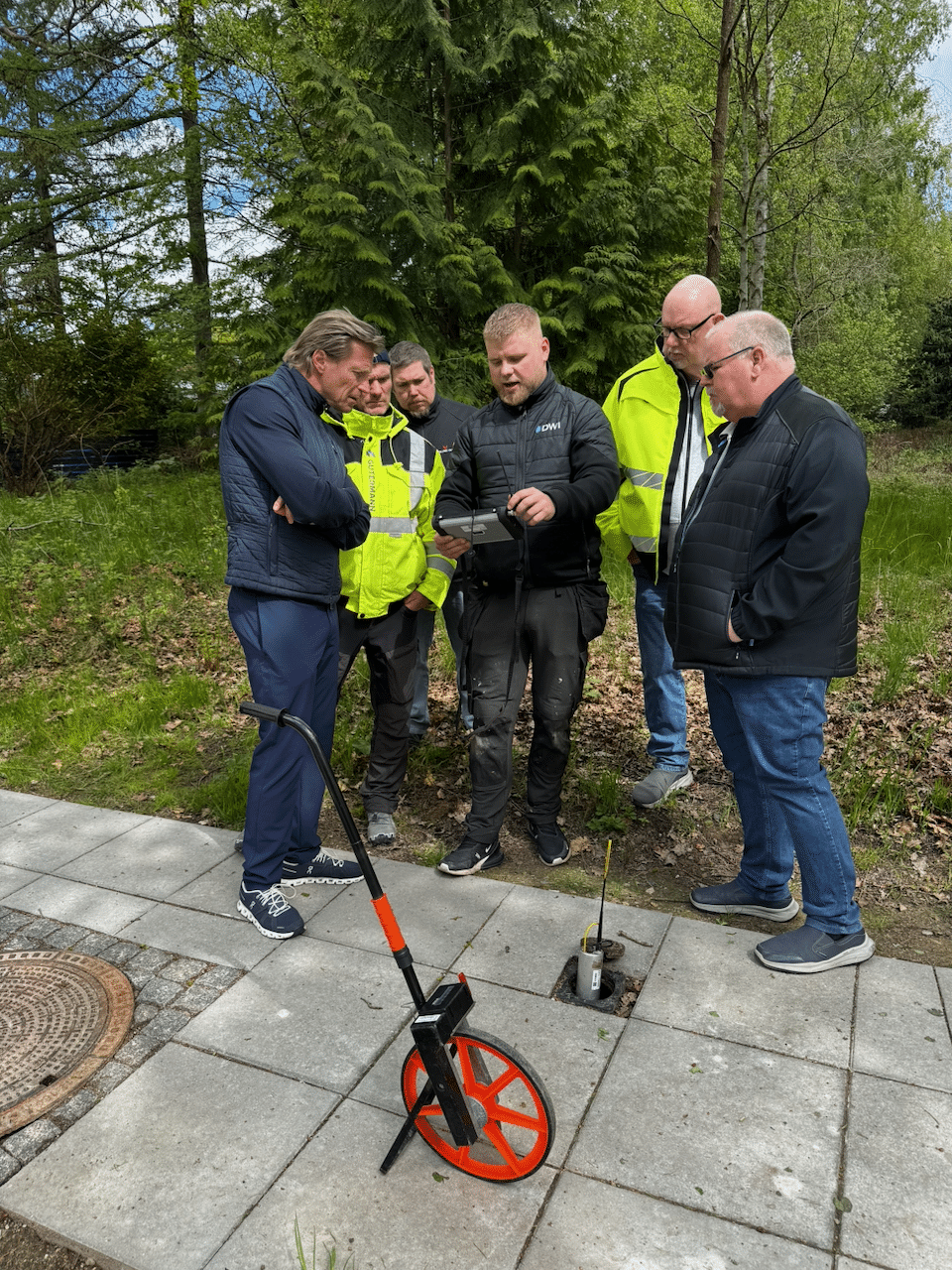
We are responsible for the location, not the work in the ground. We locate and document the measurements, and the marking is placed in the terrain. The repair is carried out by your plumber or contractor. We are happy to provide the information directly to them so that the excavation can be kept to a minimum. Afterwards, we can check that the section is tight and that the night consumption has decreased as it should.
In the case of an emergency break, we can often come the same day. The emergency number is +45 70 23 98 98.
Yes, but not on the total number. We measure during quiet periods and over a longer period of time so we get a baseline. A constant loss shows up as a flat line that doesn't change no matter how many people are in the house.
It can, and it's a typical case for us. Once your people have pressurized the irrigation string, we search it with tracer gas until the leak is located. Plastic pipes rarely make enough sound for acoustics alone to be sufficient.
Yes. We divide the network into sections and take them in an agreed order, typically with the most consequential first. You will get a comprehensive overview at the end of what was measured and what was found.
They belong. Installations that are left unused are the ones where a loss can run the longest without anyone noticing, and they are often located on long stretches of land.
Contact DWI
Contact us for competent advice, leak detection and pipe location for your waterworks or water supply. We also assist commercial customers and private households with professional solutions.
