
Leak detection in Holstebro
In a barn, water consumption fluctuates, and a loss fluctuates with
Water consumption in a livestock facility follows the animals. The number of animals, their age, the feeding schedule and the temperature of the barn move consumption up and down throughout the year, and that is as it should be. This is precisely why a leak in a ground pipe or in a drinking water system can lie dormant for months: the increase looks like another fluctuation, and it is explained by the fact that more animals have been introduced.
Often it is not the meter that reports first, but the pressure. The drinking valves furthest from the inlet deliver too little, and the pump starts too often. The animals get less water than they should, and the operational problem is there long before anyone uses the word leak.
Pressure drop as the first symptom
A hole somewhere on a long underground line takes pressure off everything behind it. In the stable, it is seen as uneven delivery: one end works, the other lags, and it gets worst during the hours when consumption is already highest.
That's why we start with your own figures. The pump's operating hours and starts tell a lot, as do the pressure at the inlet and the consumption read over the week. We go through the figures with you and use them to define which part of the system our own measurements should be based on. If they don't indicate a loss, the picture may instead be due to a dimension that has never been large enough for the system that is there today.
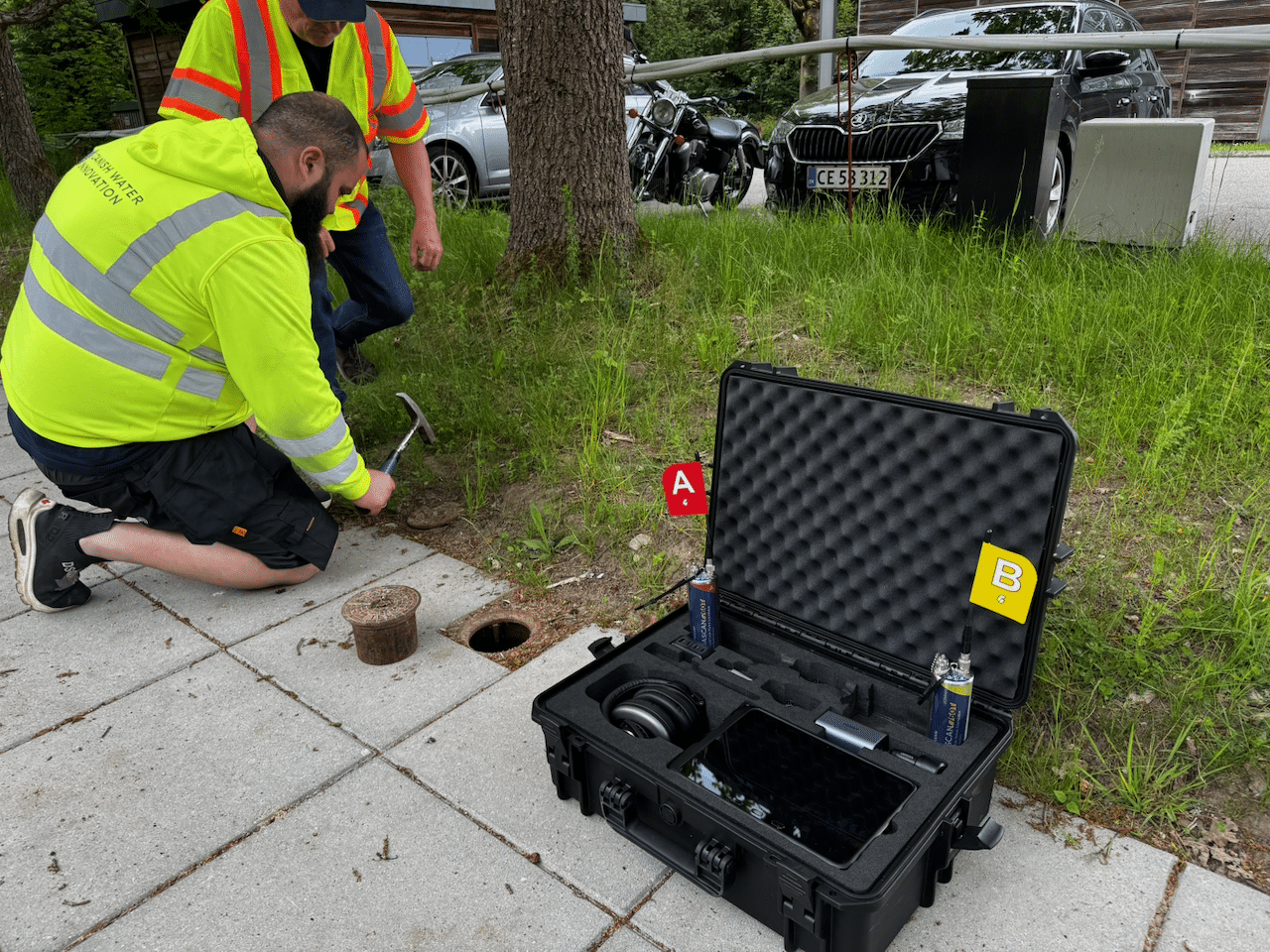
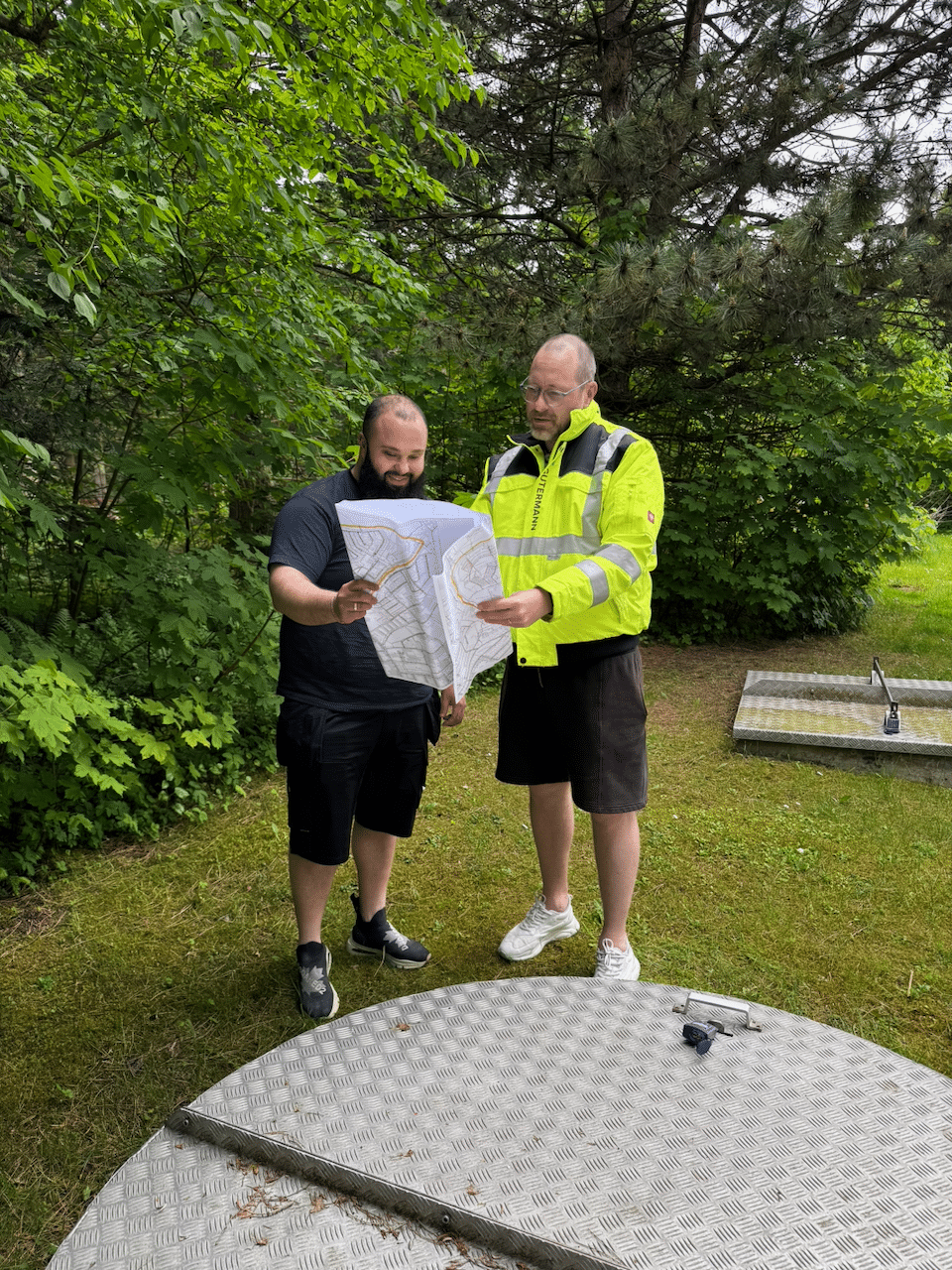
Leak detection in Holstebro and on the livestock farms around the city
The first task is to determine whether the loss is on the supply line or inside the system. Here we use your readings from drilling or insertion and compare them with what the buildings can explain. If the drawings do not match, we trace the course of the line with a line search first, so that the measurements will be above the pipe.
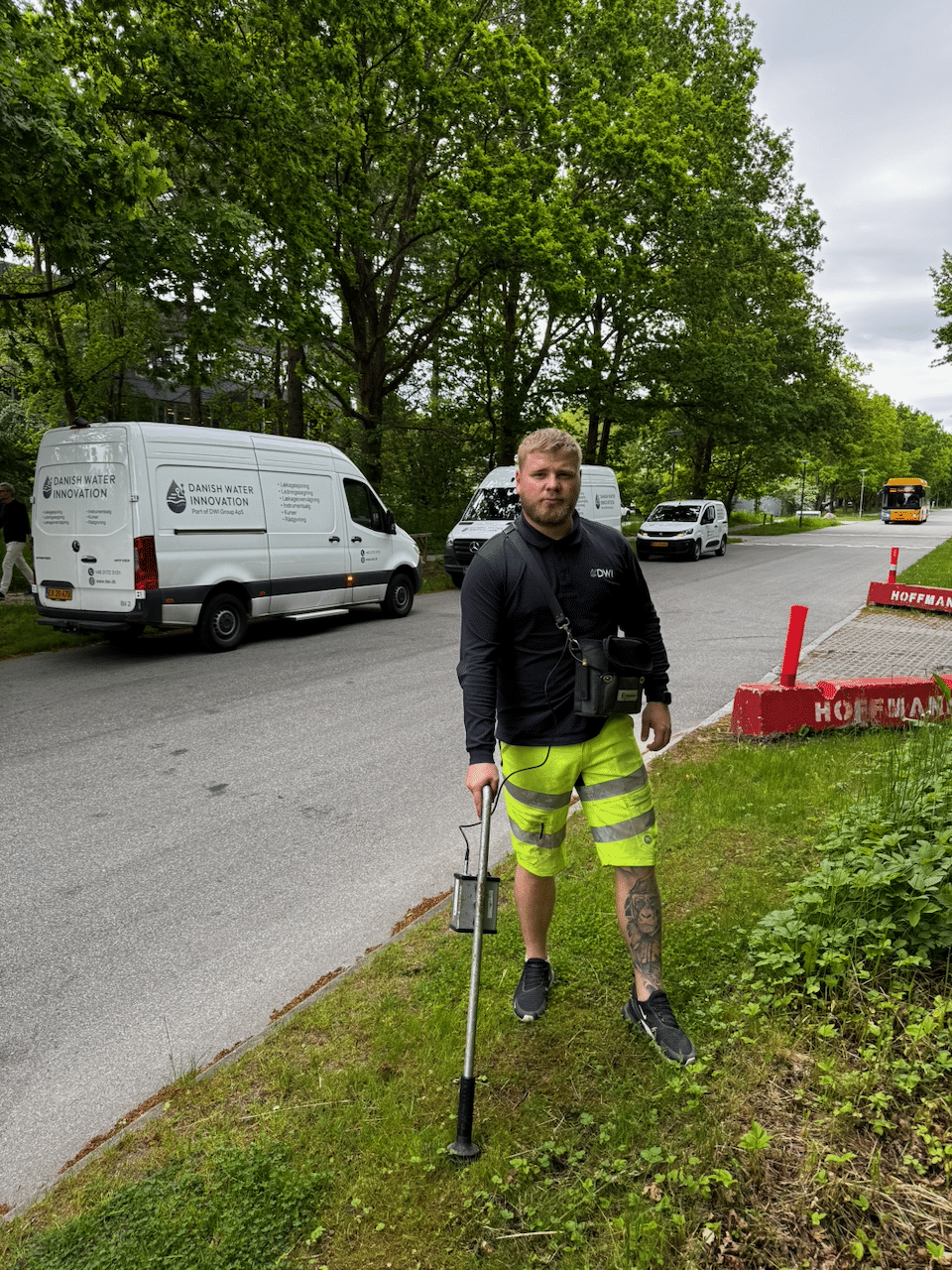
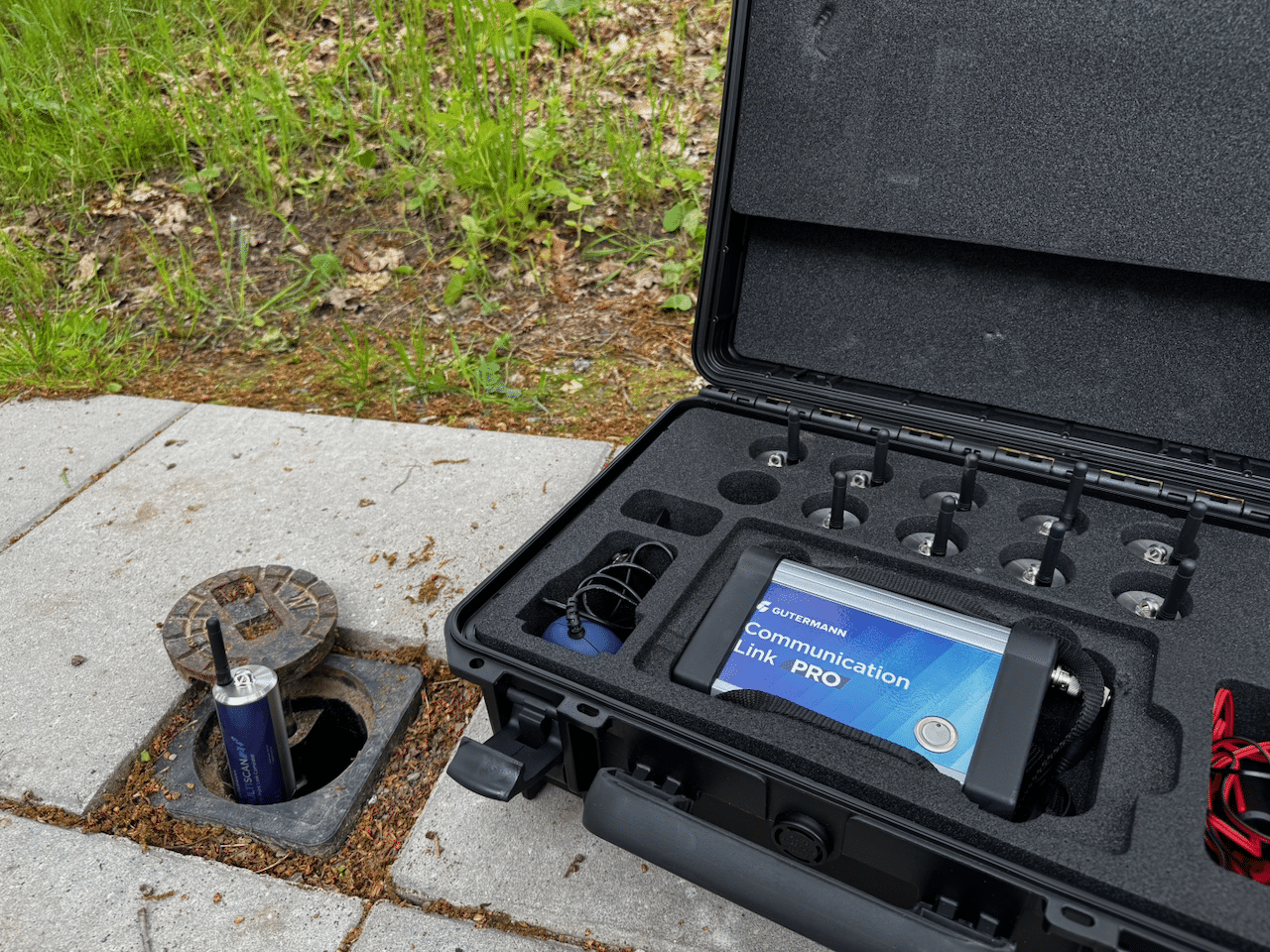
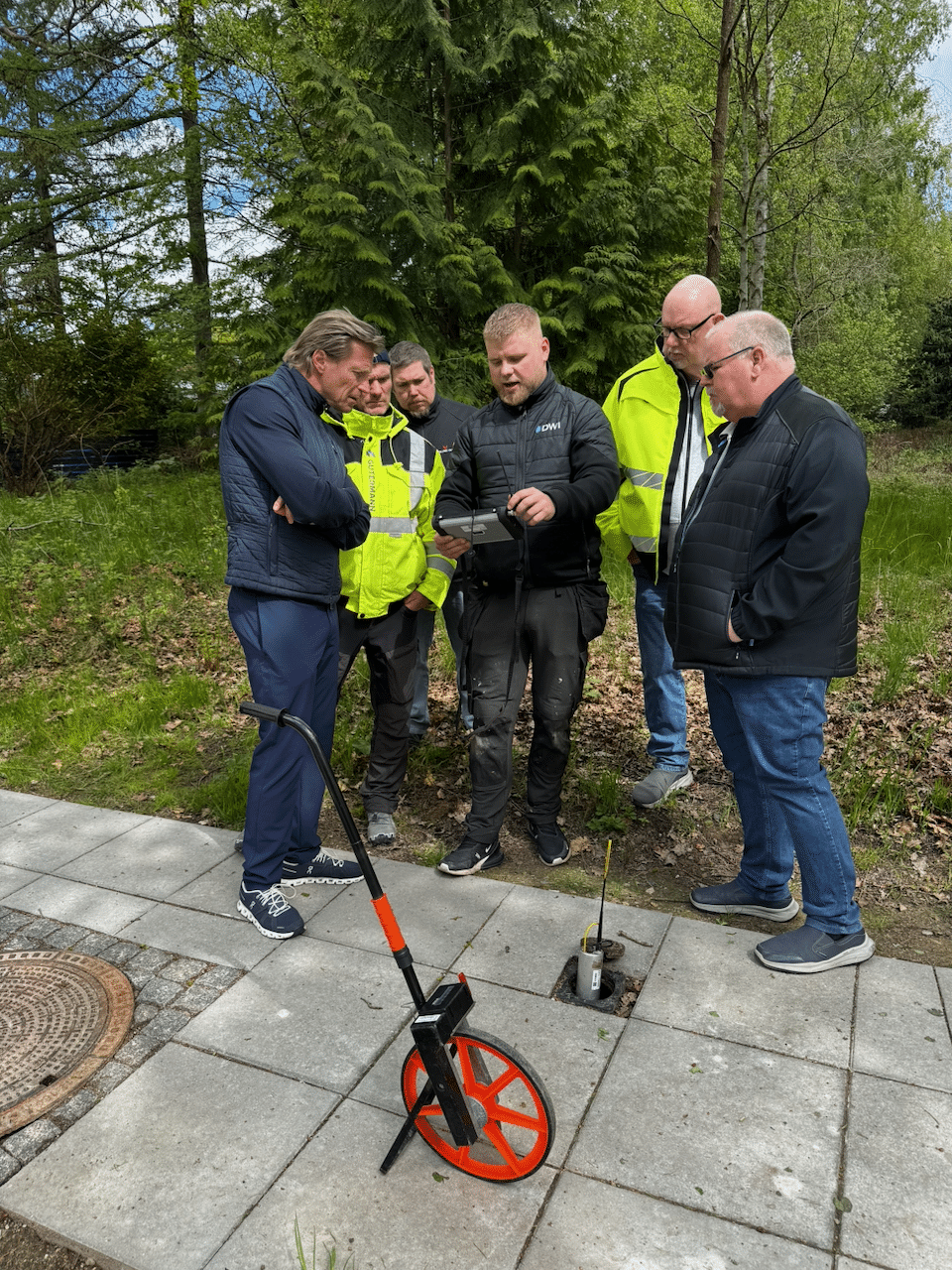
The point is then located. We listen acoustically with a ground microphone along the pipe and use correlation on the longer sections between buildings, where there is a measuring point at each end. If the leak does not produce a usable sound image, which is common on plastic pipes at low pressure, we resort to tracer gas, which finds the leak through the ground above the pipe.
Leak detection in Holstebro city and in the supply network
Inside the city, the task looks different. Here we work for housing associations and property managers, and the cables are under pavement and asphalt. Sound propagates differently in a compacted roadbed than in loose soil out in a field, and traffic adds noise, so many urban measurements are done at night.
Water loss in the city's network is calculated as NRW, and a systematic review of a street or residential area provides a basis for prioritizing renovation. In the event of acute breaks, we often respond the same day, even in the city; the emergency telephone number is +45 70 23 98 98.
The distance between the well and the barn
Many livestock farms are supplied from their own borehole, and the pipes that run from there to the buildings are located under the field road and farmyard. A loss here is rarely seen on the surface. The water seeps down into a gravel or stable layer and is distributed, and the pressure in the system is still high enough for the system to work.
That's why we always look at the relationship between what your meter at the source shows and what the buildings use. If there is a difference, the loss is in the section in between, and that's what we look for with listening and correlation. If you belong to a public water utility instead, the same principle applies from the meter onward.
Measurement in a barn that is in operation
There is no need to empty or move animals to get started. We measure from the taps and valves that the system has, and take the acoustic measurements when the system is quietest, typically at night, when consumption is lowest.
If consumption never drops sufficiently, data loggers can collect data over several days with automatic notification through The HydrantAI platform. Once the point is marked, your contractor digs a hole. DWI does not dig or repair itself, but we are happy to work directly with the person who will carry out the repair.
On a larger farm with its own operations manager, it can be worthwhile to have the equipment on hand. If consumption looks wrong on a Sunday, he can put the ground microphone on the taps nearby and have an answer by Monday; search equipment can be purchased or leased from us. A basic course at DWI Leak Academy also gives you a feel for what the animals' drinking valves are and what a leak is.
By looking at the bottom of consumption rather than the peaks, and by measuring over several days. The animals drink in patterns that follow light and feed. A loss is constant, even during the hours when the barn is quietest.
Yes, and it is one of the most common places because the pipes are located under the yard and field road, where seeping water is not visible. We compare the reading at the source with the consumption in the buildings to see if water is lost along the way.
The drawings that exist and your recent readings. If we have access to wells and taps, we can get started right away, and if we need to enter the stables, we agree on infection protection and access routes in advance.
The pump's number of starts per day and the pressure at the far end of the barn. If the pump starts running more for the same livestock, there is something to investigate long before the meter makes the reading clear.
Yes. We review your pressure and consumption figures and take acoustic measurements on the sections indicated by the figures. If we do not find a leak, we will let you know what the measurements rule out and what is worth pursuing further.
Contact DWI
Contact us for competent advice, leak detection and pipe location for your waterworks or water supply. We also assist commercial customers and private households with professional solutions.
