
Leak detection in Esbjerg
A wet field on the quay does not indicate a position.
The port and industrial areas in Esbjerg are fortified from fence to quayside. Heavy traffic drives over the same surfaces day after day. The air is salty, and humidity is a condition more than an event. If there is water in a corner of a terminal area, it does not say anything about where a leak is. It could be rain that cannot escape, condensation under a roof or a break a good distance away, where the water has found its way along the pipe trench under the pavement.
We are working our way forward in a different direction. The sound image from the leak is read in the measurement points the network already has, and the position is pinpointed before anyone puts a cross in the asphalt.
Leak detection in Esbjerg under paved surfaces
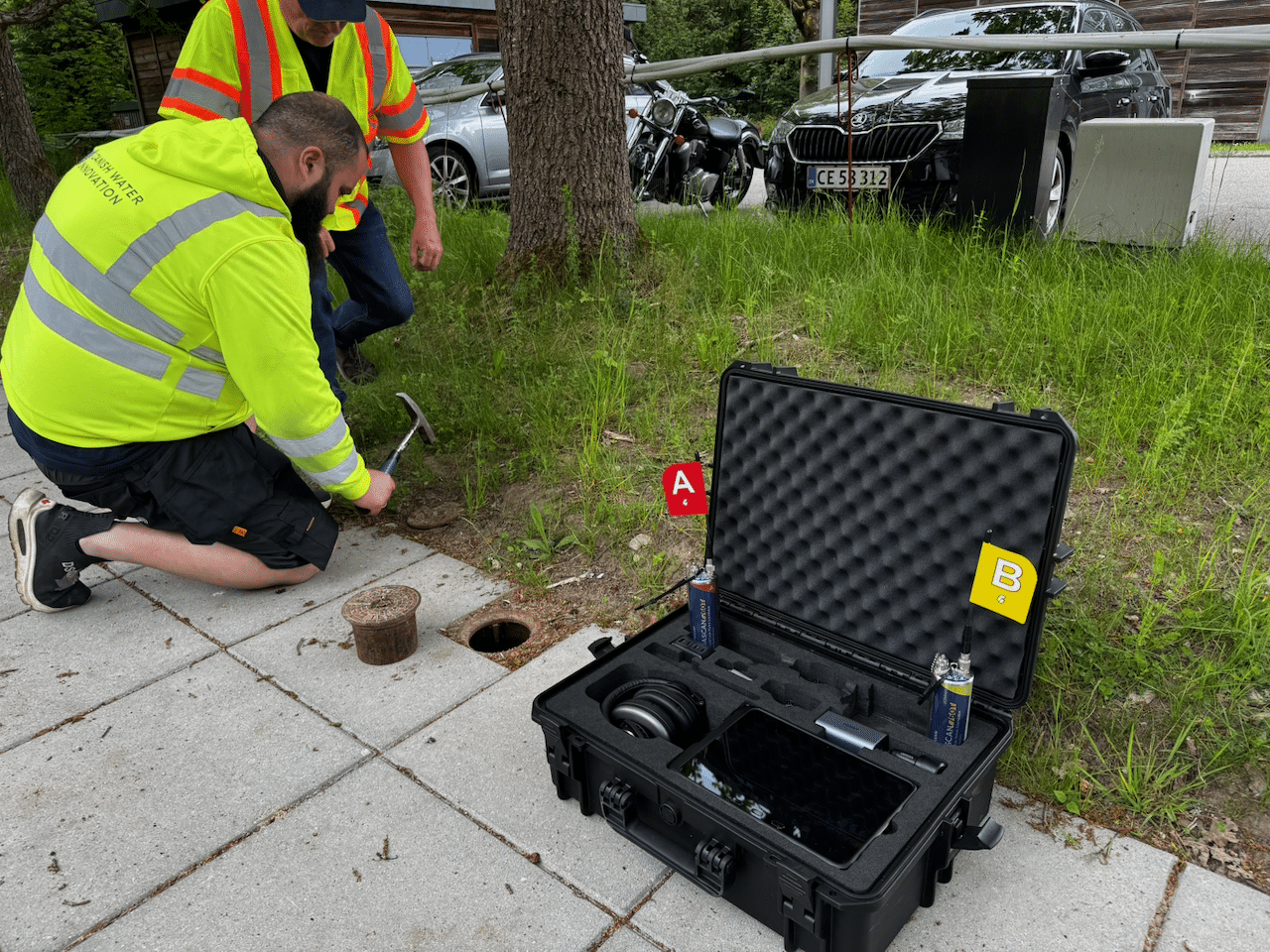
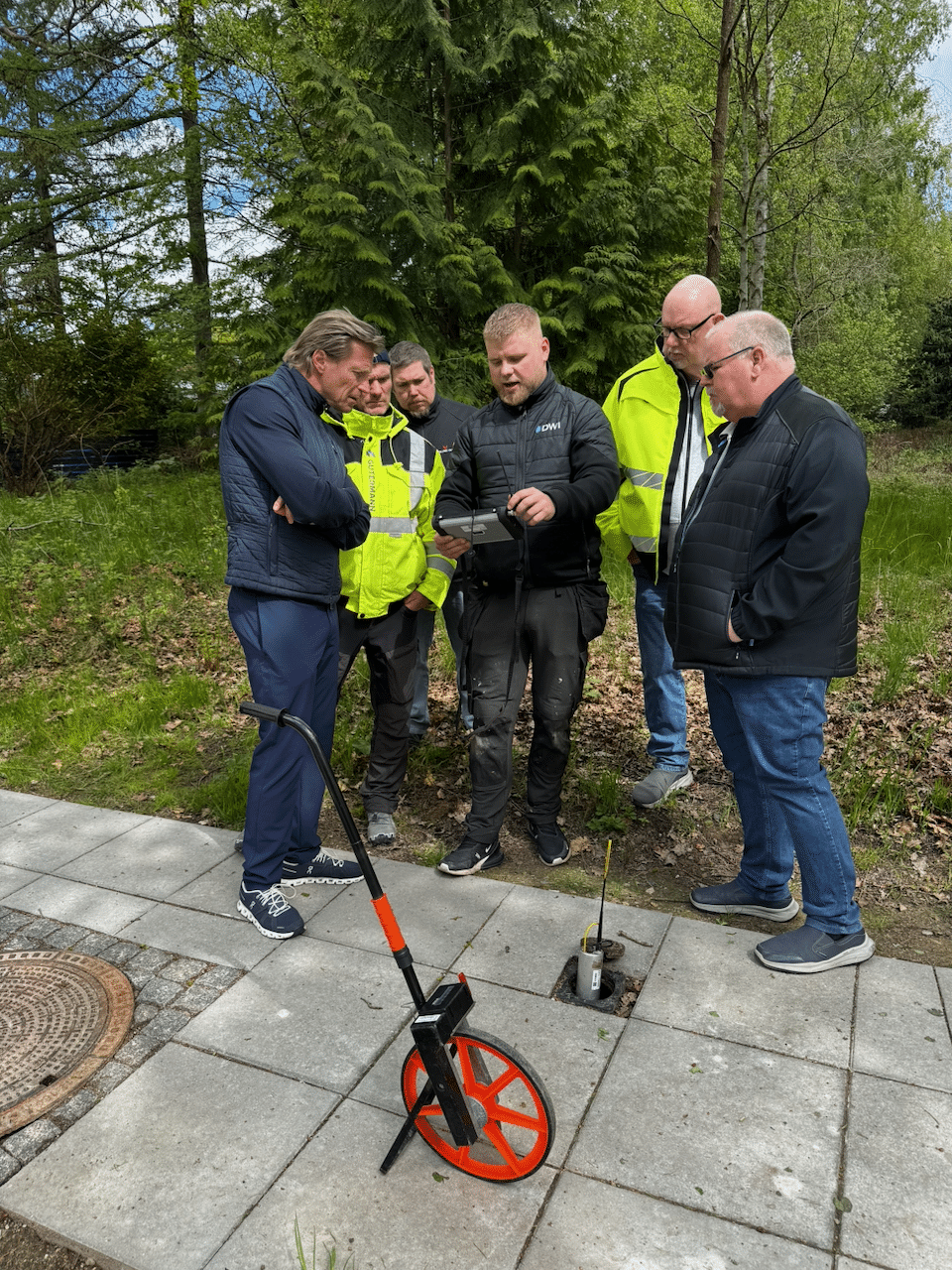
The search is carried out from the surface and from the wells and valves found on the route. There is no need to block off, and the coating does not need to be broken in order for us to measure. This only happens when the repair is to be carried out, and then only at the marked point.
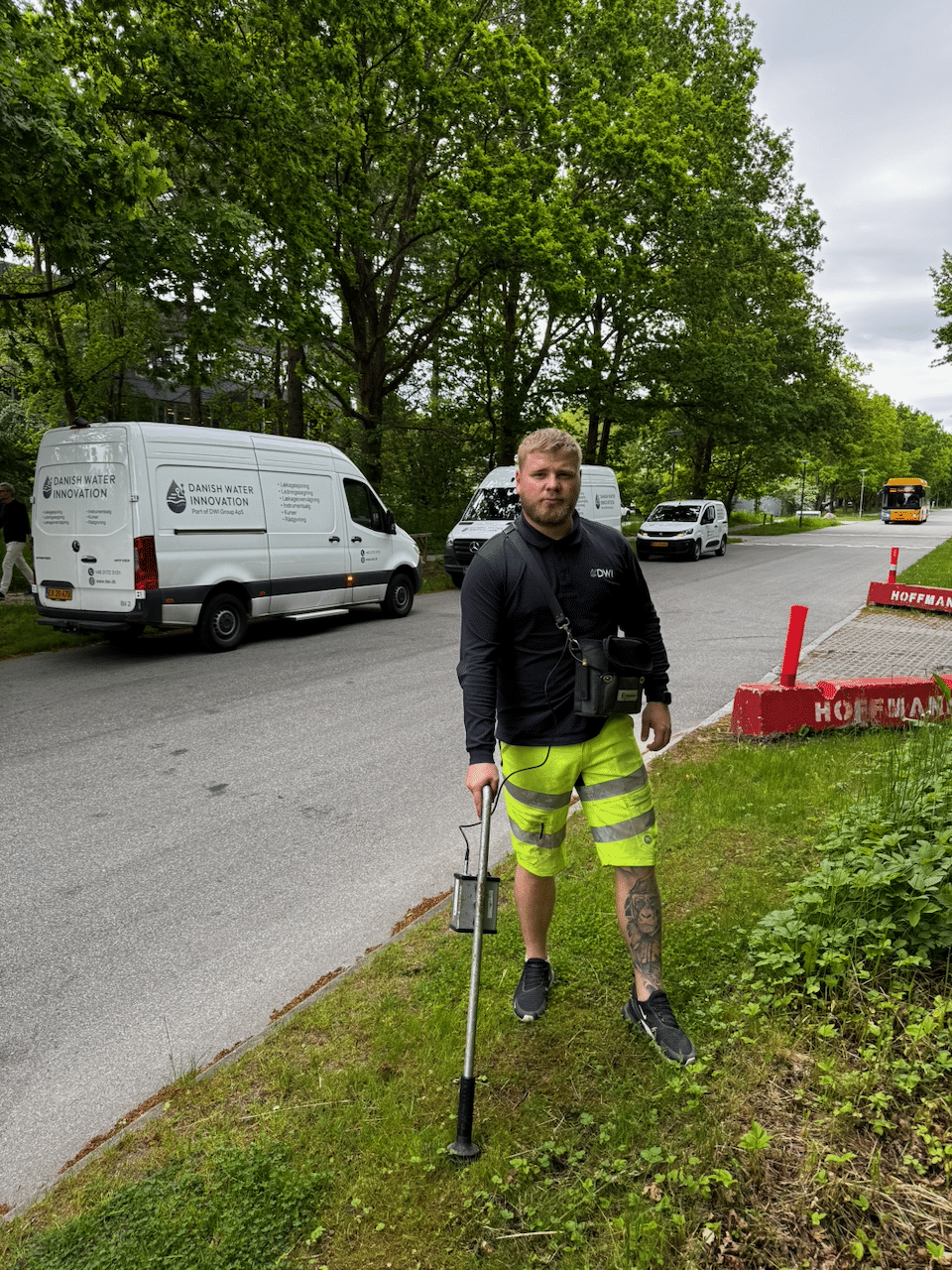
We listen acoustically with a ground microphone and use correlation, where two measurement points have pipes between them — in a port area there are often long, straight stretches between two valves, and this is where the method is strongest. If plastic pipes or machine noise make the sound image unusable, we switch to tracer gas.
The noise, in turn, sets the framework for when measurements are taken. Trucks and refrigeration units fill the soundscape during working hours, so the acoustic measurements are taken during the quietest hours, while the cable search can take place in the middle of the day.
Leak detection in Esbjerg on a rented commercial property
H2: Leak detection in Esbjerg on a rented commercial property
Large commercial properties rarely have one network with one story. They have been built on and leased out in stages, and each stage has left its own design — or none at all. Valves disappear under new asphalt. Connections to buildings that have been demolished are still in the ground with pressure on.
There is a legal aspect to this. From the main meter onward, the network belongs to the landowner, and on a rented property, the lease can pass the bill on to the tenant. Therefore, it is rarely enough to know that water is leaking. It must also be documented on which sub-area and on which line the leak occurred before the landlord and tenant can agree on who pays for the water and for the repair.
In practice, we therefore start by defining what is actually connected. If part of the network can be closed at a valve, the loss is confined to a section before we listen. If there is no usable sectioning, we read the night consumption at the main meter and work our way inwards from there. In an area with 24-hour operation, there is rarely an hour when consumption is zero, but the level is stable enough that a constant loss can be read from it.
Wire search when the drawing does not fit
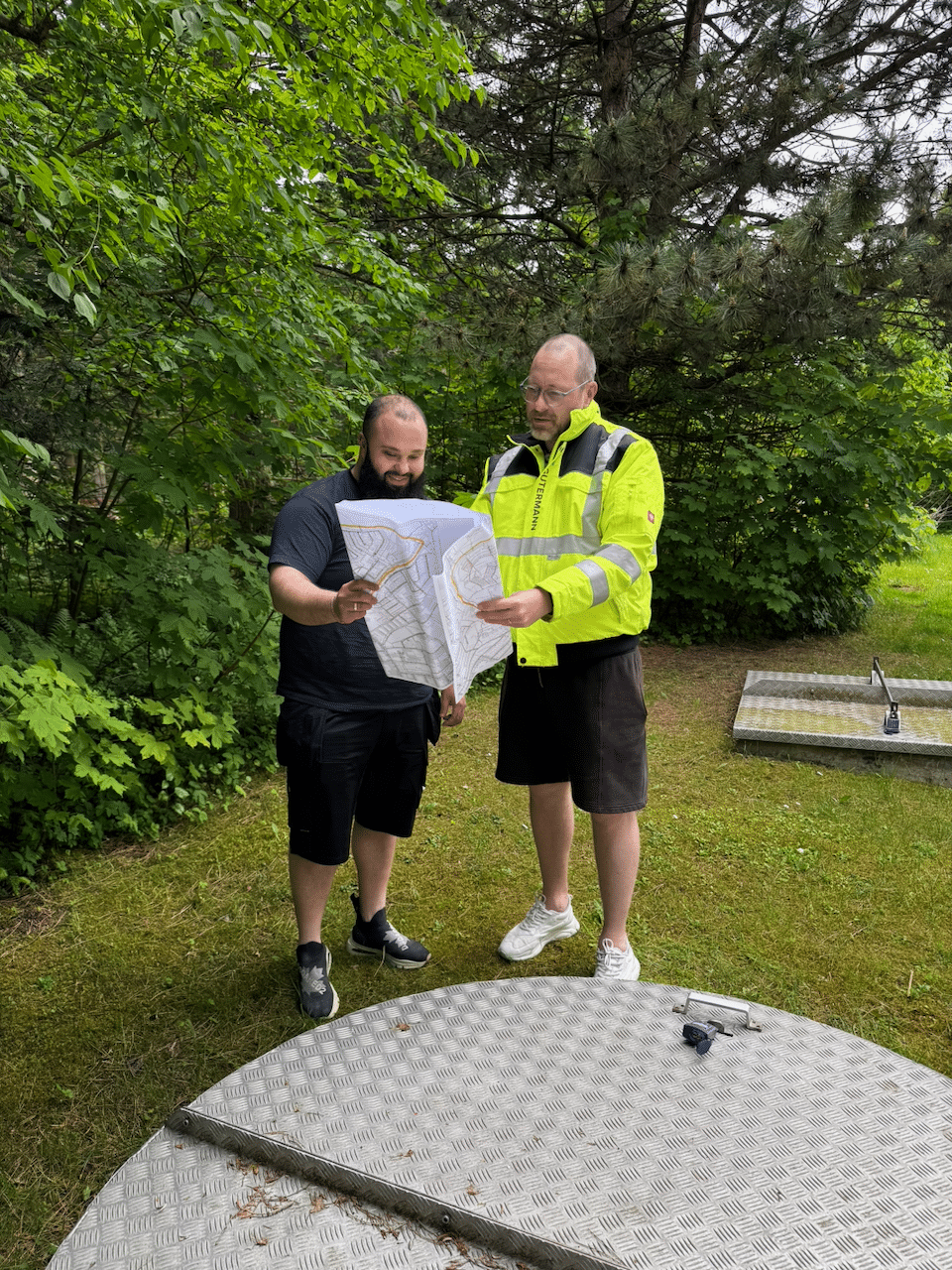
Wire search precedes the measurement where the map material is not sufficient. We trace the pipeline and the service lines, mark the course in the terrain and note where it deviates from what the plan shows.
This has value beyond the actual leak. The next time there is a need to dig for cables or new pavement, the contractor will know what is in the way — and a pipeline owner with updated drawings will not be surprised when the area changes hands.
What the numbers show between two visits
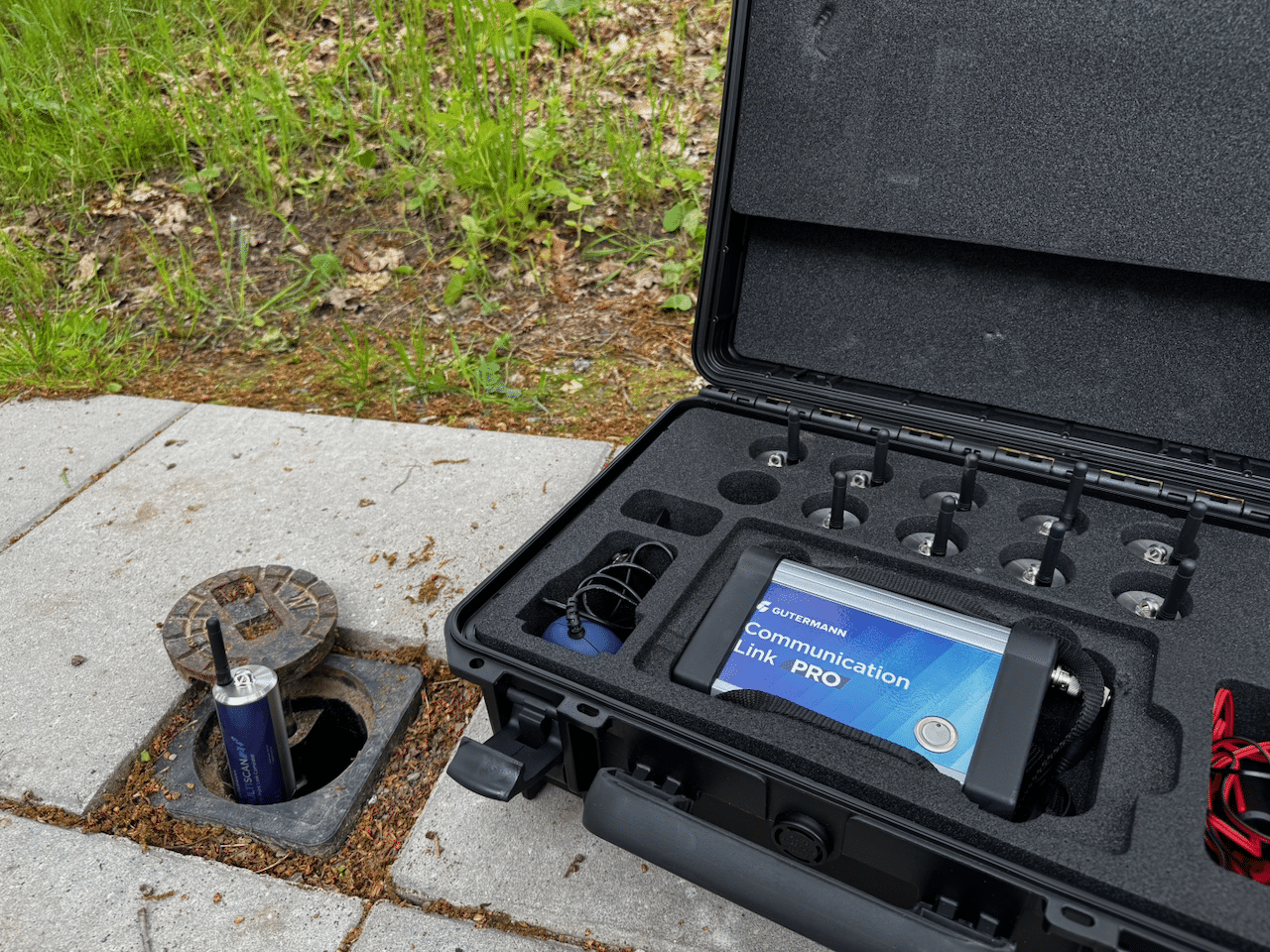
A large internal network has many places where a small loss can be below the alert level between two reviews. Data loggers installed in the network measures around the clock, and The HydrantAI platform collects data and automatically alerts you when there are deviations. In areas with changing tenants, it also provides a picture of when consumption changes in a sub-area and how long it has been high.
An operations department on an area of that size gets more suspicions than there are visits to an appointment. That's why some choose to have their own search equipment on hand, and we handle both sales and leasing with service on it, so that a wet spot can be checked the day it is noticed. If people are to be able to trust what they hear on a network where no drawing holds, the basic course at DWI Leak Academy before the equipment.
How to share work with your contractor
Excavation and repair are not part of our job. We locate the leak and mark the point on site, and you get the measurements documented. Your plumbers or contractor will do the work in the ground. We are happy to talk directly with them about where the cut should be made, so that the disruption of the coating is kept to a minimum.
In the case of emergency breaks, we often respond the same day, and the emergency telephone number is +45 70 23 98 98.
Yes. We do not use surface moisture as an indication, but measure in the pipes from wells and valves. If the sound image is poor, we switch to tracer gas, which can be used regardless of whether the surface is already wet.
Yes. We will then do a cable search first and find the actual route. You will have the route marked in the terrain and described so that it can be included in your own map material afterwards.
No. The entire search is done from the surface and from the network's existing measurement points. The coating is only broken when the repair is to be carried out, and then only at the marked point.
This is done by the landowner or tenant, depending on the lease. Our role is to document where on the network the loss was and what was measured. This is typically the material the parties use to place the expense.
We can delineate which part of the network the loss is on and which buildings that part supplies. If the distribution is to be monitored continuously, data loggers in the individual branches are the way forward, and then changes in consumption become visible per sub-area.
Contact DWI
Contact us for competent advice, leak detection and pipe location for your waterworks or water supply. We also assist commercial customers and private households with professional solutions.
