
Leak detection in Aalborg
There are networks where the supply cannot be shut off.
Aalborg has several large, interconnected areas, each with its own internal pipe network. Campus and dormitory buildings are among them, as are larger healthcare buildings, where construction and operation are taking place at the same time. What they have in common is that water is used in the network around the clock, and that no one can shut off a line to try their luck.
It changes the order of work. We can't close a valve and see where consumption drops off. We measure on the network as it stands.
Leak detection in Aalborg without closure and without stopping operations
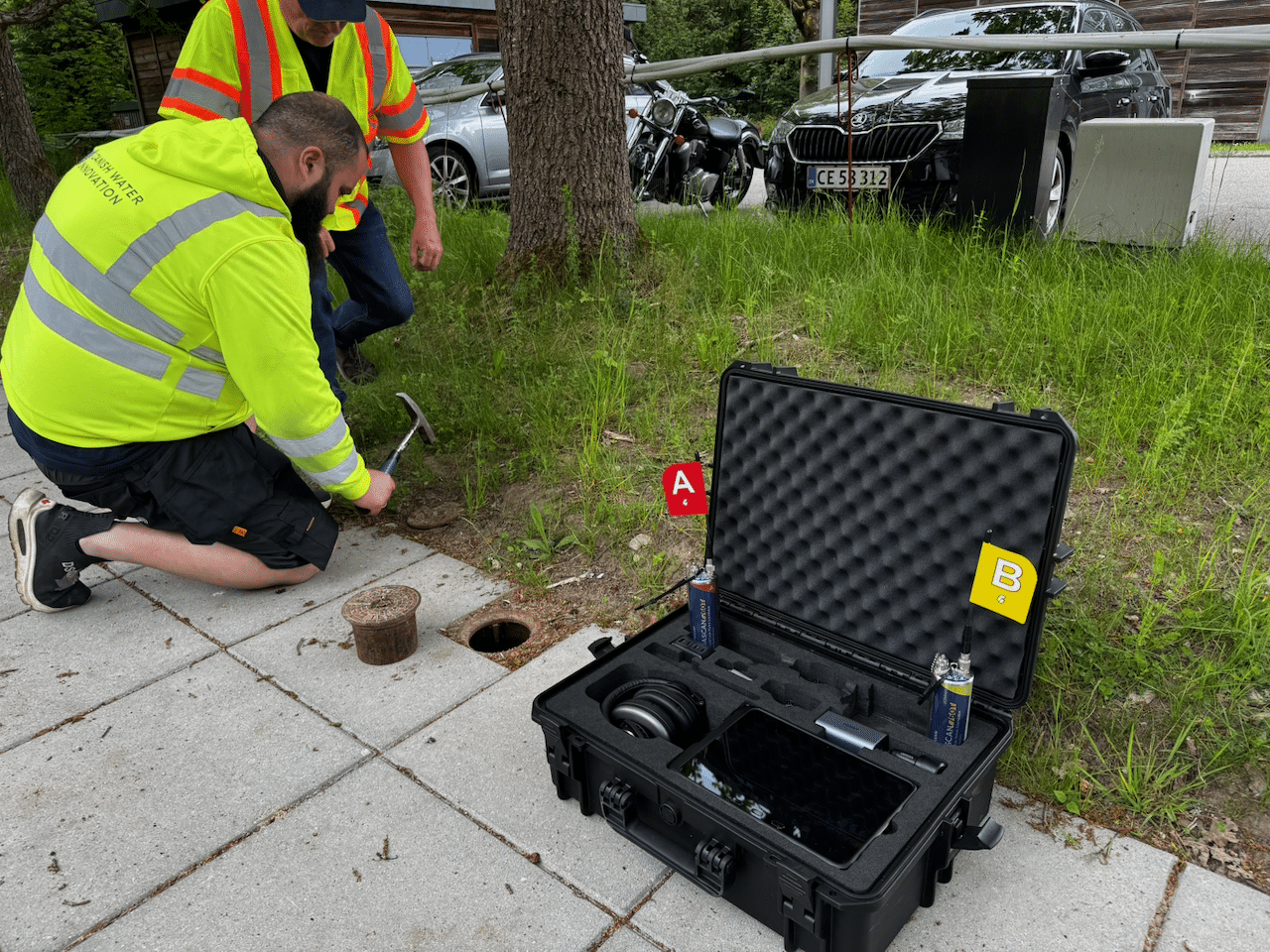
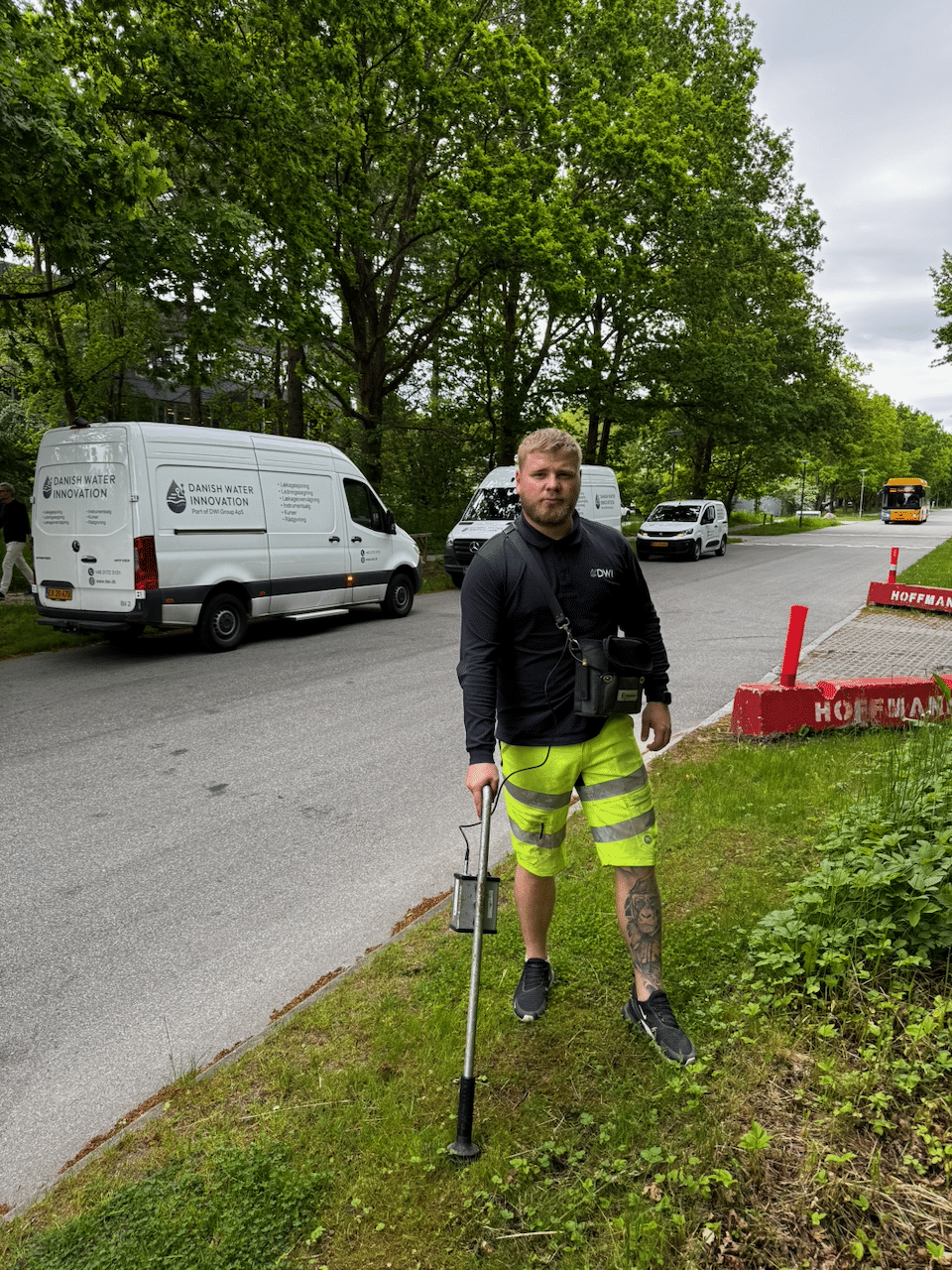
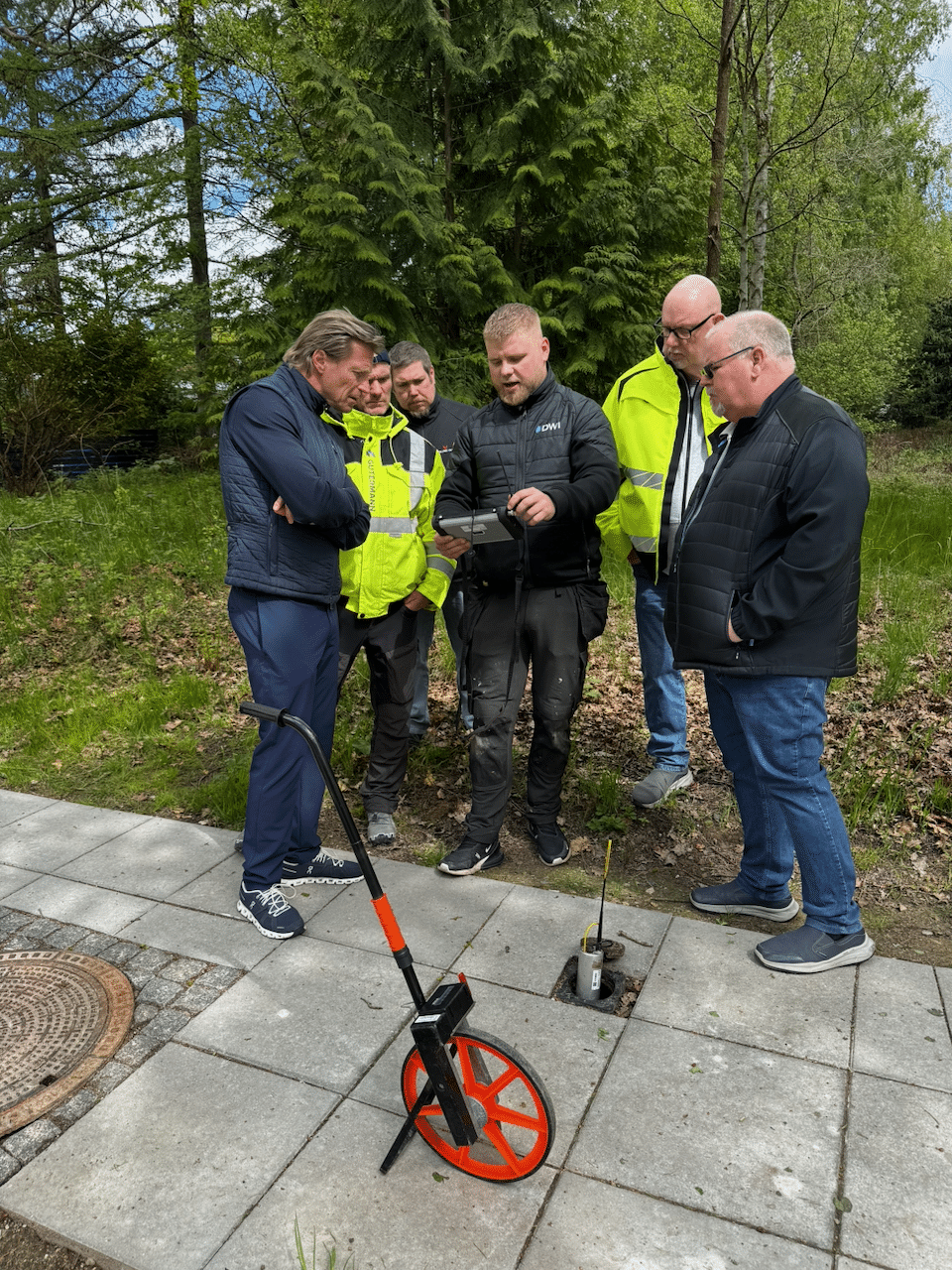
The measurement points are wells, valves, meter wells and taps. We can reach them without excavation, and the ground microphone works from the ground, even over asphalt and hard surfaces.
The first step is to narrow down. If the area is divided into strings, each with its own meter well, the night consumption per string can indicate where we should start, even when the consumption never goes to zero. Then, measurements are made section by section until the position can be set.
If there are several pipes in the same route between two buildings, a pipe search takes precedence. Internal main routes and old connections have been laid on top of each other over several construction periods, and without a proven route, one can measure on one pipe believing it is the other.
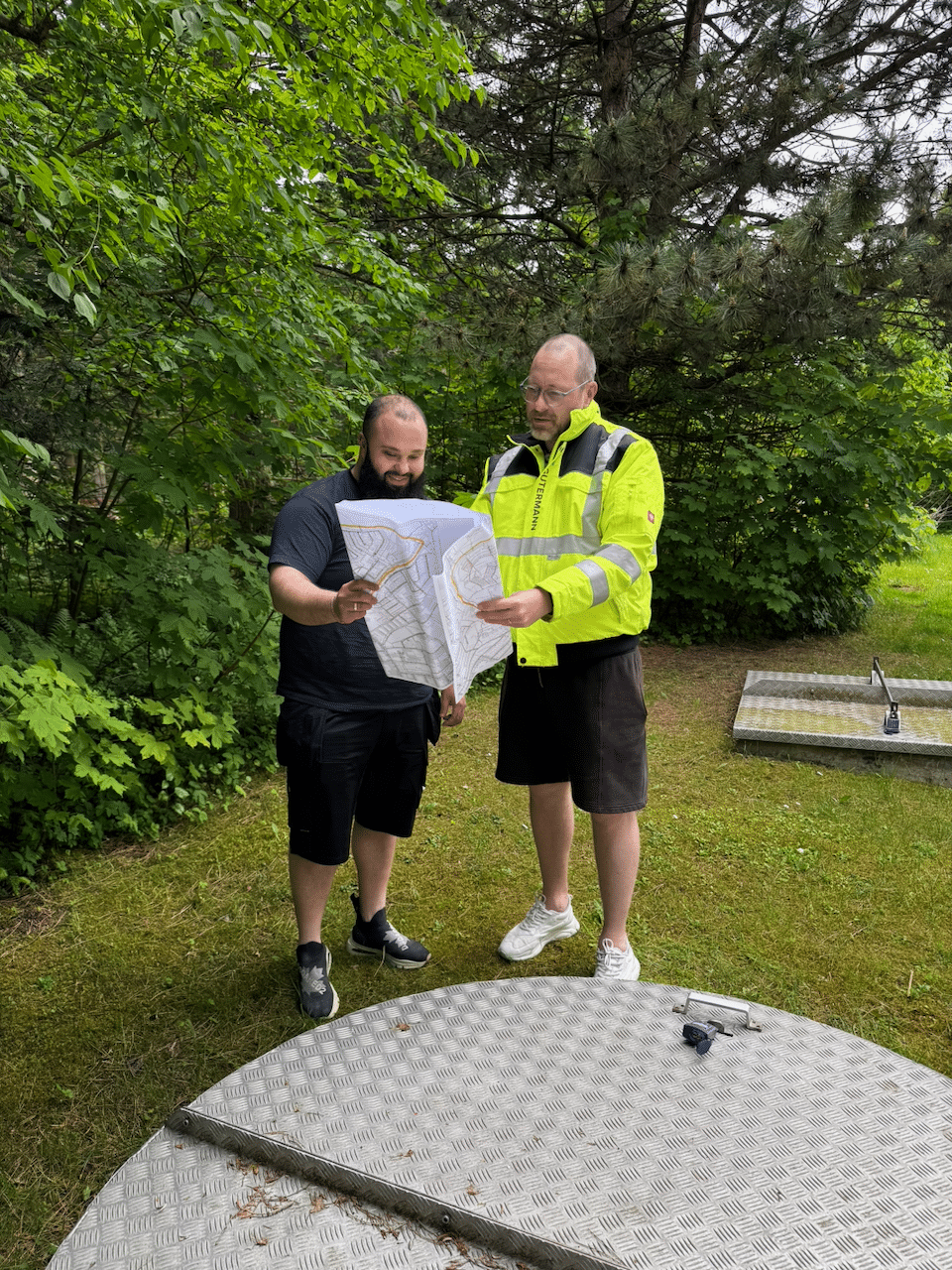
Access needs to be planned when the area is large. We like to review a well and valve map in advance and agree which points should be open and who has keys to technical rooms and locked wells. In an area with access control and changing construction site fences, it is often the detail that determines how much of the network we get through in a day.
Behind the scenes, the wire is your own
The responsibility of the utility typically ends at the boundary or at the end of the connection. Everything inside belongs to the property: the main lines between the buildings and the connections to each of them. This is precisely the part that is often the most poorly documented, because it was built, extended and changed in stages over many decades.
For you as a building owner or operations department, this means that a loss behind the boundary is yours to find and yours to fix. We are just as happy to measure on an internal network as on a supply network, and we speak directly with the contractor or plumbers who will be digging when the point has been set.
The person who owns the buildings is rarely the one who knows the pipes under them. That's why we start by clarifying where your own network starts and which buildings are connected to the same network. If meter data is available per building, it saves us an entire step.
Trace gas when shutdown is not an option
Trace gas finds the leak through the ground instead of through the sound of the pipe, and it does not require the supply to be shut off or digging to get there. That is why it often resolves the case inside an institutional area.
Pumps and ventilation introduce a constant noise floor into an acoustic measurement, and a socket under a floor or under heavy covering is difficult to reach with a ground microphone. Gas is unaffected by both conditions, and it also works where a leak does not provide a usable sound image.
Continuous monitoring of a network 24/7
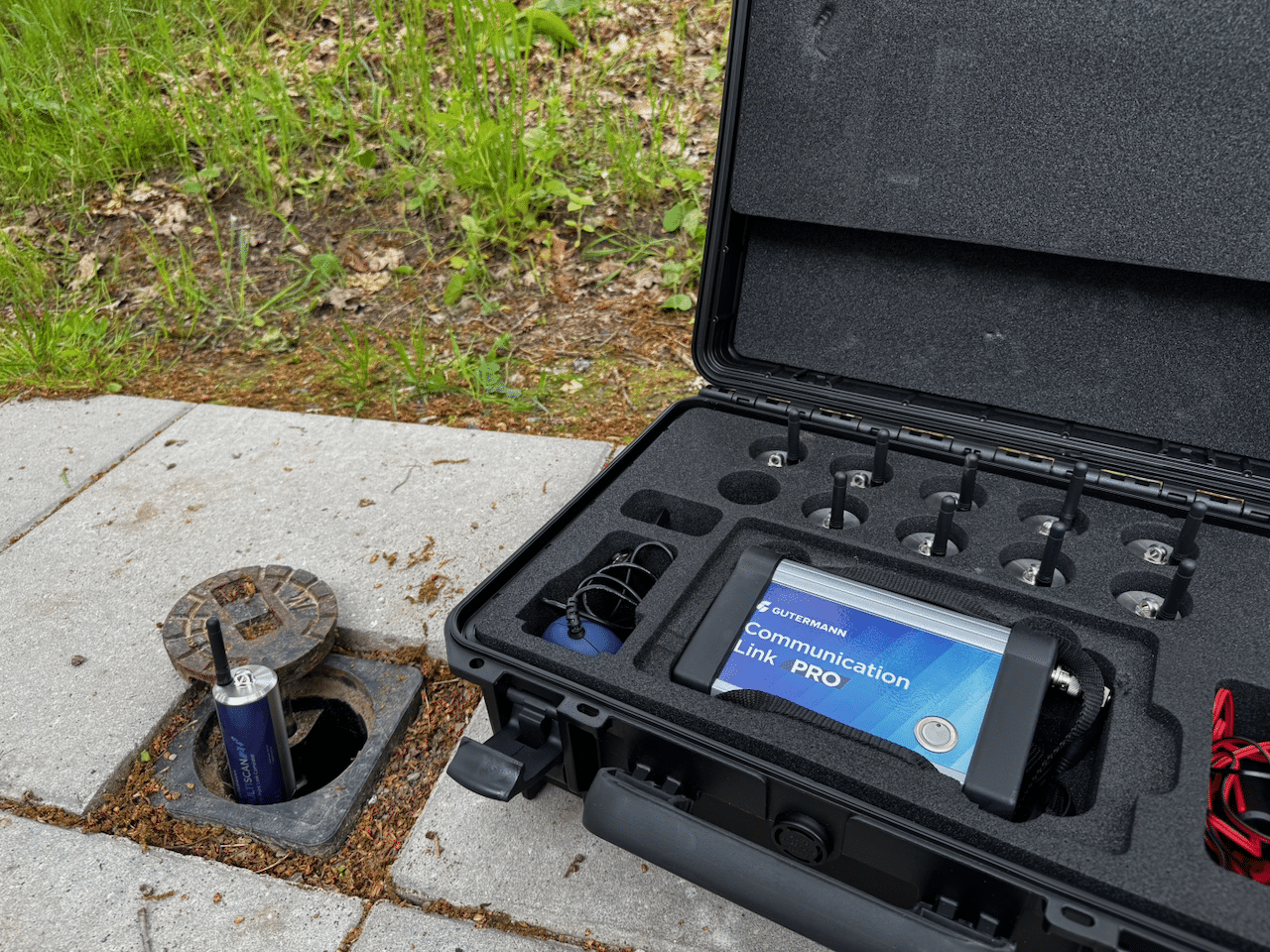
A large internal network can be followed between visits. Data loggers is placed in the network and measures around the clock, and The HydrantAI platform collects the measurements and automatically alerts you when there are deviations. In an area with many buildings and many sockets, it is the fastest way to see which part of the network has changed behavior before anyone goes out with the equipment.
The loggers can be permanently installed, or they can be placed for a period of time on the part of the network you are most unsure about, and brought back in when the pattern is known. For an operations department with many buildings, this is often the cheapest way to keep an eye on a network that is otherwise only measured when someone notices something.
If you have a technical department with keys to wells and technical rooms, it can take the first measurement as soon as a logger shows a deviation, without having to wait for someone to come from outside. We are responsible for the sale and leasing of search equipment with service, and a basic course at DWI Leak Academy gives people the routine they need to read a result correctly.
Leak detection in Aalborg, and what happens after the marking
DWI A / S neither digging nor repairing. We mark the leak on site, and you will receive documentation of the measurements with: where the measurement was taken, and with which method. The repair is carried out by your own plumber or contractor, and we are happy to review the measurement with them so that the cut is made in the right place.
If the leak is on a line that supplies several buildings, we also agree on what the repair requires from the operation before the technician arrives. If it is urgent, an operator is often on the scene the same day. The emergency telephone number is +45 70 23 98 98.
Usually at the boundary or at the end of the connection. Everything inside the plot is the responsibility of the property, and this is typically where the documentation is thinnest. We work on both sides of the border.
No, but it's good to know in advance. If you have a map of wells and valves, we will review it before the visit and agree which points should be accessible and who will open them.
The marking shows where to dig, and the documentation shows how the position was found. This makes the excavation smaller and the repair shorter, and we are happy to speak with the craftsman directly before starting.
Yes, and that's one of the reasons for using tracer gas. It detects the release through the ground rather than through the sound from the pipe, and it also works where the surroundings are noisy.
It depends on the size of the network and the access conditions. Call or write and we will assess the task specifically.
Contact DWI
Contact us for competent advice, leak detection and pipe location for your waterworks or water supply. We also assist commercial customers and private households with professional solutions.
