
Leak detection on Funen
What the board should be able to see when the tick is placed
A location rarely ends on site. It has to go on to a board meeting where a construction budget must be approved, to a property manager who has to explain to an owner why the driveway is being dug up, or to an insurance company who wants to know how the leak was found.
That's why we deliver more than just a marking in the asphalt. We write down the measurements and describe the position so it can be found again when the excavator arrives. After the repair, we measure the same place again.
This is what the documentation looks like after a leak detection on Funen
The basis is the measurements we made along the way. Acoustic listening with a ground microphone shows where we listened and what the sound image showed at each point. The measurement setup is the network's own access points, i.e. wells and valves, and they can be visited again by anyone.
If we have measured at two points and calculated a distance, both points and the result are included in the report, because they are what make the distance verifiable. If tracer gas was used, it is stated where the gas was applied and where it came up.
The actual marking on the spot does not last forever. A sprayed ring on asphalt can withstand rain and traffic for a few days, which is why we describe the position with measurements from something that does not move, typically a manhole cover or curb. This way, the digging point can be recreated, even if the repair is not carried out until later.
We do not assess the remaining life of the pipe and do not state any blame. We describe what was measured and with what method.
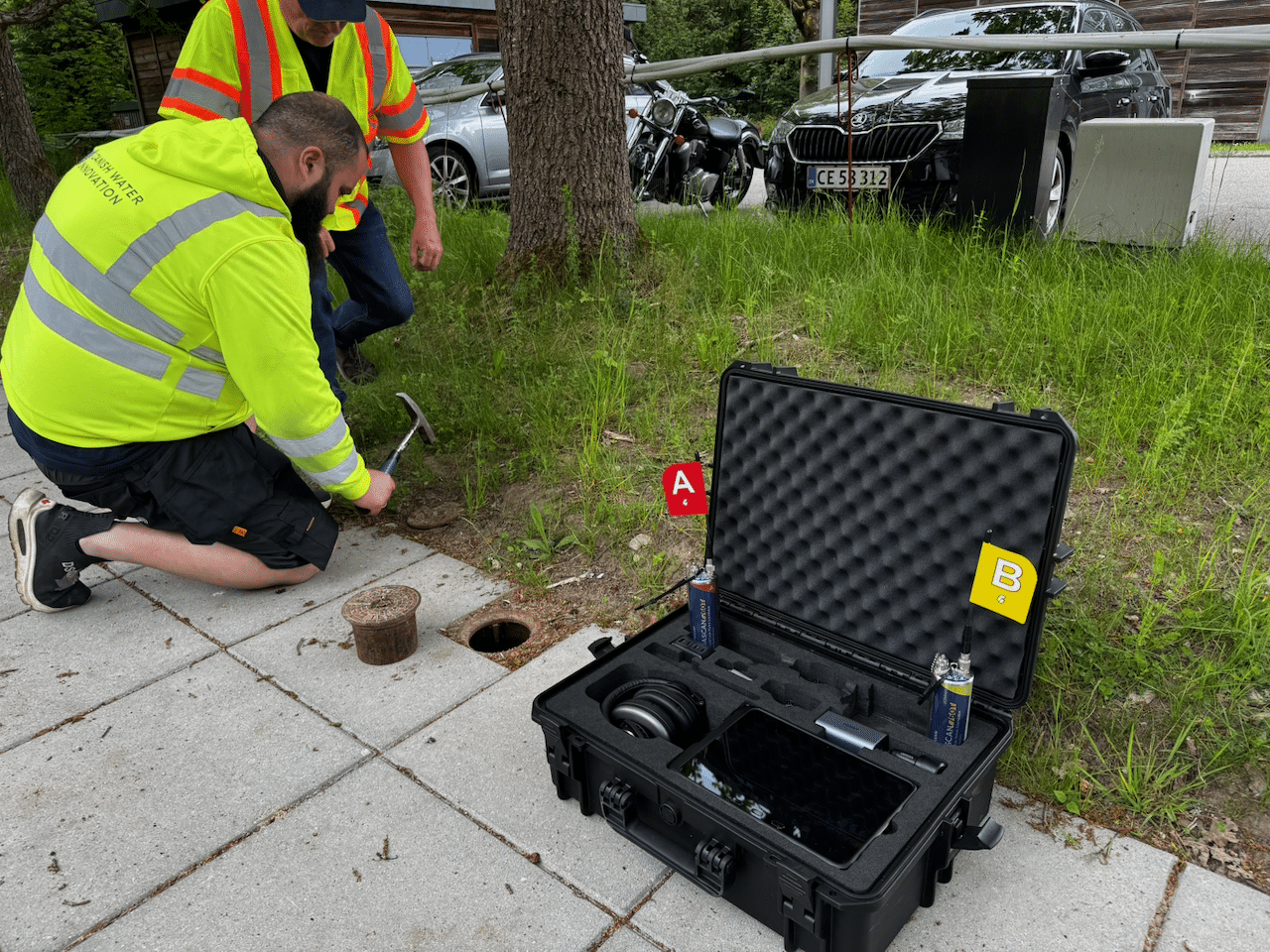
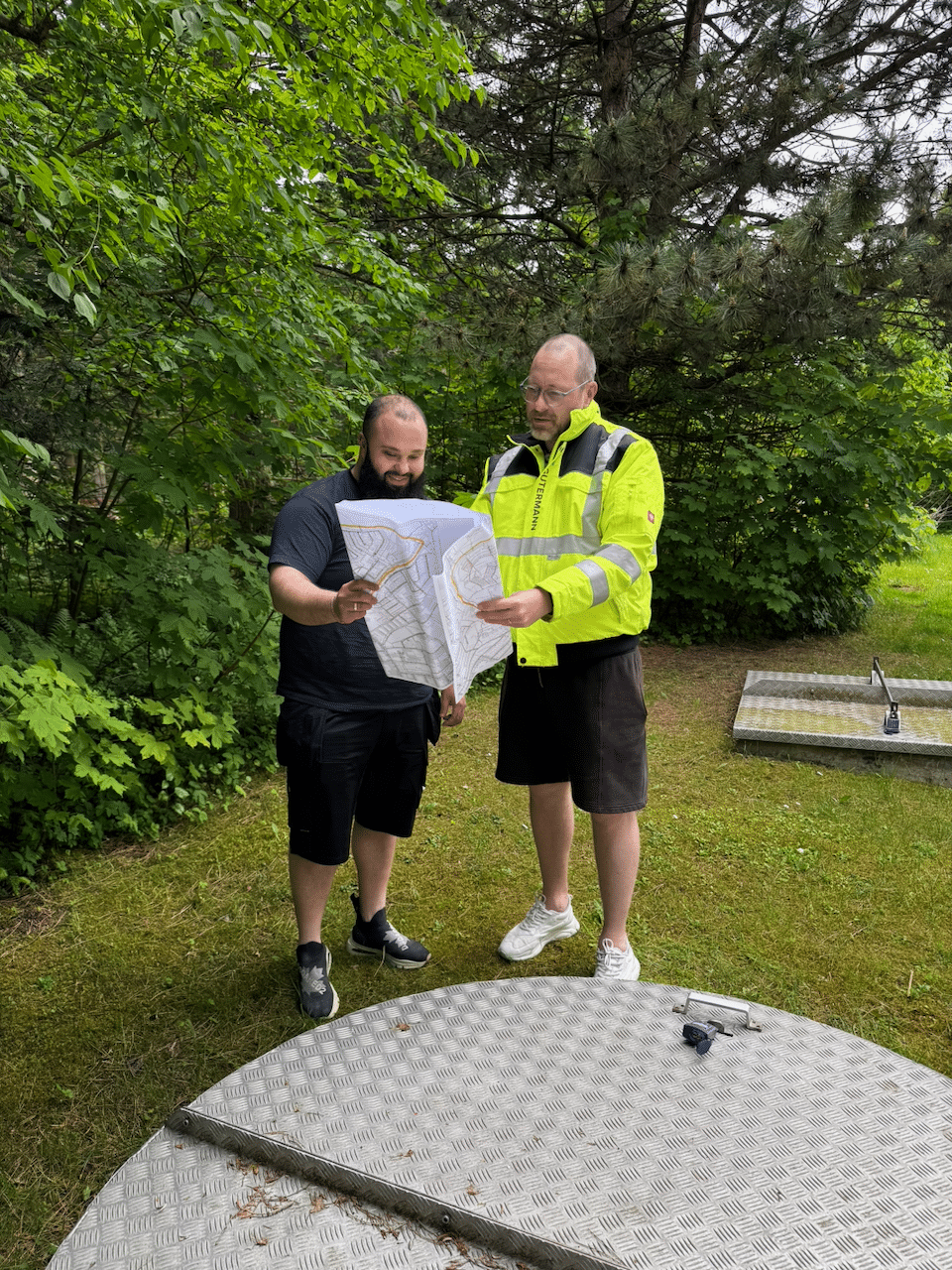
The choice of method in a leak detection on Funen must be justified.
Funen consists of many smaller networks with long connecting pipes between the villages, and on such stretches we choose correlation because two measurement points can cover a lot of pipes at once. If the stretch is short and densely built up, acoustic listening gives a sharper picture, and we do that instead.
The choice must be readable afterwards. If the documentation states why the method was changed along the way, a board of directors can follow the thinking without being an expert, and an advisor can decide whether the basis is sufficient to order excavation work.
If you take the first measurements yourself, the same requirements apply to the documentation. Search equipment can be purchased or leased with service, and a basic course At DWI Leak Academy, the operator is given the basis needed to be able to explain the method afterwards. This combination makes it possible to delimit a suspicion yourself and only then call us to the final location where the measurement can be presented.
The control measurement after the repair
We do not do the digging or the repairs. The work is the responsibility of your plumbers or contractor, and we are happy to speak directly with them so that the marking is understood correctly before the first sod is cut.
On the other hand, we can measure again afterwards. Same points, same method. If the sound image has fallen back to background level, the line holds. If there is still a signal in the same place, there is more than one leak, and the search continues. The control measurement is also what closes the case for an auditor or an insurance case manager, who must see that the expense had an effect.
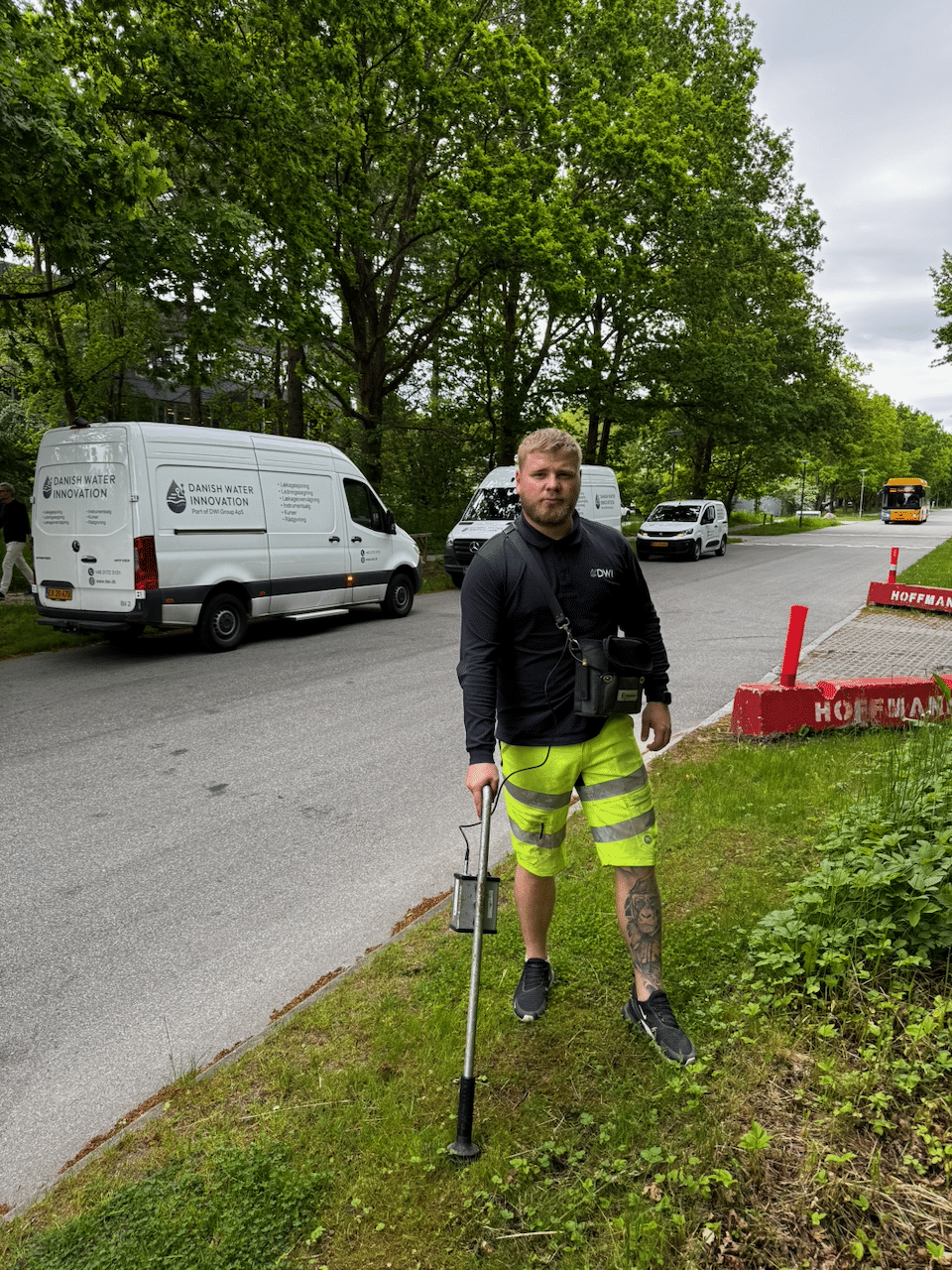
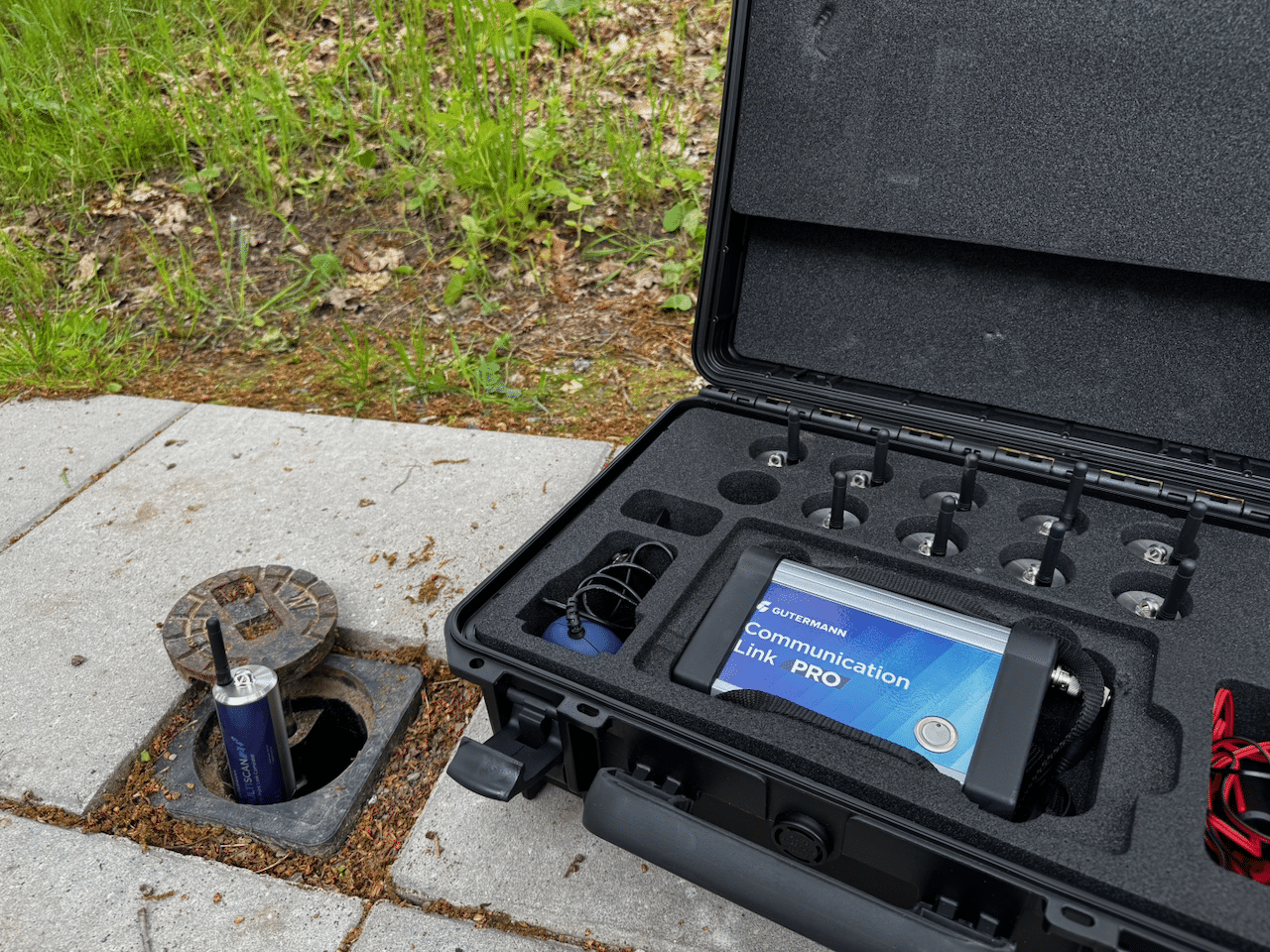
When the water loss must be presented
A water utility with an increasing difference between pumped and settled volumes needs to be able to show what has been done. The technical name for water loss is NRW, non-revenue water., and the calculation becomes more reliable when each location can be traced back to a specific measurement in the network.
A board meeting has an agenda, and water loss is one item on it. Therefore, it is important that the material can be read without a professional background: how many sections have been covered, and what was found along the way. We write that part briefly and in plain language, while measurement data is behind it for those who want to go into detail.
The municipality supervises, and an insurance case requires a documented reason. We do not decide either case. We provide the measurement basis that the case manager otherwise lacks. Furthermore, if drawings are missing, we make wire search of pipelines and service lines, so that the map material matches what is actually in the ground.
Leak detection on Funen and the towns that have their own page
Odense, Middelfart and Svendborg are described separately, with the conditions that apply there. If your network is outside of these three, we work from the same starting point on the rest of the island: the same choice of method and documentation that can be put on the table.
We cover the whole of Funen, including Nyborg, Kerteminde and North Funen.
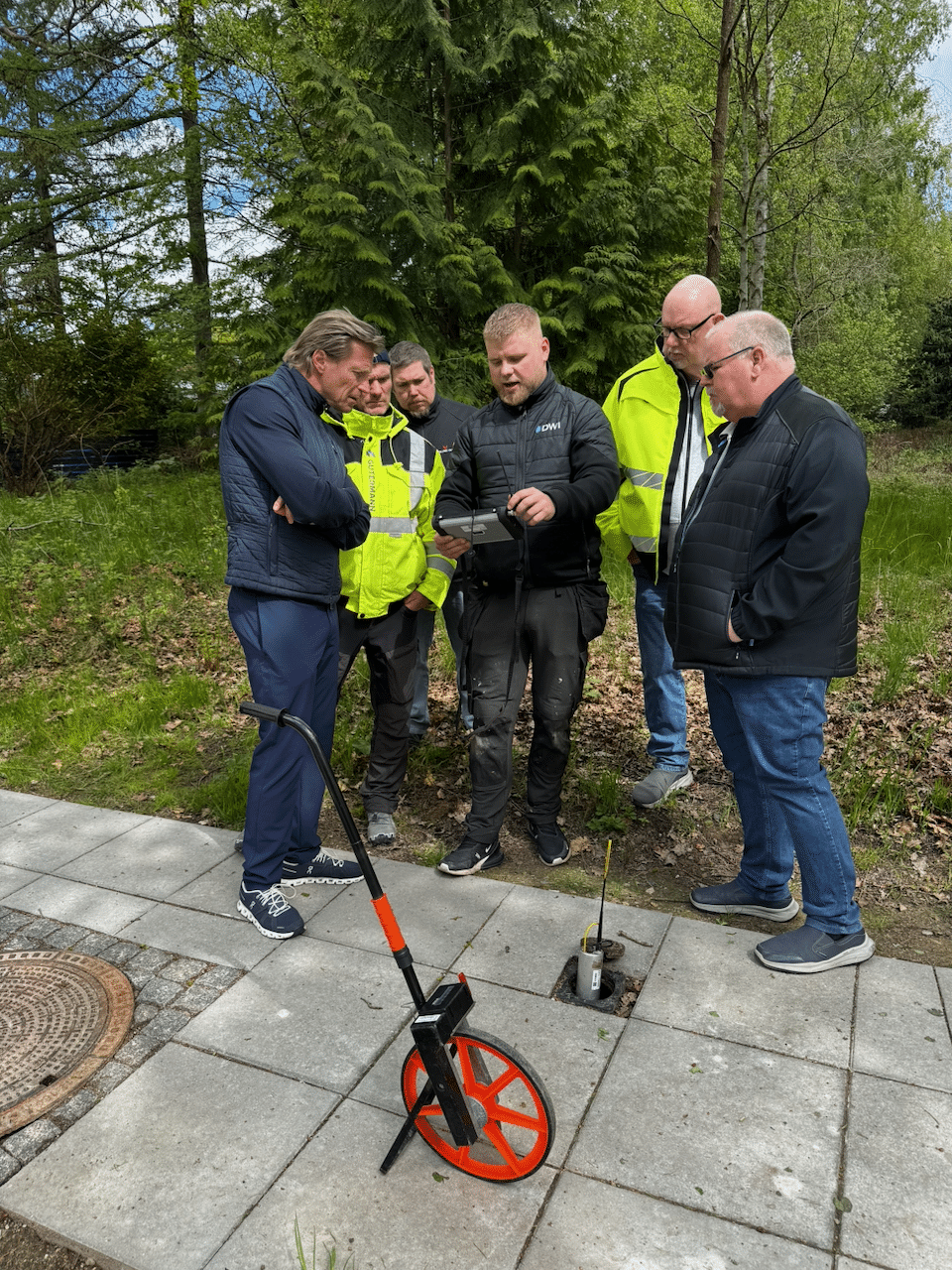
A marking on the site and a written report of the measurements. It states which points were measured and which method led to the position. The description is made so that your contractor can find the site without us.
We do not take a position on coverage, but we document the cause and location with the measurements that were taken. This is the kind of documentation a caseworker asks for, and it can be provided directly.
Yes. We will return to the same measurement points and repeat the measurement so you can see if the line is tight again. If a signal still appears, we will continue searching the same day, if possible.
That is part of the purpose. The report explains why this particular section stands out, so that a decision to replace or repair can be made on a measurement basis rather than an assumption.
No, but it changes the order. We start with the pipe search and get the pipe route on the map, and then we locate the leak. The tracking becomes faster, and the digging work afterwards is more targeted.
Contact DWI
Contact us for competent advice, leak detection and pipe location for your waterworks or water supply. We also assist commercial customers and private households with professional solutions.
