
Leak detection in Central Zealand
Under the highway there is no access above the pipe
Highways and railways cut through the pipeline network time and again in Central Zealand, and where they don't, a stream or a major road does. Every crossing is a place where the pipe is in a casing or under load from heavy traffic. It is also a place where no one can walk over the pipeline with a ground microphone.
The question therefore becomes where the leak is located: inside the crossing or on the accessible section before or after it. The answer determines how big of a deal the task will be.
Wire search before the first measurement
Intersections are often the place where a construction project has had to change the plan along the way. The line has been re-laid or pulled in a casing, and the drawing is not always corrected afterwards. A casing also shifts the actual route in relation to what was once measured.
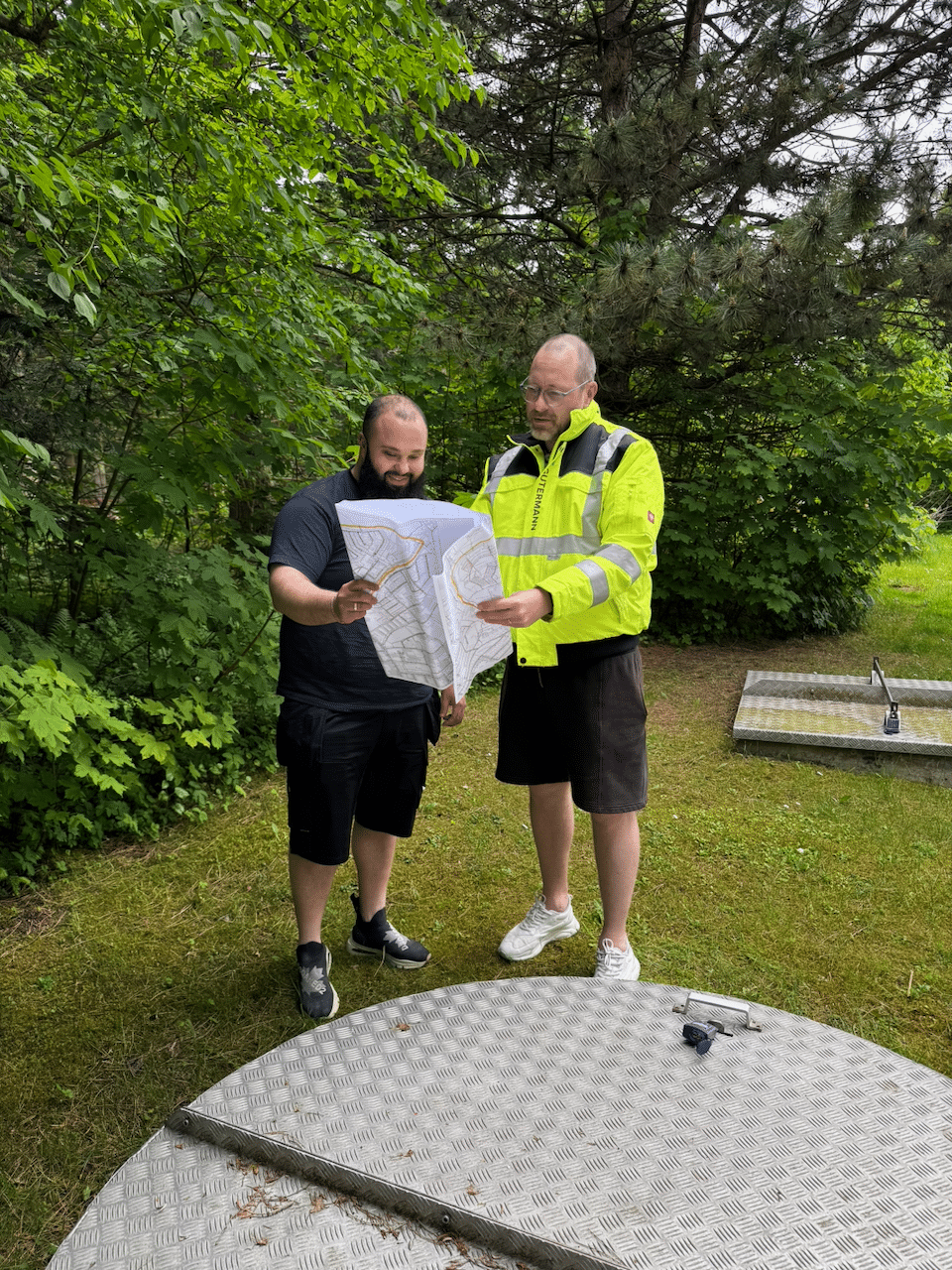
We therefore trace the progress before we measure. If the endpoints are determined correctly, there is something to calculate. If they are on a wire that turns out to be blinded, the entire calculation will be skewed, and the error will only be discovered when someone is standing with a shovel in the wrong place.
The wire search This is a prerequisite for what comes afterwards.
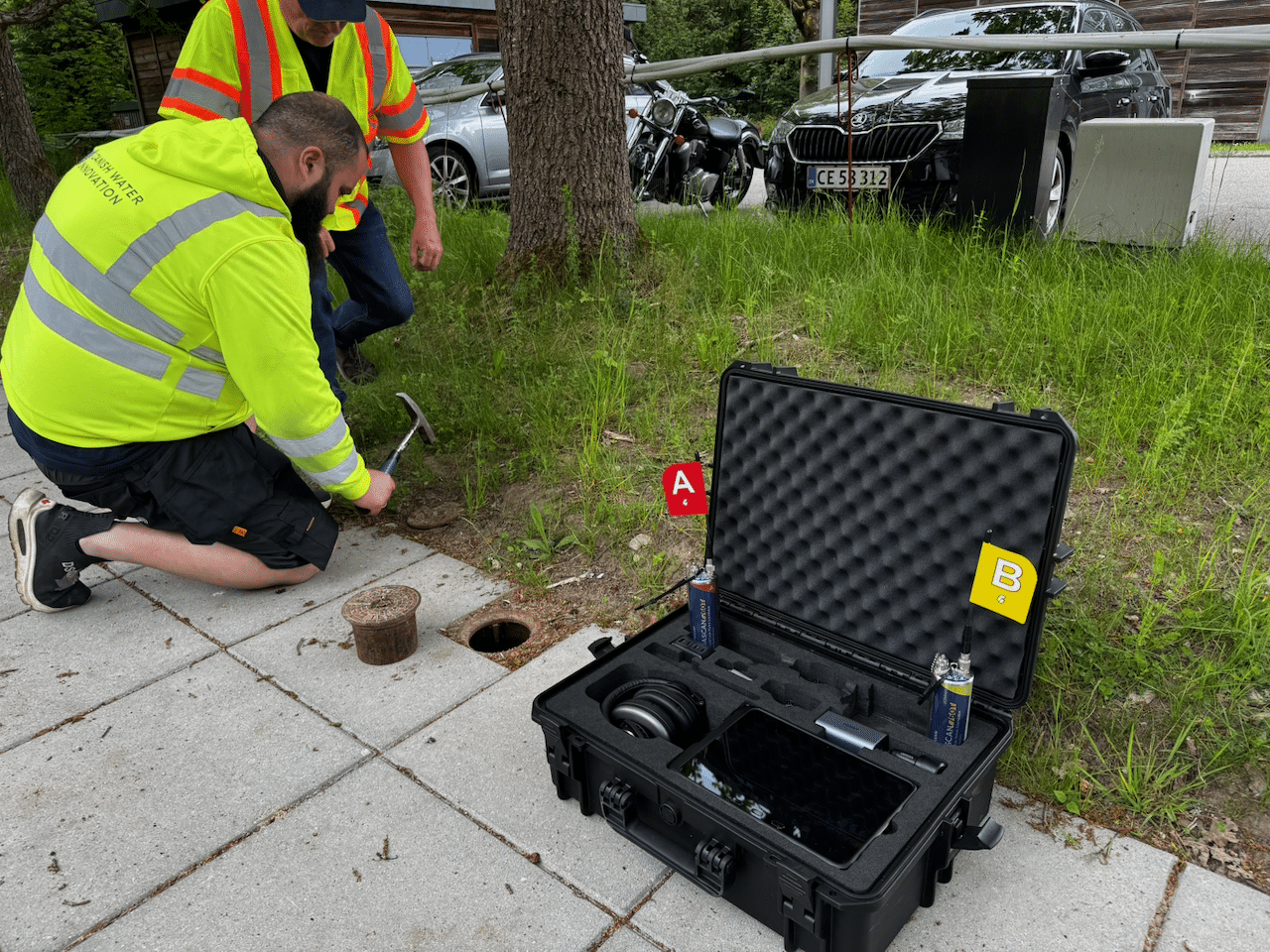
Leak detection in Central Zealand measured from the endpoints
When the surface above the pipe is inaccessible, we work from the points the network itself gives us on each side. A fitting or well before the intersection and a corresponding point after it are enough for a correlation: the signal from the leak is measured at both ends and the position is calculated from the time difference between the two measurements.
The conditions are good here. A crossing is usually a long, straight stretch without branches, and this is the kind of stretch that the correlation works best on. Whether the pipe is cast iron or plastic has an impact on the signal strength, but at a crossing it is the access to the endpoints that determines the choice of method.
If the calculated position is inside the intersection, you know before anyone tries to dig. If it is a little outside, the task is a regular repair in the embankment. In both cases, we note how secure the position is and what the uncertainty is due to — at an intersection, that information is as important as the position itself.
The available routes are excluded first
A conclusion about a crossing is expensive to act on. That is why we do not use it until everything that can be measured in the usual way has been measured. We divide the network into zones and examine the sections where there is access above the line with the ground microphone first. We agree on closures at valves with the operations before anything is operated.
If the loss falls into place there, the crossing is out of the question. If the zone continues to show increased nighttime usage after the available sections have been cleared, there is a measured basis for moving forward — and for spending time and money on permits and traffic management.
The first exclusion can be handled by an operations team themselves if the instruments are in-house. We handle the sale and leasing of search equipment, and a basic course at DWI Leak Academy provides practice in reading a sound image and in setting measurement points so that a correlation across an intersection is based on something that is measured correctly from both ends. The more of the available stretches you can clear yourself, the sharper the task we are called upon to do.
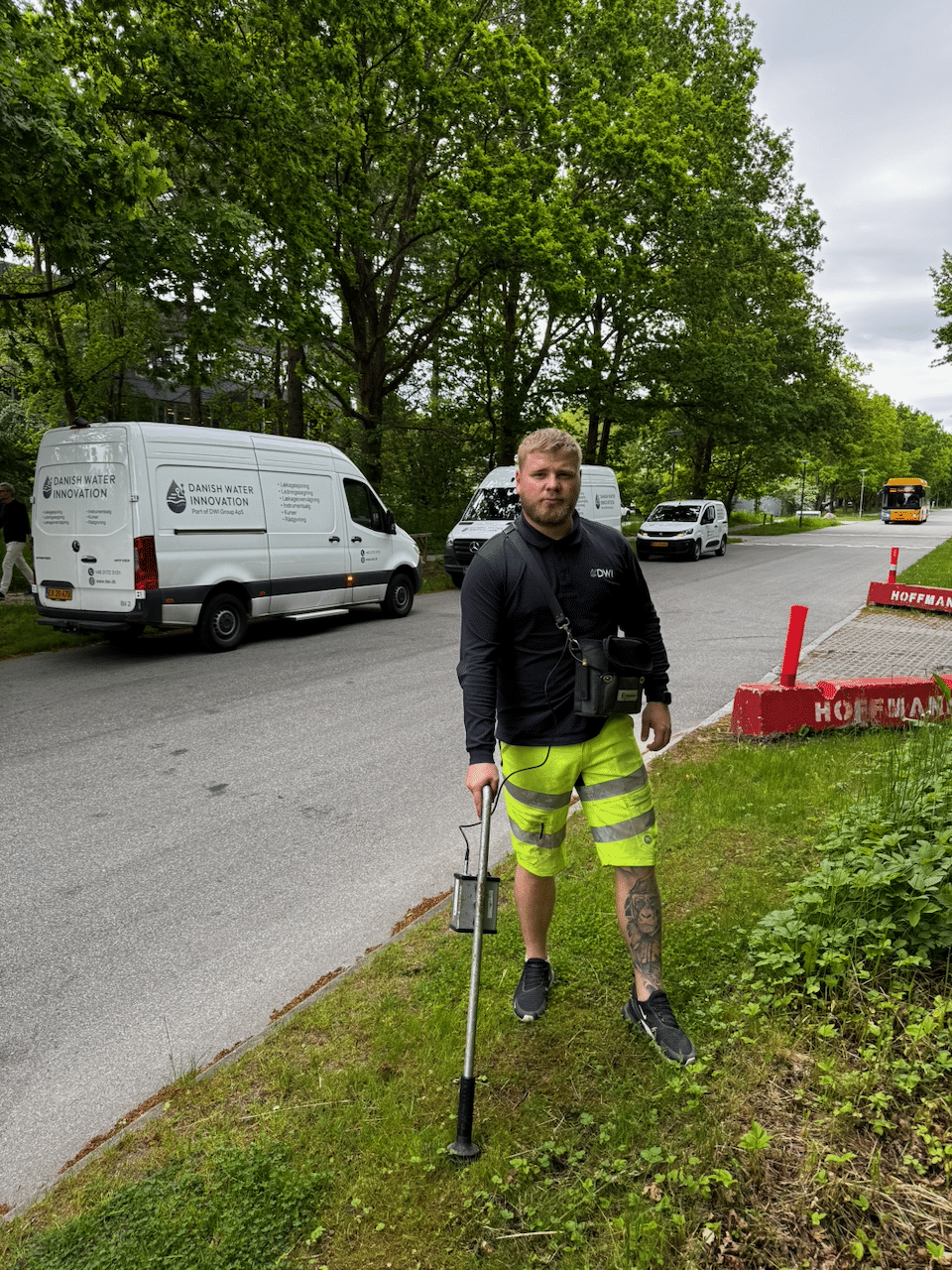
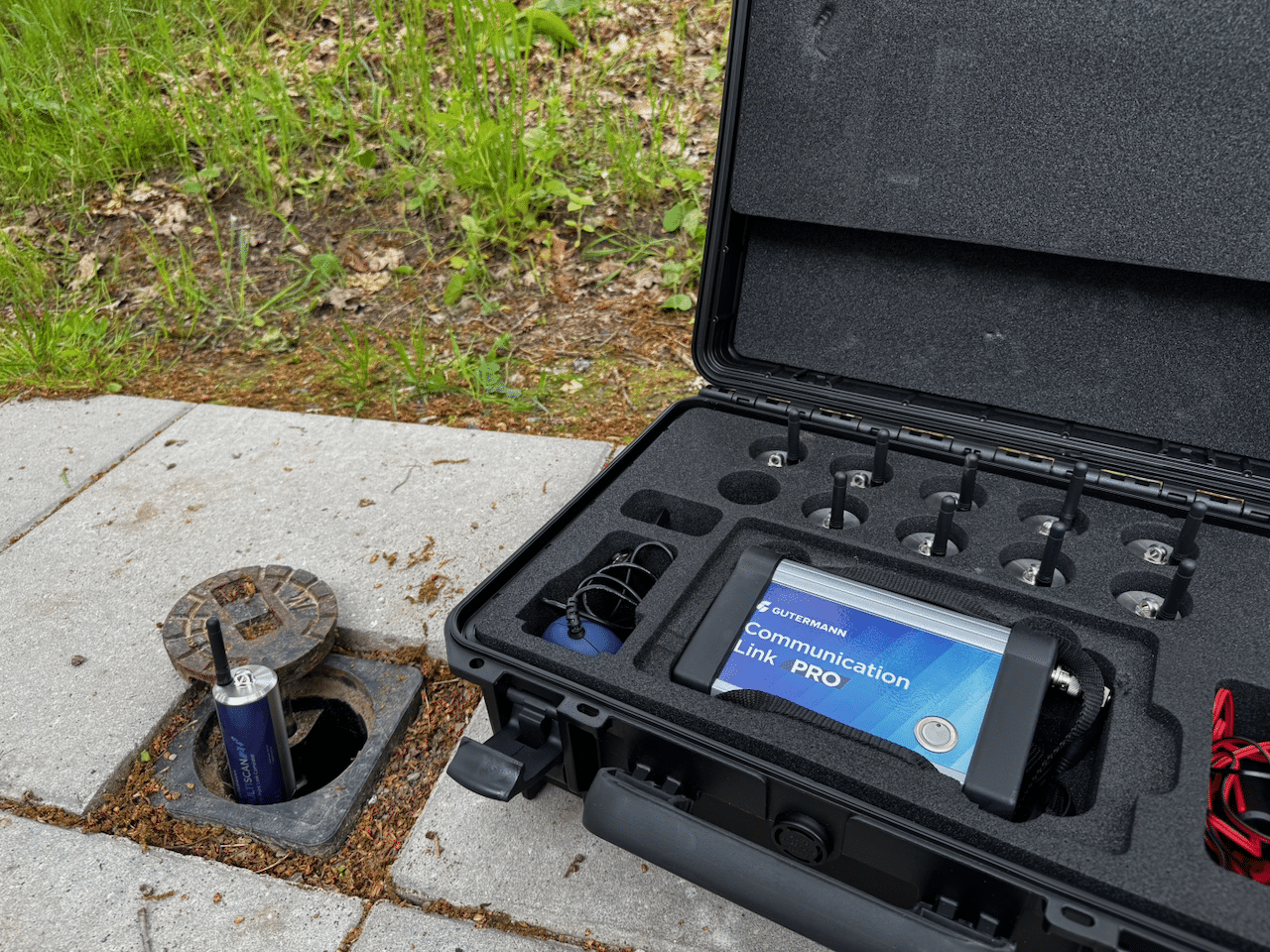
Trace gas where there is access to the pipe trench at both ends
If we can access the pipeline at both ends of the crossing, tracer gas is an option. We inject harmless gas into the defined section and scan the surface where there is access: in the bank or at the well where the casing ends. The gas follows the pipe and seeks upward where it can get it.
The method also finds leaks that emit too little sound to be correlated. Where the surface can be scanned, the point is set with an accuracy of a few centimeters.
Leak detection in Central Zealand as a basis for the excavation permit
Excavation in a highway embankment or close to a railway line begins long before the first shovel. Permits must be sought and cordoning must be planned, and both require someone to be able to write down where to dig and how safe it is measured.
We deliver the position together with the measurement points it was calculated from and the date of the measurement. It is this documentation that makes the work a planned task instead of a search trench in a closed roadway. We do not dig ourselves — your contractor takes the work from there, and we are happy to talk to the consultant along the way.
Yes, in most cases. We measure from a point on each side of the intersection and calculate the position based on the time difference. If the calculation shows that the leak is outside the intersection, there is no need to continue the hard way.
Yes. The measurement is done from wells and fittings on each side of the route. If there is access to the pipe trench at both ends, tracer gas can be used as a supplement.
We trace the route in the field before measuring and correct the deviation in the documentation. This is common at crossings where the line has been rerouted or pulled into a casing pipe during construction work.
The position together with the measurement points and the method it was calculated from, and the date of the measurement. In addition, our assessment of how safe the point is, so that the authority and the contractor can see how large a field needs to be opened.
Contact DWI
Contact us for competent advice, leak detection and pipe location for your waterworks or water supply. We also assist commercial customers and private households with professional solutions.
