
Leak detection in the Capital Region
The discount is filled in stages
Under the sidewalks in the capital area, the water pipeline is sandwiched between cables and district heating pipes, and each layer is laid down in its own year with its own map basis. When a machine goes down for a cable, the water pipeline is closer than the drawing suggests.
A large proportion of the damage we are called out for has occurred while someone was working in the ground. Therefore, the effort belongs in two places: before the shovel is put in, when the pipeline must be identified, and in the hours after an accident, when the spill must be located.
Detection of the pipeline before excavation work
Wire search is a task in itself. We trace the route from the network's own measurement points and follow the main line to the outlets until the route can be marked on the ground. This way, the contractor knows where to dig by hand rather than by machine.
The branch lines are the tricky part. They were laid down when the individual property was connected, and they do not necessarily follow the angle shown in the drawing. Blinded sections are still in the ground and can be confused with the line that is in operation.
Therefore, we track the connections once the main line is established and note the paths we could not confirm.
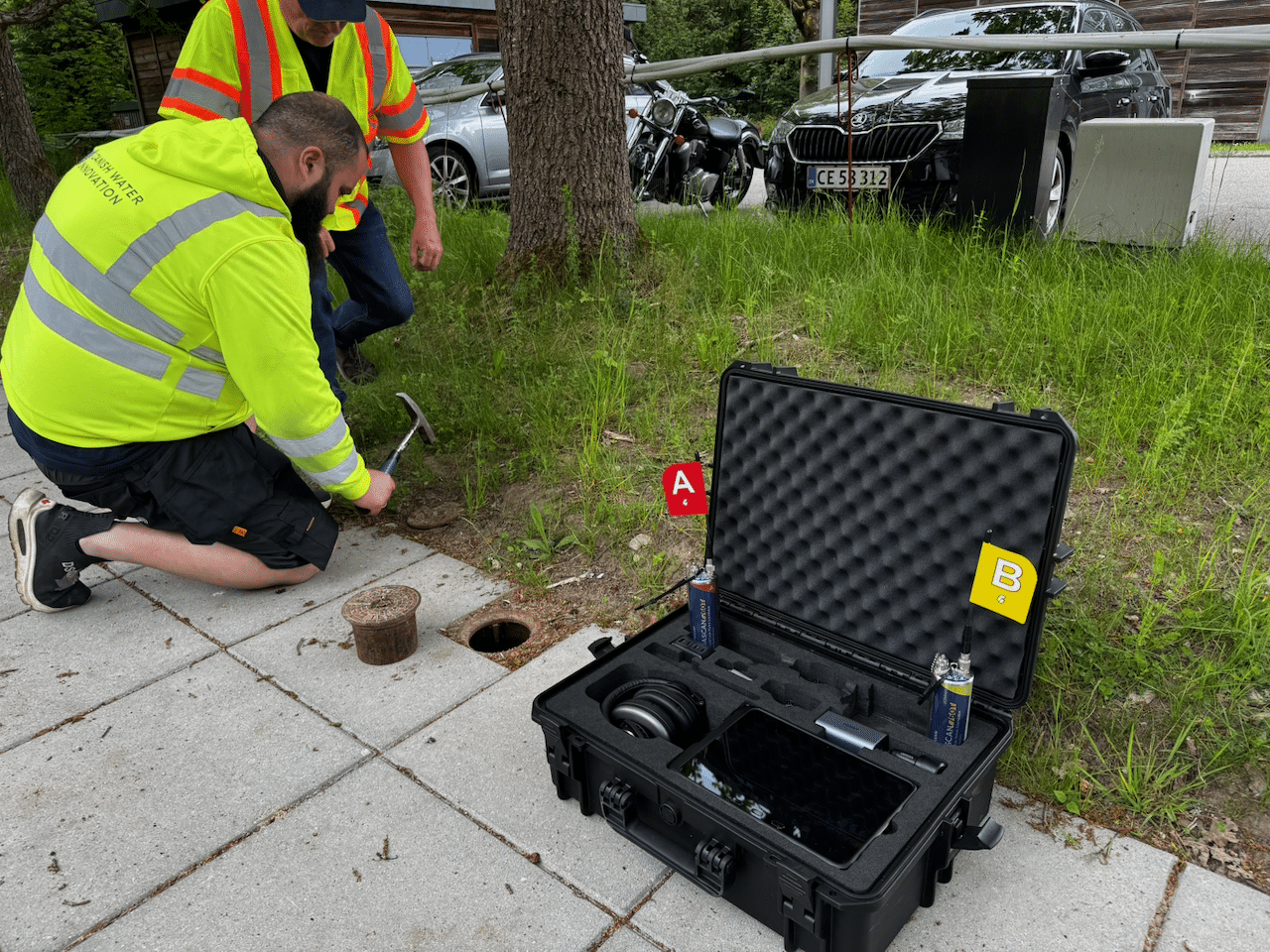
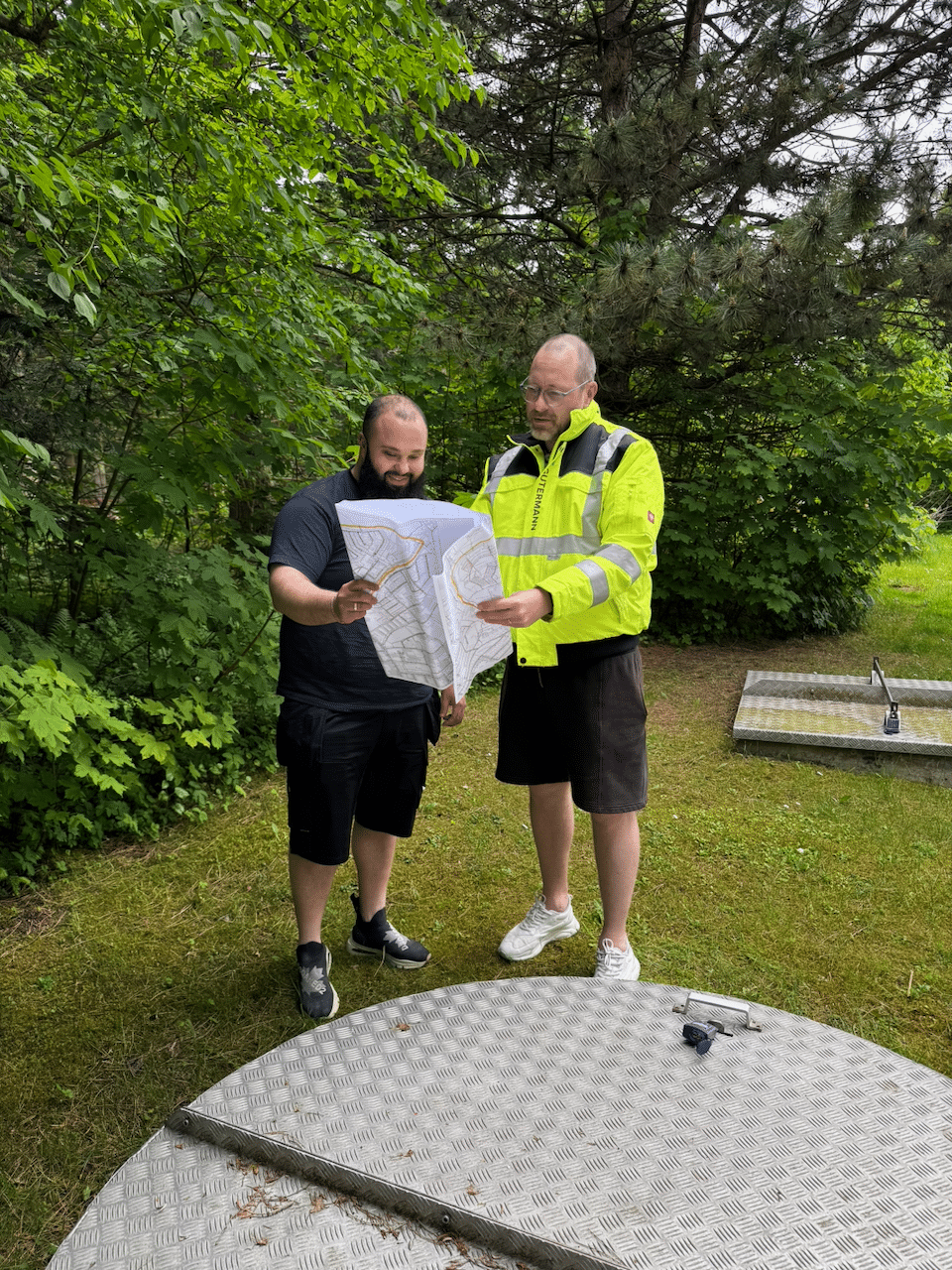
The sale must last until the machine arrives.
A marking on asphalt or grass has a short life. Rain and traffic will take it away, and excavation work is often postponed for a couple of weeks. That's why we submit the progress in writing with the measurement points from which it was traced, so that the marking can be re-established without having to search from scratch.
We agree on the marking itself with the person who will be digging. If work is to be done close to the water pipe, we mark the width of the area that requires caution instead of a single line across the middle. This gives the client something to base the work on if doubts later arise about what was detected before the work.
Leak detection in the capital area together with your contractor
We don't dig, and we don't repair. We find the spot and mark it on site, and you get the measurements in writing. The repair is carried out by your plumber or contractor, and we are happy to speak directly with them while they are at the hole. This saves a lot of time when a schedule is slipping.
The division of roles also means that we can be called upon by the contractor himself. If there is no time to go through several stages when a machine is stationary, we can agree on the task with the person on site and send the documentation to the line owner afterwards. If a network needs to be monitored over a longer period of time, data loggers and automatic notification through HydrantAI placed on top of the work.
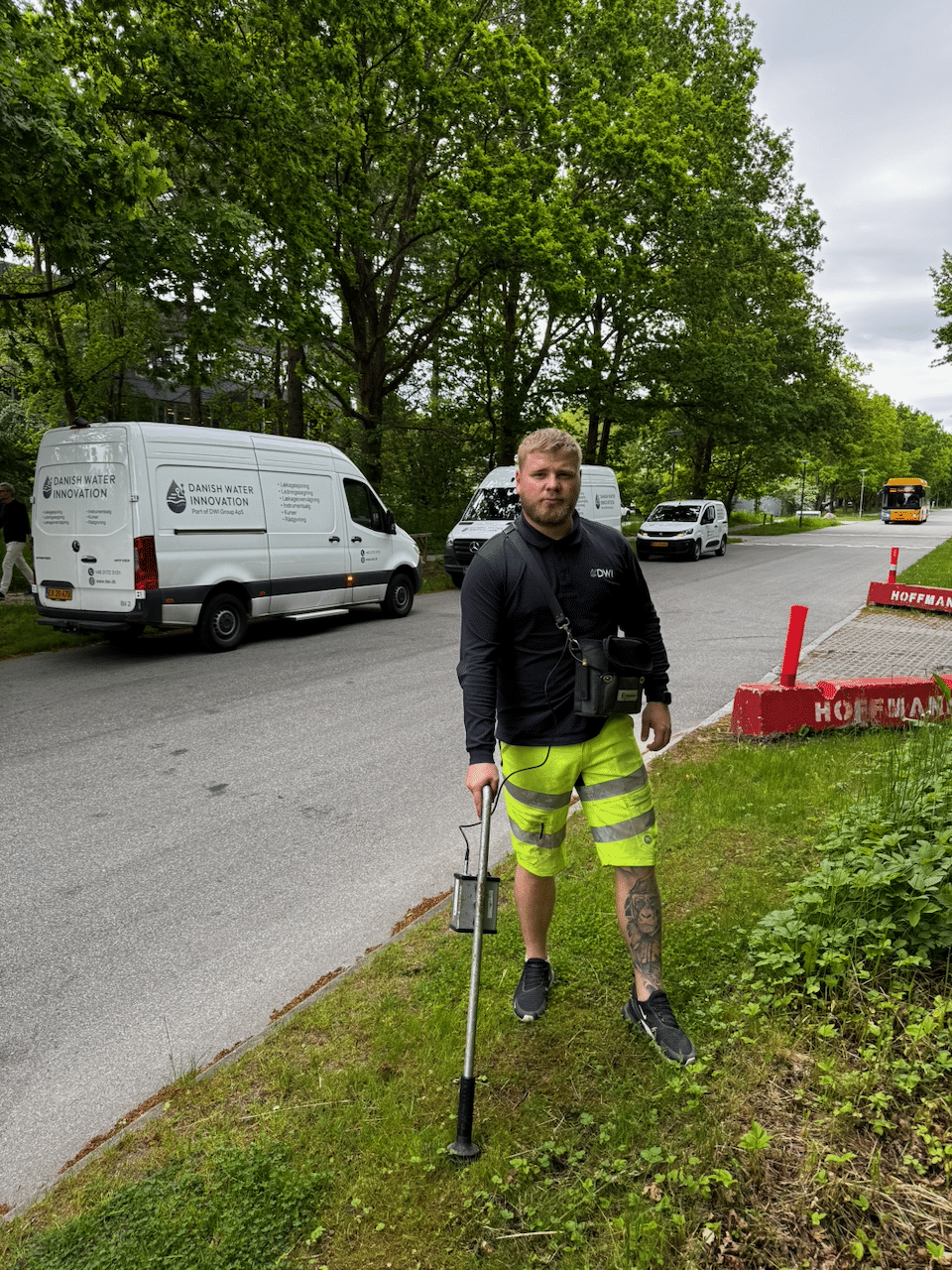
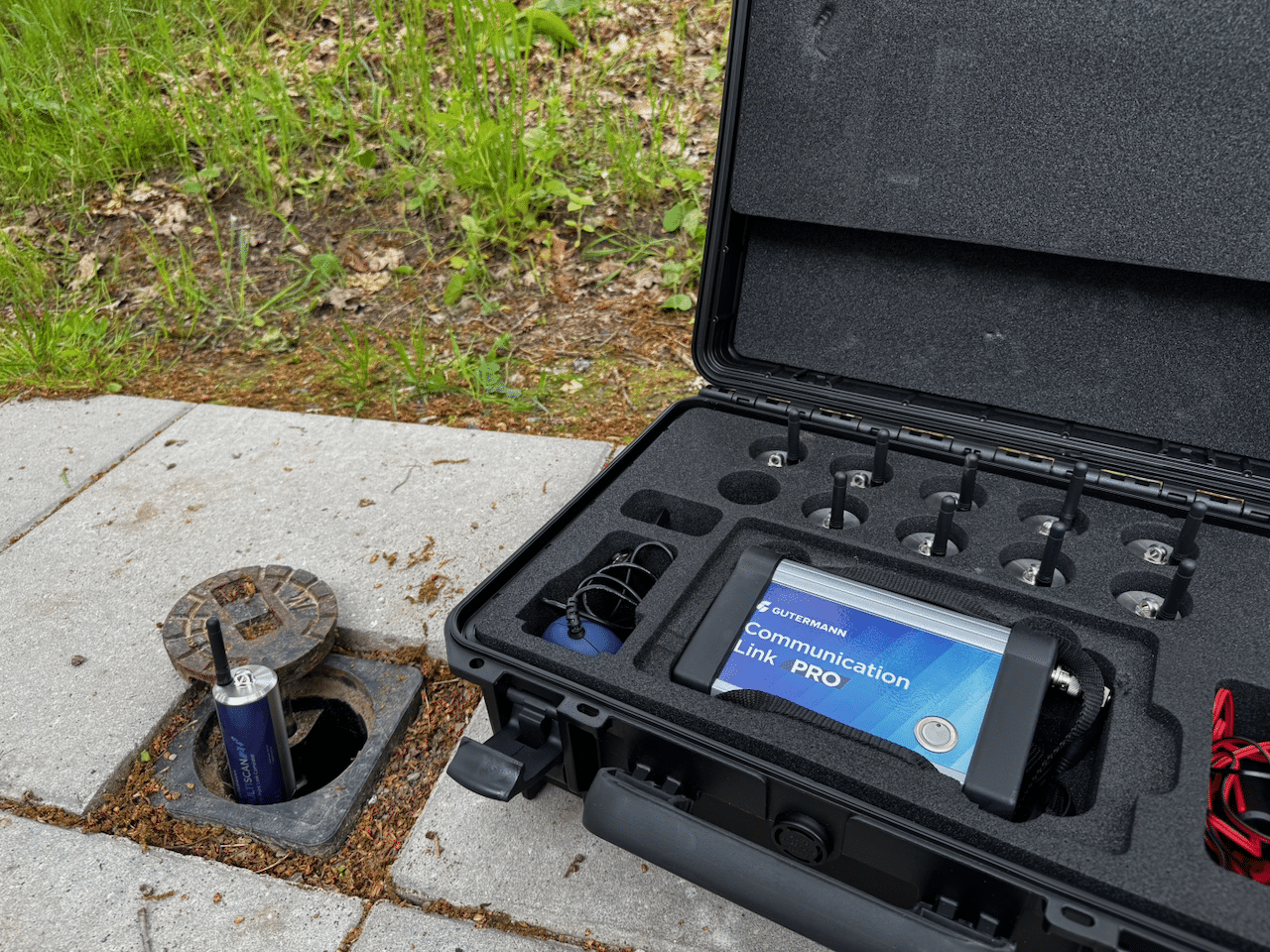
Leak detection in the metropolitan area when a line is affected
A break in a densely built-up area behaves differently than a break in open country. The water runs along pipe trenches and foundations and comes up in a completely different place than where the pipe is damaged. Therefore, it is rarely useful to dig where the water appears. If a break has occurred now, we can often be there the same day.
In the event of an emergency call, the first few minutes are spent demarcating. We clarify which valves have been operated and where the water is now. We then measure the section that still has pressure from a point on each side and calculate the position based on the time difference between the two measurements. If the traffic noise is too loud for a sound measurement, we demarcate with tracer gas.
The point is marked while the machine is stationary, and the contractor can go down to a place where there is actually something to repair.
When the operations team needs to be able to detect a wire themselves
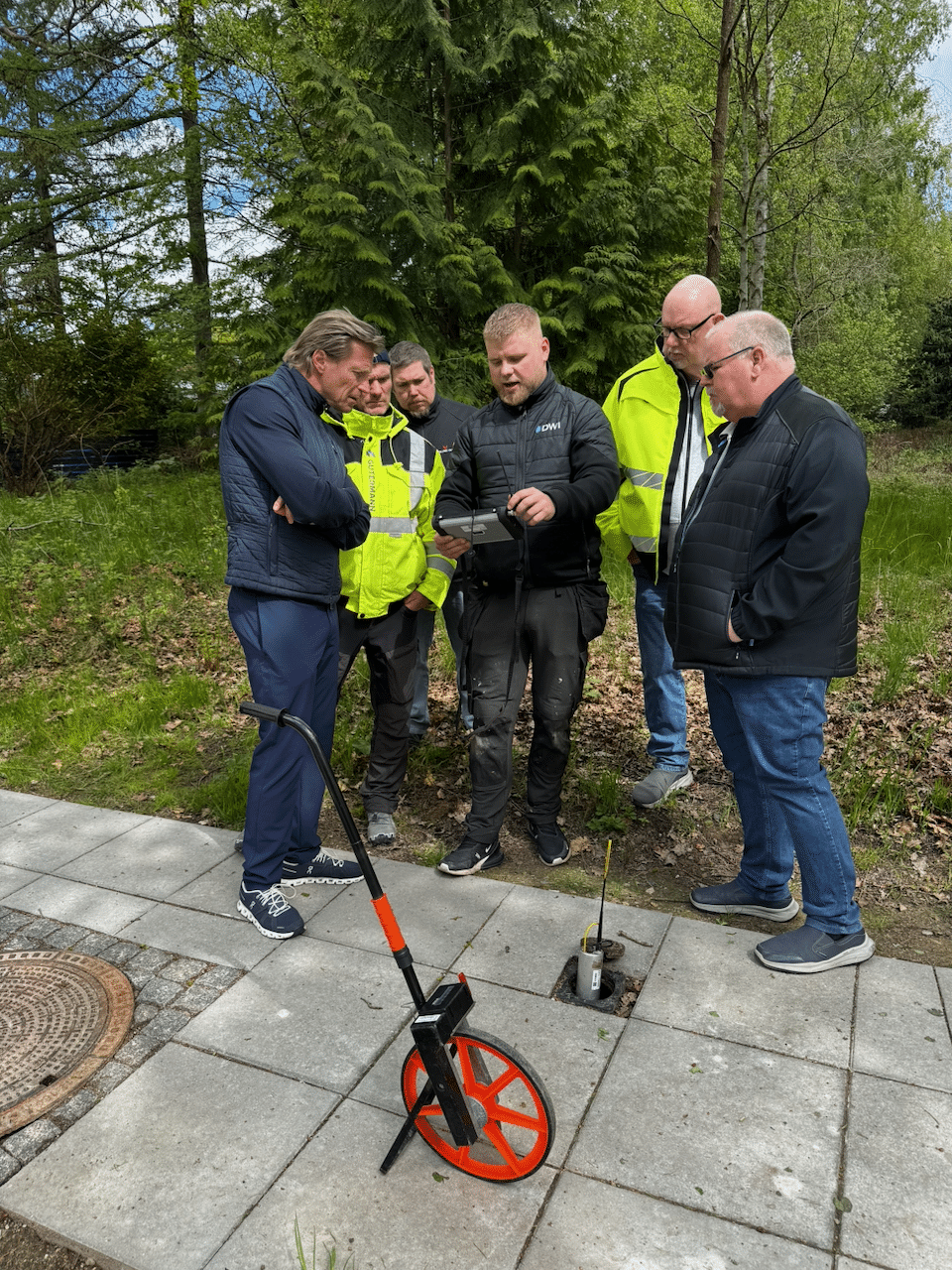
Some of the things we are called out to do in the capital area could be handled by an operations team themselves if the equipment was in the car. Selling and leasing search equipment is therefore part of what we do, and we are an authorized distributor of, among other things: Gutermann, including service on the instruments. If people are to be able to use them on busy roads, the DWI Leak Academy basic course in wiring and leak detection in Hørsholm, where the exercises take place on a test track.
Yes. We trace the pipeline and branch lines from the network's measurement points and plot the route on the ground. The measurements are submitted in writing afterwards. The task can be ordered alone, without there being any suspicion of a leak.
Call the emergency number +45 70 23 98 98. We often arrive the same day, determine where the water is leaking from the section, and mark the point so that the repair can begin without excavation.
Both parts. The course is physically marked on the terrain at the site, and the marking is supplemented by written documentation with measurement points and method, so that the information does not disappear when the marking wears away.
The marking in the field rarely does this, but the documentation does. We indicate which measurement points the course is traced from, so it can be set back up in a few minutes when the contractor shows up.
Yes. A blinded lead behaves differently during a trace than a lead with pressure on, and we note which of the pathways we find are active and which we could not confirm.
Contact DWI
Contact us for competent advice, leak detection and pipe location for your waterworks or water supply. We also assist commercial customers and private households with professional solutions.
