
Leak detection in Sønderborg
Nighttime consumption never goes to zero
Southern Jutland has many manufacturing and food companies and a number of larger farms, and they use water around the clock. At three in the morning, cooling, washing, milking and cleaning are still running. A fixed base consumption overnight can therefore cover up a significant leak without looking strange.
We use nighttime consumption as an input, not an answer. The loss is isolated by breaking the grid into smaller pieces and measuring them in stages while operations continue — and by comparing what is measured against what production actually did during the same hours.
How do we distinguish process consumption from losses?
A process consumption has a pattern. It follows the shifts and the cleaning schedule, and it changes when the schedule changes. A loss has no calendar. It is flat over the day and is the same size on Sunday morning as it is on Tuesday afternoon.
That's why we ask for your operating plan along with the meter data. If we compare the consumption curve with what was actually running when, the unexplained floor will appear by itself. That floor is our goal.
A planned stop is worth using. If consumption is still flat over a public holiday day when there is no production, we know both that there is something to find and approximately how big it is. If the plant has no stop, we make the same cut by zone instead.
Zoning and leak detection in Southern Jutland in stages
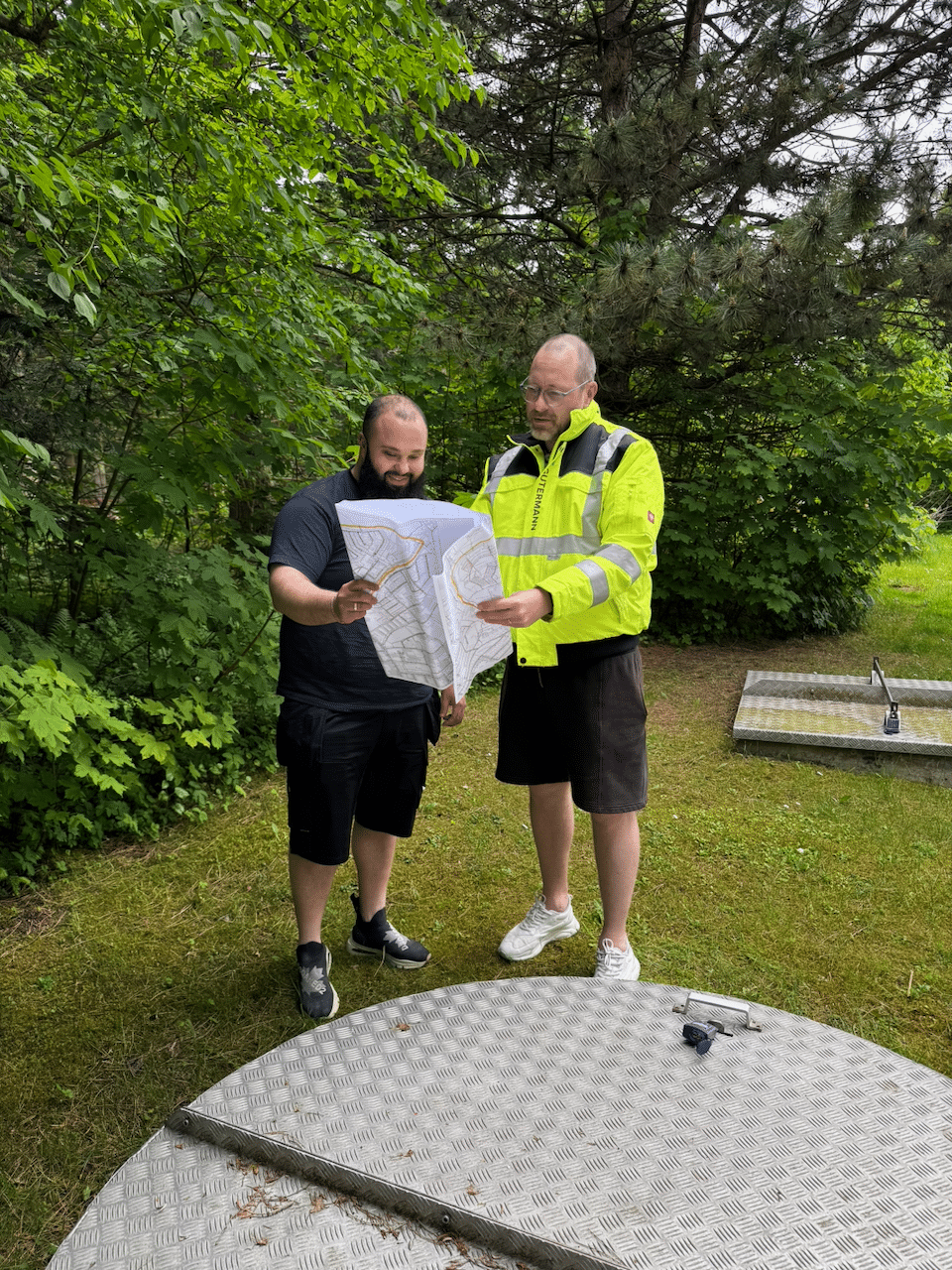
We divide the network into zones that can be measured individually, and take them one at a time. The basis is your own meters and the loggers we set up, and the effect of each maneuver is read there. A zone that is closed off must remain idle for a while before the number can be trusted.
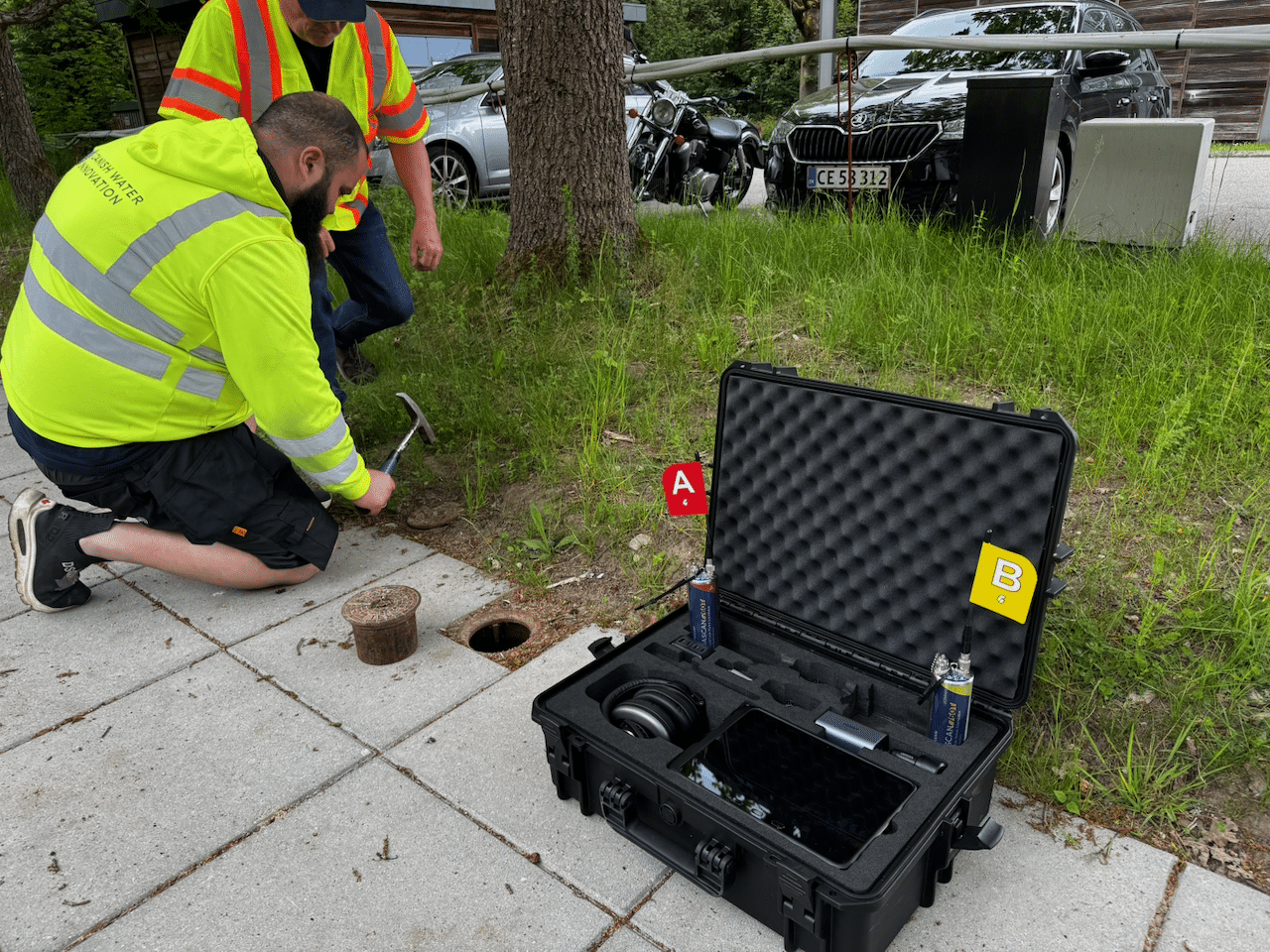
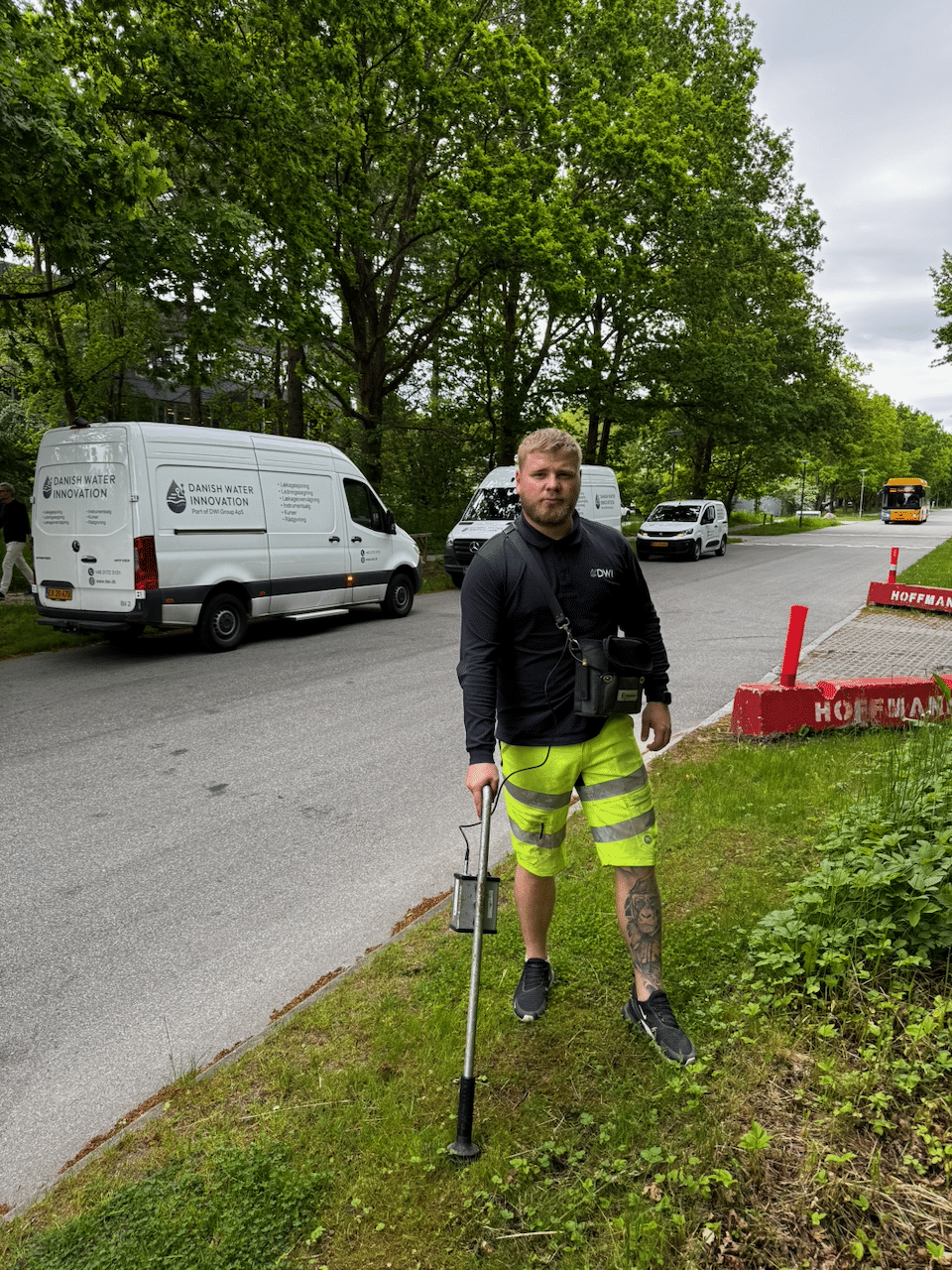
If a zone uses more than what is written in it can explain, we go closer with a ground microphone along the line. In an area with many parallel uses, this is the method that can separate one leak from the neighbor's pump, and when the section is short enough, it narrows down to the point to be marked.
Valve maneuvers agreed with the operation
Zoning requires closing and opening, and on a system in 24-hour operation, this is the part that needs to be planned best. We agree on the maneuvers with your operations manager in advance and place them where the fewest departures are loaded. We keep the number down because each closure must be approved by someone who knows the system.
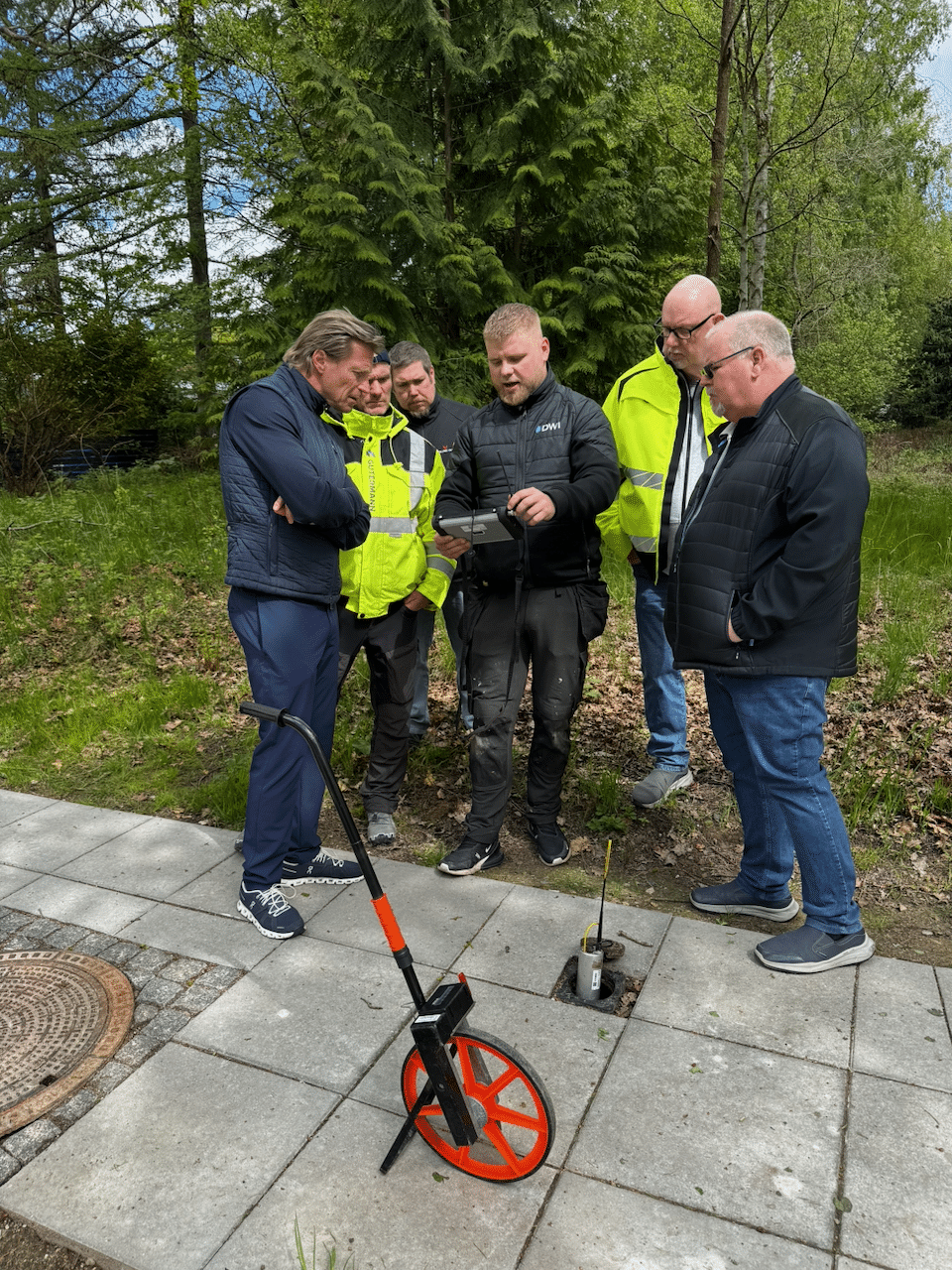
Production does not have to stop along the way. Most measurements can be taken during the shift's quiet hours, and because we measure from the wells and valves that already exist, without digging or blocking, the lines do not notice us. In some cases, we ask for a short closure of a single valve to determine whether a consumption belongs to one branch or the other.
When consumption fluctuates throughout the week
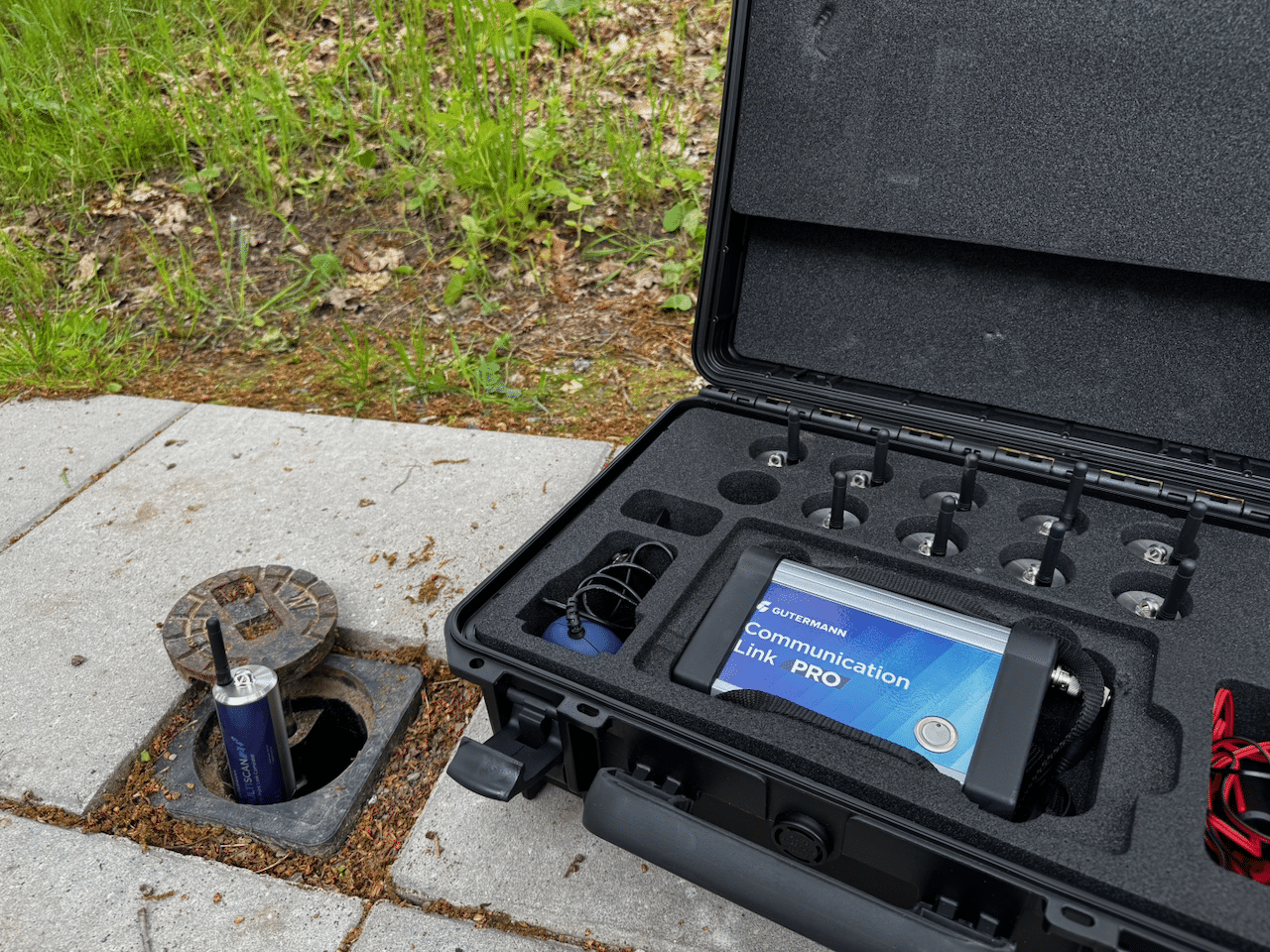
A single measurement day provides a narrow picture of a network with 24-hour operation. Data loggers in the network collects around the clock over weeks, and HydrantAI collects data and automatically alerts you of deviations.
The monitoring does more than catch acute spikes. It also shows whether a zone's base usage is slowly creeping upward over months — the type of development that never triggers a single suspicious number, but is the most common way water loss increases.
Some companies will be able to intervene themselves the day a zone starts to deviate. We supply them with search equipment, both for sale and for lease, so that the maintenance department can screen the valves closest to the zone while production continues. If people also want to be able to interpret what they hear on the tube, they take a basic course at DWI Leak Academy first.
Leak detection in Southern Jutland on your own property
A large part of the tasks lie behind the meter, where the pipes belong to the company or the farm itself. This is often where the loss lies, because no one systematically supervises pipes that have been in place since the buildings were built.
On a company site, the map material is rarely updated after each expansion, and several of the pipes that lie side by side under the farm area carry something other than drinking water. Therefore, the task here often begins with a pipe search: the course must be demonstrated before we can know whether it is the supply line or a laid process line that we are listening to.
The actual work in the ground is not ours. We mark the point, document the measurements and gladly deliver them directly to your plumber or contractor so they know what they are getting into.
Yes. We measure in stages and place them where the load is lowest. If a valve needs to be closed briefly, we agree with operations in advance and keep the number of closures down.
Yes, as a starting point. It tells you where the floor of consumption is. Whether the floor is a loss or a process is determined by measuring zone by zone and comparing it with what actually ran during the period.
Process consumption follows a plan and changes with it. A loss is constant and unaffected by whether production is taking place. If we measure over several days and through a weekend stop, the difference becomes clear.
Yes. A large part of our business tasks lie behind the meter. We need access to the wells and valves that exist, and a contact person who knows the system.
We agree on that. In some places, the operations do it because they know the facility best, in other places we do it according to your instructions. We never close anything without agreement.
Contact DWI
Contact us for competent advice, leak detection and pipe location for your waterworks or water supply. We also assist commercial customers and private households with professional solutions.
