
Leak detection in North Jutland
There can be a long distance between two plugs on the same wire
The North Jutland supply network is held together by long transmission lines between towns, villages and individual users. On large parts of the route there are few consumers per kilometer of pipe, and no one passes by daily. A leak in the middle of such a section can run for a long time before it shows up — either in the water utility's figures or as a ditch edge that never dries.
The distance makes it harder to detect the loss. On the other hand, it makes it easier to find once we have driven out. A long, undisturbed pipe with no consumption along the way is the best conditions for correlation.
Correlation on the long, straight pieces
Correlation measures the same sound signal at two points on the pipe. The position is calculated from the time difference between the two measurements and the speed of sound in the pipe material. The method becomes more reliable the longer and the more undisturbed the section.
Inside a city, the measurement struggles against pump noise and consumption along the way. Between two villages, there is basically only the pipe. Therefore, we can work with distances on a North Jutland transmission network that would not be realistic in a densely built-up area — provided that we can get to the pipe at both ends.
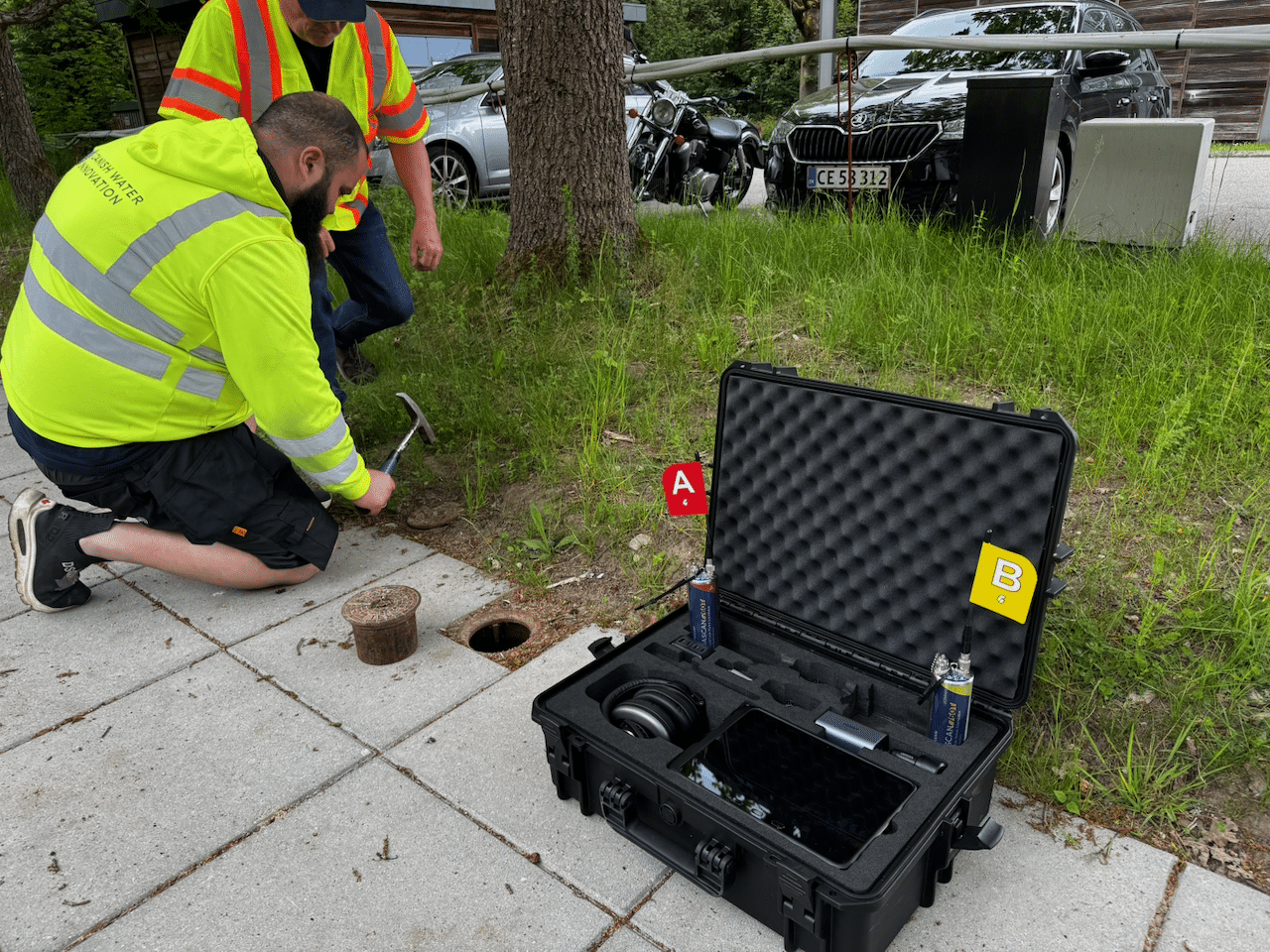
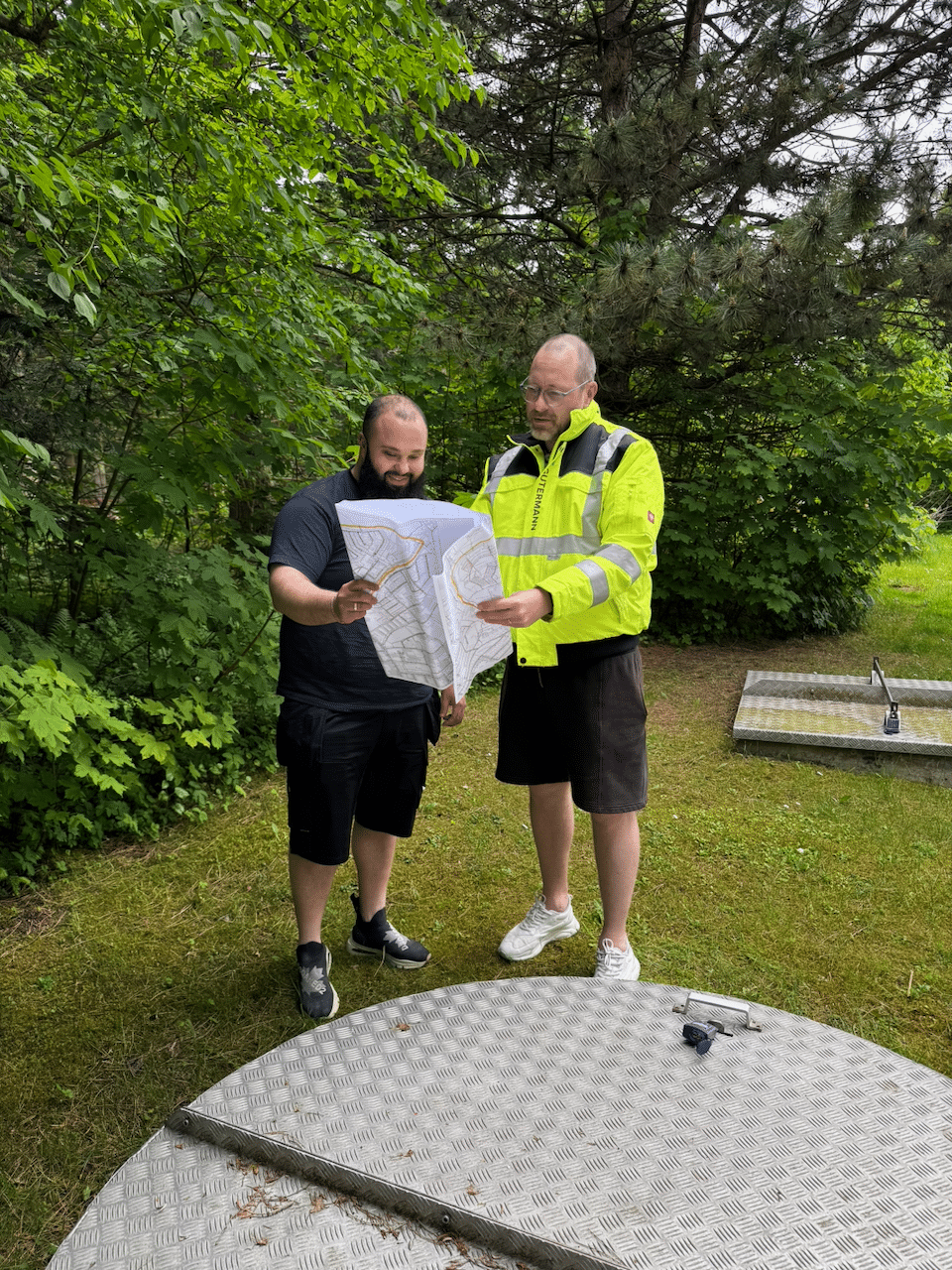
Leak detection in North Jutland when the measurement points are spread out
We work from the network's existing access: wells and valves. If they are close together, it's straightforward. If they are far apart, we divide the section into stages and gradually narrow it until the section is short enough to go through with a ground microphone.
There is no formula for how close the points should be. The pipe material matters most: cast iron carries the sound a long way, plastic dampens it, and low pressure dampens it even more.
We therefore take a few sample measurements on site and determine the jump between two points from them, instead of calculating backwards from a table.
If there is no access at all nearby, we start somewhere else: by finding the pipe. Wire search gives us the actual route, so that listening takes place over the line and not a section next to it. This is especially true for older lines that have been rerouted or extended without the map being included.
Leak detection in North Jutland: the order of a large network
A network with many scattered sections cannot be examined at once, and the question is where to start. We first look at the difference between pumped and settled water per zone. The zone with the largest difference and the fewest consumers typically comes first, because a loss there has both run the longest undisturbed and is easiest to measure cleanly.
We then weigh the pipe material and the pressure in it, along with any previous breakages the network has had. A section of older cast iron with high pressure moves up in the queue because it is both probable and quick to measure.
The sequence is not fixed. After the first stages, we know more about the actual state of the network than any drawing can tell, and the plan for the following years is adjusted accordingly.
If you already have a renovation plan, we will base the review on it so that you know which sections are losing water before the contractor is hired.
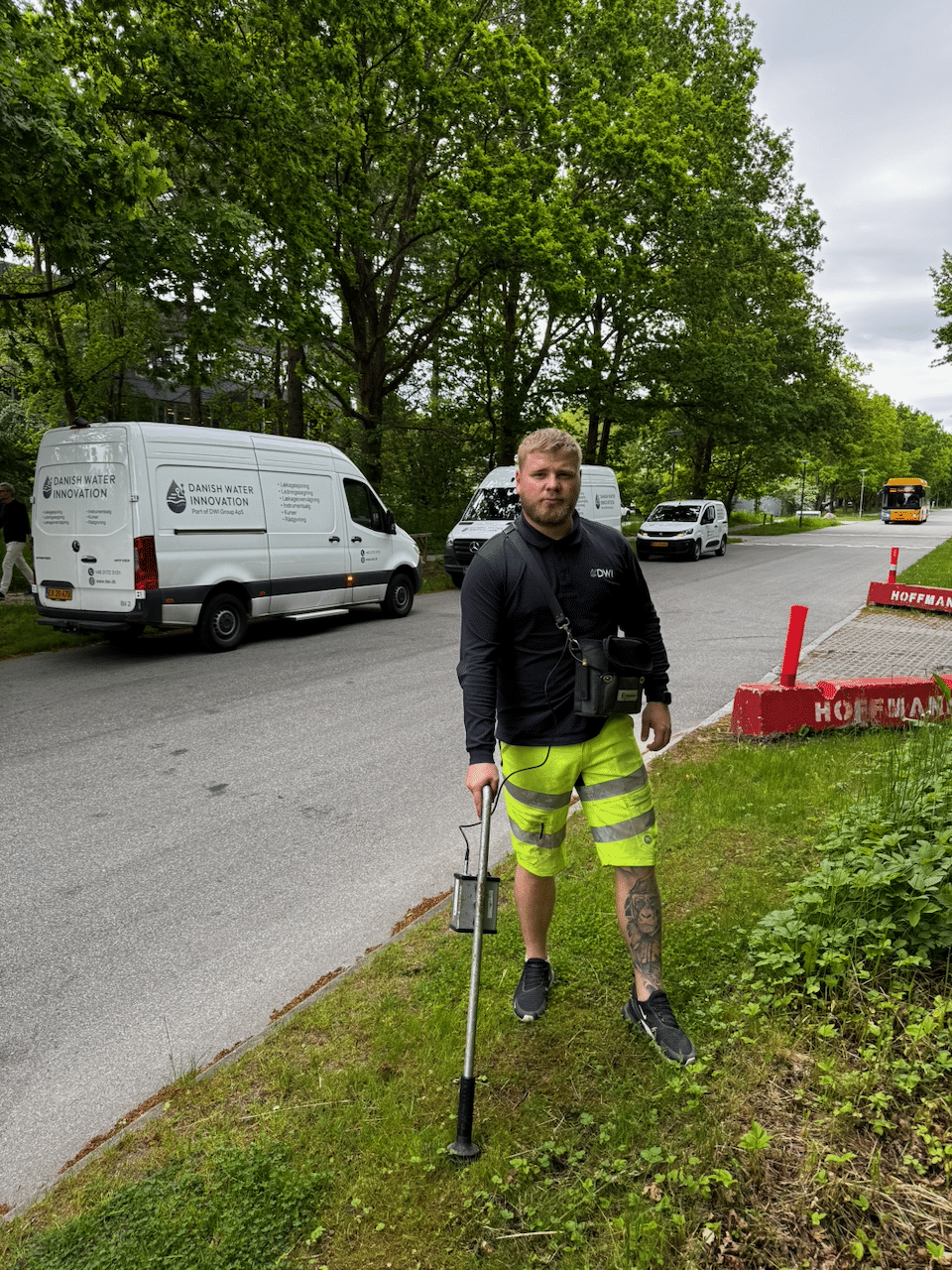
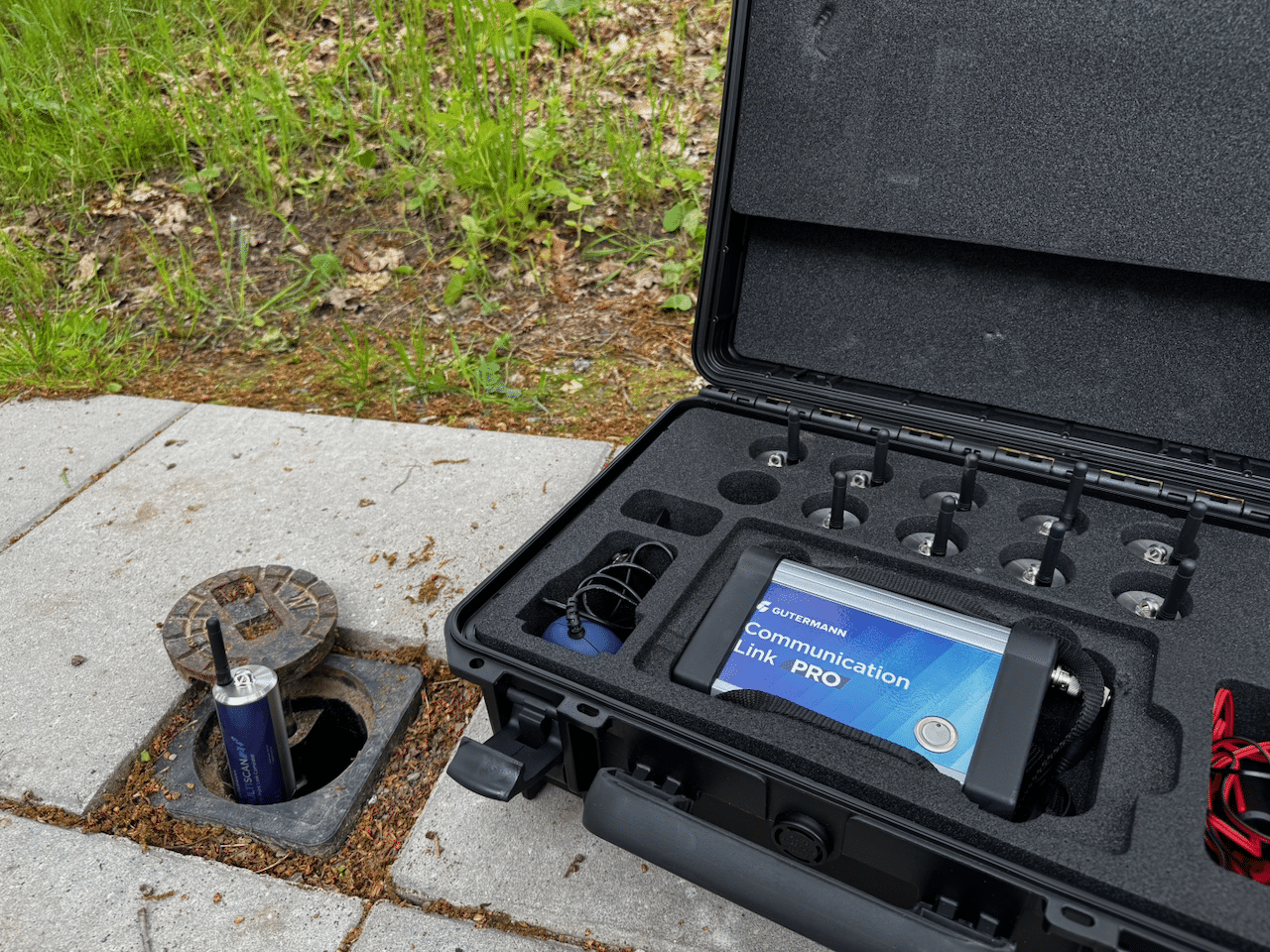
Monitoring between two visits over a long distance
On a line where months can pass between two visits, a single measurement is a narrow basis. Data loggers placed in wells collects around the clock and registers the lowest sound level at night, where consumption is least disruptive.
HydrantAYou collect data from the loggers and automatically alert when a point starts to deviate from its own normal pattern. On a network with large distances, this means that a new loss is known in the days after it occurs, and that the review can be placed where the loggers point.
The driving distance is also an argument for being able to do the first check yourself. If the waterworks has its own search equipment, which we both sell and lease, the operations manager can listen to the nearest valves when a logger has alerted, and call us with a result in hand instead of a suspicion. The routine of daring to trust your own measurement comes at a basic course at DWI Leak Academy.
Yes, but it takes longer because access has to be created. We measure from the points that exist and narrow in stages. If we know the route of the pipe, tracer gas can be used on the section we have delimited.
It mostly depends on the pipe material and the pressure. Cast iron carries the sound a long way, plastic dampens it. We take a few test measurements on site and determine the jump from them, and on long stretches without consumption we can go significantly further than inside a city.
We start in the zone where the difference between pumped and settled water is greatest, and where there are the fewest consumers to disrupt the measurement. We then weight the material and the pressure. The order is agreed with you and adjusted when the first stages have been measured.
The sections that have been reviewed, the points we have found something at, and what has been measured where. If we have done a pipeline search along the way, the route of the pipe is included so that your map material can be corrected.
No, but they work well together. The logs record new losses between visits. The review finds the slow ones that have been below the alert level for years.
Contact DWI
Contact us for competent advice, leak detection and pipe location for your waterworks or water supply. We also assist commercial customers and private households with professional solutions.
